



Browse
Culture And Society
Empowering Black Youth: From Listening to Learning to Meaningful Action
Black children and adolescents hold valuable knowledge about what supports their well-being and positive development. It’s this understanding that influences much of my research, which focuses on engaging Black youth’s voices to inform how families, schools, and communities understand youth thriving. My commitment to youth-engaged research approaches stems from the belief that young people know how to name their needs, experiences, and hopes for the future—we just need to listen.
Listening to Black Youth to Reimagine the Contexts They Navigate
bell hooks (1991) reminds us that theory emerges from lived experience. In this spirit, Black youth theorize as they navigate the relationships, systems, and environments that shape their growth. Recognizing young people as experts challenges adults, including researchers, educators, and community leaders, to take seriously the insights they can offer about their lives and well-being.
One way this perspective has informed my work is through my involvement with the Family Voices Project, led by Dr. Emilie Smith, Professor of Human Development and Family Studies and College of Social Science Distinguished Scholar. Through focus groups with Black children ages 5–12 in mid-Michigan, our team explored youth’s experiences of racism and coping, as well as what they identify as necessary for their success in school, family, and community contexts. Even at early ages, Black youth in our study offered thoughtful and deeply perceptive reflections on what they need to thrive. Perhaps most importantly, their responses pointed to tangible policies and programs that could better foster their positive development.
For example, participants consistently emphasized the importance of strong relationships and supportive environments. They described how caring family members, encouraging teachers, positive peer connections, and mentors would positively contribute to their sense of well-being and belonging. Many shared that more individualized attention and encouragement at school would strengthen both their motivation and confidence to do well in class. At the same time, children identified several barriers to their well-being. Bullying and teasing surfaced frequently, alongside a desire for more effective adult intervention and support. Concerns about community safety also emerged, particularly fears related to gun violence, highlighting a need for coordinated community safety efforts and responsive firearm policies. In addition, several children described a need for improved food access, underscoring the importance of universal school meals, summer and after school meal programs, community gardens, and other place-based initiatives that promote food security among youth and families.
Listening Responsibly, Acting Responsively
When Black youth articulate their needs and desires, they offer a roadmap for reshaping the environments that matter most in their lives. Their perspectives provide important insight into the conditions that support their success, as well as the barriers that may hinder their growth and well-being. Creating intentional opportunities for young people to share their experiences and perspectives helps us move beyond adult assumptions and toward programs, practices, and policies that are more responsive to the realities they navigate every day.
Even so, listening alone isn’t enough. While creating space for Black youth voice is an important step toward empowerment, it is equally important that their perspectives meaningfully inform the decisions adults often make on their behalf. When youth insights are taken seriously and translated into action, we move closer to creating school, neighborhood, and community environments that are aligned with their lived experiences and developmental needs.
Centering Black Youth Expertise to Create Thriving Developmental Contexts
As they navigate family, school, and community life, Black youth are continually making sense of who they are, how they relate to others, and how the world responds to them. In doing so, they generate insights that can transform developmental contexts into environments that affirm their identities, respond to their needs, and support their holistic well-being. However, these possibilities can only be realized when adults commit to intentional listening and engage young people as partners in change.
Through my scholarship, I aim to affirm Black children and adolescents as active contributors to envisioning healthier and more equitable communities. I’m guided by the belief that when we recognize youth expertise and act on the knowledge they share, we move closer to creating environments where young people—and the communities around them—can truly thrive.
____________________________________
Reference
hooks, b. (1991). Theory as liberatory practice. Yale Journal of Law and Feminism, 4(1), 1–12.
By:
Yasmine Ben Slimane
Thursday, Jun 4, 2026
CULTURE AND SOCIETY
+2
Leave a comment
Youth Entrepreneurship Ecosystems: Driving Change Through Integrated Support Systems in Africa
It has been reported that Africa has the youngest population in the world, with about 400 million youth aged 15 to 35 years. Sub-Saharan Africa is home to a youthful population, with more than 70% under 30. Growth projections demonstrate that the youth population is expected to double to more than 800 million by 2050. Such growth requires significant contributions to developing initiatives that support youth in actively addressing complex societal issues and advancing economic development. More recently, youth entrepreneurship has been a topic of interest as a mechanism for encouraging the identification and exploitation of opportunities to launch ventures that contribute to innovation, job creation, social welfare, and economic growth. Given the complexity of entrepreneurial support, a range of actors work together in an ecosystem to support youth entrepreneurship.
Despite the challenges of resource scarcity and uncertainties in the African context, ecosystem actors demonstrate early successes in their youth entrepreneurial development. First, while entrepreneurship education is still in its nascent phase, actors are providing generic business management tools to enable youth to run sustainable businesses. Second, despite limited financial resources, some youth entrepreneurs received small grants to develop their businesses. Of course, there is still more to be done in this regard. Third, there is an emerging opportunity for integrated partnerships to support large-scale youth entrepreneurial activity. Such an emerging approach can do away with the solo approach in entrepreneurship support. Lastly, the youth ventures that emerged address social issues and provide employment opportunities, though most are seasonal.
While youth entrepreneurship is materialising, there are still challenges that need to be addressed. At the core is entrepreneurship education and training. The approach to educating and training entrepreneurs should be designed to articulate the different levels of focus. At the grassroots level, entrepreneurship education needs to be integrated into the school curriculum across primary, secondary, and tertiary institutions. Outside of the formal educational system, entrepreneurship education requires further development to better align with entrepreneurs’ needs. In most cases, the training is generic and fails to acknowledge the different entrepreneurial phases. As a result, some outcomes are not realised. Another challenge is the absence of youth entrepreneurs' voices in the design of programmes meant to help them. Consequently, the programmes designed often do not align with the requirements of the youth. While entrepreneurs still show up for these activities, they end up moving from one intervention to another, for the sake of benefits (e.g., access to a laptop) rather than the actual development.
Access to finance is also a challenge facing ecosystem actors, both supporters and entrepreneurs. Some actors, such as non-governmental organisations, are also under-resourced and therefore compete with entrepreneurs for financial resources. As entrepreneurs report, being young and without a track record of financial success and collateral increases financial risks, making access to early-stage start-up funding a challenge. Therefore, blended financing and crowdfunding platforms can be instrumental in supporting impactful youth entrepreneurship projects.
As much as interventions can be designed, business environment factors, such as a lack of a supportive legislative framework for youth businesses, will deter efforts to build sustainable businesses. In many countries, stringent tax requirements are cited as one of the challenges entrepreneurs face that the ecosystem still needs to address. In the business entrepreneurial environment, access to mentorship, markets, information, and networks within the ecosystem remains unattainable for many youth entrepreneurs. It is acknowledged that most youth entrepreneurial activity takes place in the informal sector and townships, complex business environments that are often harsh for businesses. However, entrepreneurs in these contexts do not have adequate support to function effectively, and forcing them to transition to formal settings is not an option. It should be acknowledged that some entrepreneurs will operate in township settings and should be supported accordingly. These emerging business environment challenges require a targeted approach.
It is evident that work is being done, but most of it is disjointed and in silos, resulting in duplication of efforts. An integrated approach amongst the key actors is therefore recommended to drive the entrepreneurial initiatives towards the common goal. The key questions are: what the integration should look like, who the key custodians are, and how the integration should be implemented and funded. Is it possible to have a continental youth entrepreneurship integration platform? Can digital technology be leveraged to better support the integration? Can these platforms support high-growth firms owned by youth? Can they support internationalisation of youth-owned enterprises? The benefit of better integration is that it spans multiple disciplines, enabling entrepreneurs to leverage diverse thematic areas to solve complex problems with innovative solutions. All these questions are a call to collective action to effectively support youth entrepreneurship.
By:
Yasmine Ben Slimane
Wednesday, Jun 3, 2026
CULTURE AND SOCIETY
+1

Leave a comment
African Futures Scholar Azinne Azipue
Meet Dr. Ezinne Ezepue, Lecturer of Film at University of Nigeria, Nsukka. 🌟Her research focuses on reimagining folklore and adapting traditional stories for the screen, exploring how cultural narratives can be preserved and shared through film. 🎬Although she participated virtually throughout the program, Dr. Ezepue described it as an interesting experience and expressed her gratitude to for the opportunity to take part in the program. ✨
By:
Baboki Gaolaolwe-Major
Wednesday, Apr 1, 2026
CULTURE AND SOCIETY
+1
Leave a comment
African Futures Scholar Alfdaniels Mabingo
“I can't wait to go back and be kind of a new scholar, new researcher, new academic leader, and new responsible citizen of this world.” ✨Meet Dr. Alfdaniels Mabingo, Lecturer of Performing Arts and Film at Makerere University in Uganda. His research for this fellowship explores dance education, pedagogy, and leadership particularly focusing on empowering youth through the arts in Uganda. He describes the program as a transformative experience in his early research career, calling it a true rite of passage that marked a significant milestone in his academic and professional growth.Through collaboration, mentorship, and knowledge exchange, the program has supported Dr. Alfdaniels Mabingo in further developing his leadership capacity and expanding his research experience. It has offered him a valuable space to continue refining his scholarly voice while building meaningful connections across disciplines and borders. 🌍
By:
Baboki Gaolaolwe-Major
Tuesday, Mar 24, 2026
CULTURE AND SOCIETY
+1
Leave a comment
New Digital Archive on Lagos History
We are pleased to announce the launch of Our Lagos History, a digital archive dedicated to preserving and sharing historical records on Lagos. The archive can be assessed at www.ourlagoshistory.org. The collection includes letters, newspapers, photographs, and personal writings sourced from private archives. Some materials are presented in their original format, while others are incomplete due to their fragile condition. Our Lagos History makes Lagos history accessible to researchers, educators, and the wider public. We invite you to explore the stories, people, and ideas that have shaped the city.
Questions about the collection can be directed to the coordinators (Halimat Somotan and Mufutau Oluwasegun Jimoh) at ourlagoshistory@gmail.com.
Contact Information
Halimat Somotan and and Mufutau Oluwasegun Jimoh at ourlagoshistory@gmail.com.
Contact Email
ourlagoshistory@gmail.com
URL
http://ourlagoshistory.org
By:
Aaron Dorner
Tuesday, Mar 3, 2026
CULTURE AND SOCIETY
+1

No Preview Available
Leave a comment
Alliance for African Partnership (AAP) welcomes the largest cohort yet of African Futures Research L
Fourteen scholars from across the AAP consortium are embarking on a year-long program focused on artificial intelligence and sustainable futures
East Lansing, Michigan — Alliance for African Partnership (AAP), a consortium of ten leading African universities, Michigan State University (MSU), and a network of African research institutes, is pleased to announce the sixth cohort of the African Futures Research Leadership Program, a competitive visiting scholar initiative supporting early career researchers from AAP member institutions. This year’s cohort — the largest in the program’s history — will explore the theme Artificial Intelligence in Africa: Transdisciplinary Innovations for Sustainable Futures.
Each scholar is paired with mentors from their home institutions and MSU for one year of impactful research, professional development, including curriculum innovation, scholarly and policy writing, grant proposal development, as well as conference attendance. Scholars will engage both virtually and in person with mentors and colleagues across disciplines to co-create research that advances sustainable futures across the continent.
“This sixth cohort marks a significant turning point for the African Futures Research Leadership Program,” said Jose Jackson-Malete, co-director of the Alliance for African Partnership. “Welcoming our largest and most interdisciplinary group of scholars to date highlights both the rising demand for collaborative research leadership opportunities and the strength of our partnerships across African institutions. The focus on artificial intelligence and sustainable futures also signals how the program continues to evolve to address emerging global and continental priorities while empowering scholars to lead transformative research in their fields.”
This year’s scholars are:
Patrick Wafula Wamalwa– Agricultural Engineering, Egerton University
Evalyn Wanjiru Mwihia– Veterinary Pathology, Microbiology and Parasitology, Egerton University
Florence Ndibuuza– Higher Education, Makerere University
Evah Maina– Pharmacy and Health Sciences, United States International University – Africa
Keiphe Nani Setlhatlhanyo– Industrial Design and Technology, University of Botswana
Bakadzi Moeti– Educational Foundations, Faculty of Education, University of Botswana
Thabang Madigoe– Business Management, University of Pretoria
Sean Kruger– Economic and Management Sciences, University of Pretoria
Sphiwe Skhosana– Natural and Agricultural Sciences, University of Pretoria
Daurice Nyirongo– Open, Distance and eLearning (ODeL), Lilongwe University of Agriculture and Natural Resources
Elhadji Bassirou Toure– Mathematics and Computer Science, Université Cheikh Anta Diop
Nedson Theonest Kashaija– Water Resources Engineering, University of Dar es Salaam
Fochi Amabilis Nwodo– Property Law, University of Nigeria, Nsukka
Salimatou Traoré– English, Université Yambo Ouologuem of Bamako
The program will begin in February 2026 with virtual collaboration, followed by an in-person residency for nine of the scholars at MSU from August through December 2026, and continued virtual engagement into early 2027. Due to new visa restrictions, five scholars will participate virtually during the entire program. Scholars will receive a small grant for research, teaching, and professional development, including conference participation and publication support, as well as a stipend during their MSU residency along with visa and travel support.
AAP aims for this cohort to generate innovative research aligned with AI’s potential to contribute to sustainable development in Africa — from health and education to environment, culture, governance, and entrepreneurship — and to lay the groundwork for long-term academic partnerships and future funding opportunities.
For more information, visit the Alliance for African Partnership website.
This project is made possible with the philanthropic support of Carnegie Corporation of New York
By:
Justin Rabineau
Wednesday, Feb 18, 2026
AGRI-FOOD SYSTEMS
+6
Leave a comment
AAP Global Engagement Fund Support Arts-Based Youth Research and Engagement
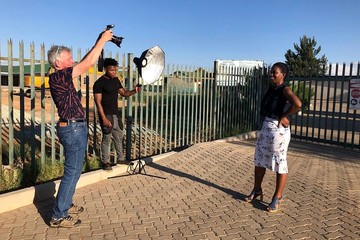
When photographer and educator Prof. Peter Glendinning of Michigan State University returned to South Africa this September, his goal went far beyond presenting artwork. Supported by the Alliance for African Partnership (AAP) Global Engagement Fund (GEF), Glendinning traveled to Johannesburg and Cape Town to advance a collaborative, arts-driven research initiative that is reshaping how youth experiences are documented and understood across Africa. For years, Glendinning has been developing Attached to the Soil, a project that pairs portrait photography with metaphor and narrative to explore young people’s aspirations, challenges, and identities. What began as a 2019 Fulbright project in South Africa has evolved—through sustained partnership—into a model for how the arts can generate meaningful social insight. This work aligns directly with AAP’s culture & society priority area, which supports projects that use cultural expression to address complex societal issues.
Strengthening a Continental Research Partnership
During his visit, Glendinning met with partners at University of Pretoria, one of AAP’s 12 member institutions, including Prof. Zitha Mokomane, a professor in the Department of Sociology and Deputy Dean for Teaching and Learning in the Faculty of Humanities, who has been conducting sociological analysis of the project’s original youth-created images and stories. The findings point to recurring themes: belonging, hope, fear, opportunity, and the persistence of socio-economic barriers.
With support from the Global Engagement Fund, the partners spent their time together outlining the next phase of the work—a potential 2027 pan-African expansion that could engage youth from multiple institutions and countries. The goal is to create one of the most comprehensive collections of narrative and visual data on African youth aspirations to date.
“The dataset we envision would allow us to compare experiences across countries, contexts, and cultures, using the arts as a bridge,” Glendinning explained. The in-person meetings made possible by the GEF award were essential for refining the research design, establishing a shared methodological framework, and preparing for future proposal development.
Cultural Institutions as Crucial Partners
Glendinning’s work emphasizes not only the creation of new cultural materials but also the preservation of Africa’s photographic heritage. While in Johannesburg, he met with leaders at the Bensusan Museum of Photography to advance efforts to secure funding for preserving its internationally significant collection of historic photographic equipment and images. He also held discussions at the Nelson Mandela Foundation, which held an 8-month exhibit of the project in 2023, exploring how youth-generated narratives from Attached to the Soil could contribute to public memory and civic learning through the foundation’s ongoing partnership. These engagements expand the project’s reach beyond academia and into community and heritage spaces—an approach deeply aligned with AAP’s focus on research for broader impact.
Festival Participation Amplifies Youth Perspectives
Glendinning’s work also reached public audiences during the inaugural Cape Town Photography Festival, where Attached to the Soil opened as an exhibition at the Simon’s Town Museum. The festival setting provided a platform for deeper conversation around the project’s themes. During a public dialogue, Glendinning and Malissa Louw, one of the original participants, spoke about the creative process and the realities behind the images—drawing attention to the power of youth storytelling as a form of social documentation.
He also led two workshops: a digital photography master-class for community members and a session for 40 students at the Cape Peninsula University of Technology. Both emphasized photography as a tool for reflection, empowerment, and evidence-gathering—illustrating how artistic training can support community insight and youth leadership.
A Model for Arts-Driven, Partnership-Based Research
Following the festival, Glendinning continued planning with Prof. Mokomane during her September visit to Michigan State University, which was also supported by the GEF. Together, they are refining the concept for the multi-country expansion and identifying ways for AAP partners to contribute to the next phase.
For AAP, Glendinning’s and project and his partnership with Mokomane exemplify the role arts and culture can play in addressing societal challenges: by elevating local narratives, strengthening community connections, and deepening understanding across diverse contexts. The Global Engagement Fund is central to this impact—making it possible for faculty like Glendinning to build the relationships and shared vision that long-term, equitable partnerships require.
As plans move forward, Attached to the Soil will offer youth across the continent the chance to tell their stories—and help researchers, educators, and communities better understand the world through their eyes.
By:
Baboki Gaolaolwe-Major
Monday, Dec 15, 2025
CULTURE AND SOCIETY
+2
Leave a comment
AAP Steps Up Its Global Footprint at Falling Walls 2025
The Alliance for African Partnership (AAP) strengthened its global visibility this year with a significantly expanded presence at the Falling Walls Summit in Berlin, signaling a new phase in Africa’s engagement with one of the world’s leading platforms for science, innovation, and societal impact.
The momentum follows a fast-growing collaboration between AAP and the Falling Walls Foundation, an alliance that has already produced tangible results. LUANAR in Malawi became the first institution in the consortium to launch a combined Falling Walls Engage and Lab, followed by the University of Botswana, which introduced the Gaborone Lab in 2025 and is preparing to roll out the Engage program in 2026. For AAP, these developments are more than individual wins: they mark the beginning of a wider rollout across the consortium, designed to strengthen research communication and create a more connected science engagement ecosystem across Africa.
At this year’s Summit, AAP member universities made their strongest showing yet. Lab winners from LUANAR and the University of Botswana took the stage in Berlin, showcasing African innovation to an international audience of scientists, investors, policymakers, and global media. Senior leaders from across the consortium also attended, led by Michigan State University’s Vice-Provost for International Studies and Programs, Professor Titus Awokuse.
During the delegation meeting with Falling Walls’ Executive Director, Andreas Kosmider, there was clear enthusiasm about the trajectory of the partnership. Discussions focused on deepening African participation in next year’s Summit and widening the circle of collaborators to include government ministries, policymakers, and funding agencies, an effort aimed at opening new channels for African–German cooperation.
For AAP, the stakes are high. Strengthening research communication equips young African scientists to tell their stories compellingly, improving public understanding and increasing the influence of research on policy. The Labs, meanwhile, function as early-stage innovation pipelines, giving African entrepreneurs exposure, mentorship, and a global platform for emerging ideas. The partnership also enhances institutional visibility, positioning African universities as active players in global science diplomacy.
Planning has already begun for next year’s Summit, with AAP leaders working on a coordinated roadmap to ensure a more visible and more diverse African presence in 2026. The goal is not simply to attend, but to shape the agenda by bringing African voices, research, and innovation to the centre of the global conversation.
As AAP expands its Falling Walls footprint, the partnership is beginning to look less like a program and more like an ecosystem-building catalyst. It is strengthening the consortium internally, opening new possibilities externally, and giving African researchers and innovators a much-needed global stage. And if the early signs are anything to go by, the walls separating African science from global visibility are starting to crack, making space for a new era of collaboration and opportunity.
By:
Baboki Gaolaolwe-Major
Thursday, Dec 11, 2025
CULTURE AND SOCIETY
+3

Leave a comment
Culture in collaboration: repurposing folklore for youth empowerment
Africa, particularly Nigeria, has a teeming young population who attempt to creatively navigate rapidly shifting identities within an unstable economy. For them, storytelling becomes a powerful tool through which sense is made of their place in the world. My research on folklore reimagination interrogates how traditional narratives are transformed into contemporary artistic endeavour that reflect the social realities of the youth. Folklore reimagination thus becomes an avenue for skill acquisition and empowerment in a society plagued with mismanaged resources and youth unemployment. By perceiving folklore as a living resource rather than a mere relic of the past, my research attempts to revive cultural heritage into digital content for the screen, constituting a source of self-employment for young creatives. In addition to addressing SDG number 8 – decent work and economic growth, this research fosters partnerships between culture and performance, youth and communities, tradition and modernity, and between local narratives and a global audience, offering education opportunities and reduced poverty. The research goal is to develop a toolkit which serves as both a learning and teaching aid for students and teachers of creative writing, further resonating with SDG number 4. Besides offering a platform for creativity and skills acquisition leading to self-employment, this research provides a model for a cultural engagement that is rooted in heritage preservation, shared creativity, collaboration and mutual respect. The research, which began in 2022, is divided into three distinct phases – toolkit draft, evaluation and update. Phase one involves the draft of the toolkit, which is divided into 5 parts and provides ethical insights and guidelines on working with folklore from the point of collection until reimagination. Offering mostly a theoretical guide, this phase is completed, and phase two is in progress. Phase two demands working closely with student writers to test the toolkit draft. Through a close collaboration with my students, aspects of the toolkit are currently being tested for effectiveness. Through feedback provided by the students, the toolkit will be updated with practical guides and sample scenarios. Further updates are expected following curated workshops, writers’ conference and creative labs. The creation of this toolkit resonates with the theme for this newsletter - art in partnership. Currently under the mentorship of Dr Jeff Wray of Michigan State University and Professor Chinenye Amonyeze of University of Nigeria, this research highlights that art, generally and folklore in particular, is not just a memory of set time in history, but a flexible material that can be reshaped into performances and creative narratives with social and economic value, while fostering partnerships driven by art. Folklore reimagination is, at its heart, an art of cultural partnership which depends on collaborations between researchers and creatives. By centring youths as creative agents, it leverages heritage to build skills, empowerment and self-employment. In this partnership, cultural memory is perceived and treated as a resource for innovation and economic growth. This art of partnership is therefore a sustainable one built on shared stories – stories that bear identities shaped by the past, present and future.
By:
Baboki Gaolaolwe-Major
Thursday, Dec 11, 2025
CULTURE AND SOCIETY
+1
Leave a comment
2025 AAP Consortium Delegates Welcomed in Classic Warm Heart of Africa Style
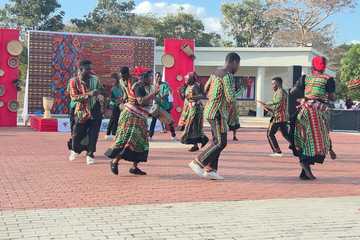
Delegates to the AAP Consortium Meeting in Malawi were welcomed with a vibrant cultural reception on the afternoon of Sunday, June 8, 2025, at the Bingu International Convention Centre (BICC) Amphitheatre. The event offered a rich immersion into Malawi’s cultural heritage, from traditional dances that transported participants across the country, to rhythmic music echoing tales of generations past, complemented by a curated selection of local foods and beverages. Set in the warmth of Malawian hospitality, the reception also featured interactive activities celebrating African cultural diversity through language games and cultural lightning talks.
Reception Planning
The reception was carefully designed to celebrate cultural identity and diversity while ensuring an enjoyable and memorable experience for all attendees. Preparations began with identifying local performance groups whose artistry authentically reflects the Malawian cultural brand. Consultations with selected groups ensured a thoughtful balance of energetic and soothing performances suited to a diverse audience, ultimately creating a programme that offered a cultural tour of Malawi through music and dance. Organisers also coordinated with the hosting hotel to incorporate Malawian cuisine on the cocktail menu, showcasing the country’s culinary heritage. With the performances and menu in place, the reception hosts curated additional interactive activities to promote cultural exchange and engagement among delegates.
Performances
The Malawi National Dance Ensemble, popularly known as the Kwacha Cultural Troupe, headlined the afternoon. Established in 1987, the renowned 30-member troupe delivered a captivating sequence of traditional dances representing Malawi’s regions. Their repertoire included Beni, Chimtali, Chisamba, Chiterera, Mjedza, Malipenga, Ingoma, Mganda, Vimbuza, and Gule Wamkulu—the iconic masked dance of the Chewa people. Adding to the ambiance, Owen Mbilizi and his team offered a rich musical experience featuring original compositions and Malawian classics, blending skilled instrumentation with harmonious vocals. Delegates responded with enthusiastic applause and cheers throughout the performances.
Local Foods
Participants enjoyed an assortment of local delicacies, including mandazi, zitumbuwa (banana fritters), malambe (baobab) juice, and thobwa (sweet beer), alongside familiar continental snacks. The refreshment break provided an informal space for delegates to mingle, exchange reflections, and deepen their appreciation of the cultural showcase.
Significance
The cultural reception successfully highlighted Malawi’s artistic and culinary traditions while fostering a shared appreciation for cultural diversity among delegates. It was an afternoon filled with warmth, laughter, and a strong sense of community, the perfect icebreaker for the week’s engagements.
By:
Baboki Gaolaolwe-Major
Tuesday, Dec 9, 2025
CULTURE AND SOCIETY
+1
Leave a comment
From Lens to Learning: Alex Mkwizu’s Transformative MSU Journey
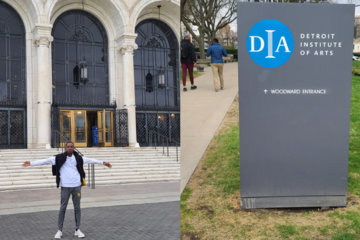
When Ibn Battutah said, “Traveling—it leaves you speechless, then turns you into a storyteller,” in his famous volumes Travels of Ibn Battutah, little did I know how profoundly this wisdom would echo throughout my eight-day experience at Michigan State University (MSU), East Lansing. I had the honor of attending as the overall winner of the InVision Africa Photography Competition, curated and sponsored by the Alliance for African Partnerships. This MSU initiative champions collaboration with African universities in art, culture, language, and other fields.
My time at MSU was eye-opening, filled with warm introductions to professors and artists. I met Professor Peter Glendinning from the Kresge Art Center, whose expertise in photography was inspiring; Professor Susan Wyche, who specializes in Human-Computer Interaction (HCI); and Mr Vadu Rodrigues, a Master of Fine Arts candidate, from whom I learned how his personal influences shaped his narrative and storytelling in photography. I also met many other colleagues, learning from their diverse experiences and creative processes.
These key encounters with experts and practitioners across different artistic disciplines opened doors for me to continue exploring, collaborating, and discovering new opportunities as a multidisciplinary creative artist passionate about the intersection of data, technology, and human-centered storytelling.
One of the most memorable encounters was with Professor Peter Glendinning and his body of work Attached to the Soil, a brilliant photographic project consisting of fifty portraits, oral history-based stories, and metaphoric representations of South African youth. He shared fascinating insights into his process, including an old, rare tool he once used to achieve a stroboscopic effect before the era of advanced cameras and editing software. What stood out most to me was that each photograph’s story was told from the perspective of the subject themselves, a powerful approach to narrative photography.
Another remarkable interaction was with Mr. Vadu Rodrigues and his artistic initiative Positive Africa, which seeks to challenge negative and biased narratives about Africa through photography and other art forms. Spending time with him in his studio was deeply insightful. I admired his practice of carrying a small notebook to document daily experiences and visual ideas that later influence his creative work. Observing his process from conceptualization to a finished art piece was a masterclass in intentional storytelling.
The culmination of this experience profoundly influenced my growth as a creative technologist and multidisciplinary artist. It also opened new doors for collaboration, one of which came through the MSU Museum CoLab Studio. I learned about a call for artists to create a piece exploring AI singularity in all its forms. Having subscribed to the studio’s newsletter, I received the announcement and decided to apply with a concept for a Virtual Reality immersive experience: a VR tribunal where sentient AIs bring cases against humans. Participants take the role of the defendant, while a generative AI judge, UbuntuBot, presides, modelled on African communal justice systems. The project merges storytelling, ethics, and digital futures.
As the old proverb goes, “Luck is when opportunity meets preparedness.” Fortunately, I was selected as one of the artists to collaborate with the MSU CoLab Studio, supported by a seed grant to bring this piece to life and exhibit it at the MSU Museum.
While the journey has only just begun with MSU Art Community, the experience with the Invision Africa Photography Competition and the exposure and connections made within MSU’s artistic community have left a lasting and transformative impact. It will continue to shape my creative path and remain a defining part of my artistic journey.
By:
Baboki Gaolaolwe-Major
Tuesday, Dec 9, 2025
CULTURE AND SOCIETY
+1
Leave a comment
Celebrating The Role of Art and Creativity in Shaping Global Partnerships
Photo by: Cris Dopher.
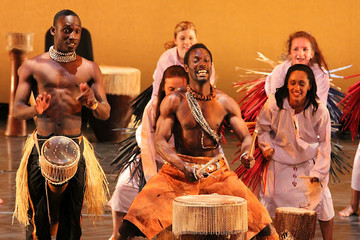
The arts represent the most imaginative and creative form of expression, integral to the civilizational progress of communities worldwide. In Uganda, an East African country where I originate, the arts are embodied and lived through music, dance, theatre, poetry, storytelling, folktales, and other forms of artistic engagement. The cultural, historical, social, and political meanings are etched in the art forms of the people. The arts are evolutionary and revolutionary, depicting the changes and continuities, and instigating shifts in the lived experiences of communities.
The arts have demonstrated their value in fostering community transformation across histories and territories. In Africa, the role of the arts has evolved in tandem with sociocultural, political, and economic changes in communities. The arts have offered platforms to sensitize communities around ever-emerging challenges, such as disease, climate change, conflicts, forced migration, gender-based violence, poverty, and cultural differences, among others. The functions of the arts have transcended stage performances and entertainment. Communities have deployed their creative and artistic potential to explore local solutions to prevailing problems. Within international development discourse on Africa, there is talk about ‘Africa finding local solutions to African problems’. Arts-oriented interventions that communities have applied and sustained offer a rubric on how communities in Africa can develop and implement sustainable and cost-effective solutions to local challenges.
The migratory and borderless natures of the creative arts, and their distinctiveness as a universal language, position them strategically to mediate differences, heal broken communities, quell tensions, and pluralize perspectives. The transnational and transcultural nature of the creative arts is evident in how they are constituted by cross-pollination of diverse cultural traditions, stories, and orthodoxies. The art forms are reinvented and reimagined at the intersection of other existing artistic practices. The aspect of embodiment that gives the arts their true meaning and essence centers people, as bearers of practices, meanings, and knowledge.
The global flow of art forms stems from local innovations. The being of the global dimension of the creative arts is rooted in their local value. Art proliferates by diffusion. The notion of art being born of people’s imaginaries enables its adaptation, assimilation, transcendence, and permeation across localities and contexts. Across Africa, the Black Diaspora, and global indigeneity, the commonalities between the arts demonstrate their universal reach, underscoring histories of migration, cultural connections, and intercultural interfaces.
Scholarship, practice, and research are media through which the arts have found expressions in transboundary contexts. In the realm of scholarship, collaborative research in the creative arts has increased, generating rich and diverse knowledge that has improved the human condition. The mobility of scholars and researchers between cultures and nationalities has augmented the exchange of expertise and circulation of artistic and cultural ideas and practices.
My current tenure as an African Futures Fellow at Michigan State University under the auspices of the Alliance for African Fellowship (AAP) is testimony to how the creative arts and artists can support global partnerships through scholarship and research. As a dance studies scholar at Makerere University in Uganda, East Africa, the program has supported me to connect with scholars at MSU and the US; co-write articles for publications; present at conferences; collaborate on artistic works with communities; and partner with researchers on ideation, incubation, writing, and submission of research grant ideas. Such engagements have facilitated the convergence of ideas, cultures, and people. My story represents a myriad of scholars who are leveraging the scholarly prowess of the creative arts to dissolve boundaries and dismantle barriers.
The arts have accelerated global partnerships through joint performances and collaborative creative processes. Worldwide, concerts, festivals, competitions, showcases, and productions have facilitated exchanges between artists, communities, artistic works, and audiences, and have supported the mobilization of resources through fundraising to care for those in need. The arts have been the heartbeat of globalization. Through exposure to different artistic forms, communities have peeked into cultures beyond their own. The creative arts carry a unique ability to communicate across generations, demographics, cultures, and geographies. Communities across the globe have united through the creative arts to draw attention to and amplify the voices of the oppressed.
The emergence of innovative technologies and platforms has empowered creatives worldwide to access wider audiences and listenership. Technology has democratized access and consumption of creative artworks globally. For Africa, the innovative platforms have enabled people to tell their own stories and confront stereotypical views through artistic and cultural products. Global business collaborations have emerged, resulting from the potential for the creative arts to circulate as commercially valuable products.
The creative arts possess inherent power to unite people across divides. As the world confronts challenges of conflicts, climate change, food insecurity, natural disasters, disease, social injustices, forced labour, and human trafficking, among others, the arts will continue to take center stage as strategic tools through which global communities can partner to find solutions to these problems. The creative arts have always been the heart that gives and receives.
By:
Baboki Gaolaolwe-Major
Thursday, Dec 11, 2025
CULTURE AND SOCIETY

Leave a comment