




Baboki Gaolaolwe-Major
(Alliance for African Partnership)
Administrative Assistant
Communication
Education
Governance
Marketing
Landscape Restoration: Cultivating Change Through Sustainable Orchards
When I first acquired my land in Goromonzi, I was immediately confronted by a stark reality. The property, situated on a slope, had no trees at all. The surrounding hills and mountains were equally bare, reflecting years of deforestation that had gradually transformed the landscape. My agricultural journey began in 2019 when I started farming on my one-acre piece of land. At the time, my focus was mainly on growing field crops. While the experience introduced me to the realities of farming and strengthened my appreciation for agriculture, I quickly realized that the methods I was using were not sustainable for the type of land I owned.
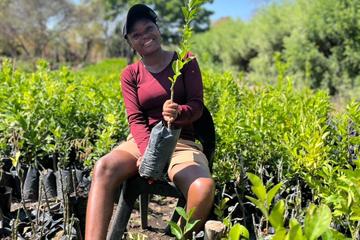
In 2020, I co-founded Young Women in Agriculture, an initiative aimed at empowering young women involved in farming and agribusiness. Through the organization, I had the opportunity to connect with many inspiring farmers and contribute to conversations around youth participation, sustainability, and innovation in agriculture. However, after taking my leave from the organization in 2024, my focus shifted toward more personal and collaborative farming journeys with like-minded young farmers whose work aligns with my own passion for sustainability and environmental restoration.Gashirai Matonga, a 27-year-old fruit farmer from Murehwa, Zimbabwe, has spent the past eight years specializing in grafted fruit tree production and fruit farming. Through her work, she supports farmers in establishing orchards while promoting practical and sustainable agricultural practices.
Our collaboration began through a family connection. During a visit to Murehwa, my father purchased one hundred plus, grafted fruit trees from an orchard operated by Gashirai and her parents in Murehwa called Zowa Farms. The trees included fruit varieties suited to local growing conditions. What initially appeared to be a simple purchase soon became the beginning of an important learning relationship. As I started planting the trees in Goromonzi, Gashirai became one of my primary sources of technical guidance and support. Beyond producing quality seedlings, she shares practical knowledge on orchard establishment, tree care, disease prevention, irrigation, and long-term orchard maintenance. Through seminars and direct farmer support, she equips growers with the skills needed to improve survival rates and increase productivity. From Gashirai I learnt a valuable lesson that propagated trees establish faster and reach fruit-bearing maturity sooner, allowing farmers to begin generating income within a shorter period. She also emphasizes the importance of thinking commercially by establishing orchards that are large enough to become economically sustainable over time.
Water management is another area where her expertise has proven invaluable. As she often explains, fruit production depends heavily on reliable access to water, especially in a changing climate where rainfall patterns are becoming increasingly unpredictable. She trains farmers to identify and manage common pests and diseases, particularly fruit fly infestations, which remain one of the biggest threats facing fruit producers in Zimbabwe.
Like many young agricultural entrepreneurs, Gashirai has faced numerous challenges. Fruit fly infestations once reduced her harvest significantly, highlighting the vulnerability of horticultural farming to pest pressures. Access to sufficient land for expansion has also remained a challenge. Yet despite these obstacles, she continues to grow her business while supporting other farmers, demonstrating resilience and determination that inspire many young people entering agriculture.
The impact of her work can already be seen directly on my own land. To date, I have planted approximately ninety-four fruit trees, mainly mango, lemon, and naartjie varieties. Slowly, these trees are transforming what was once barren land into a productive orchard. Beyond their economic value, the trees are contributing to environmental restoration by helping stabilize the soil, improving biodiversity, and restoring life to previously exposed land.
This journey has also changed the way I view farming itself. Initially, my focus was centered mainly on crop production and productivity. Today, I see agriculture as something much broader. Farming has the potential to restore ecosystems,
strengthen communities, and create sustainable livelihoods at the same time. Fruit trees, in particular, provide apractical way of combining environmental conservation with income generation. They help combat deforestation while creating future opportunities for farmers through fresh produce sales and value-added products. Looking ahead, our vision is to encourage more farmers and community members within Goromonzi and across Zimbabwe to establish orchards and adopt sustainable land management practices. Through collaboration between seedling producers, farmers, agricultural professionals, and local communities, it is possible to reverse the effects of deforestation while building stronger rural economies.
The International Year of Women Farmers provides an important opportunity to recognize contributions being made by young women such as Gashirai Matonga. Her work extends far beyond producing seedlings. Through mentorship, entrepreneurship, and knowledge sharing, she is helping shape a more sustainable agricultural future for young farmers in Zimbabwe. My own journey toward restoring a small corner of Goromonzi would have looked very different without her expertise and encouragement. It serves as a reminder that meaningful change often begins with collaboration. When young farmers work together, combining knowledge, resources, and shared vision, they can restore landscapes, strengthen communities, and create opportunities for future generations.
By:
Baboki Gaolaolwe-Major
Thursday, Jun 4, 2026
AGRI-FOOD SYSTEMS
+1
Leave a comment
African Futures Scholar Azinne Azipue
Meet Dr. Ezinne Ezepue, Lecturer of Film at University of Nigeria, Nsukka. 🌟Her research focuses on reimagining folklore and adapting traditional stories for the screen, exploring how cultural narratives can be preserved and shared through film. 🎬Although she participated virtually throughout the program, Dr. Ezepue described it as an interesting experience and expressed her gratitude to for the opportunity to take part in the program. ✨
By:
Baboki Gaolaolwe-Major
Wednesday, Apr 1, 2026
CULTURE AND SOCIETY
+1
Leave a comment
Feminist Echoes: Uniting Young Women for Political Emancipation
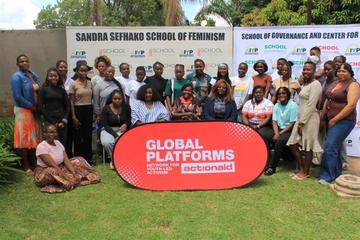
On 25 March 2026, the African Institute for Young People (AIYP) successfully hosted Feminist Echoes: Uniting Young Women for Political Emancipation at the Global Platform Youth Hub. The training brought together 35 young women from diverse backgrounds—including students, young mothers, and school dropouts—and equipped them with leadership, advocacy, and political engagement skills through a participatory feminist circle approach. The initiative was implemented under the Sandra Sefhako School of Feminism, a flagship program of AIYP dedicated to mentoring and empowering young African women to lead in sexual and reproductive health and rights (SRHR), human rights, climate justice, and political and economic participation. The program seeks to dismantle patriarchal barriers, strengthenwomen’s participation in decision-making, and build solidarity across communities and nations.
Named in honor of Sandra Sefhako, a distinguished youth activist and Mandela Washington Fellowship alumna from Botswana, the school celebrates her legacy of advancing women’s rights and gender equality in Africa. It provides mentorship, capacity-building, advocacy training, and leadership development to equip participants with the skills, knowledge, and confidence to lead transformative change in their communities. The training utilized culturally grounded methodologies inspired by the Shona nhanga tradition, alongside intergenerational dialogue, group discussions, and roundtable engagements. Esteemed leaders, including Senator Itayi Mwanza, Councillor Leah Chidamba, and former Epworth Mayor Annah Sande, shared their lived experiences in politics, offering mentorship and practical insights into navigating governance spaces.
Participants deepened their understanding of feminism, Ubuntu, and solidarity, while building confidence, networks, and actionable commitments to engage in leadership and political processes. The training underscored the importance of early mentorship, inclusivity, and the creation of safe spaces for emerging women leaders.
Overall, Feminist Echoes strengthened the capacity of young women to influence governance, foster collective empowerment, and advance inclusive political participation, in alignment with the enduring legacy of Sandra Sefhako.
Introduction
The African Institute for Young People (AIYP) convened Feminist Echoes:Uniting Young
Women for Political Emancipation at the Global Platform Youth Hub as part of the Youth in Elections Project. The initiative was designed as a participatory feminist circle contributing to the broader vision of the Sandra Sefhako School of Feminism, a flagship program committed to mentoring and equipping young African women with the skills, knowledge, and confidence to lead in political, social, and economic spaces.Grounded in the traditional Shona concept of nhanga as a safe space for guidance, mentorship,
and socialization, Feminist Echoes created an inclusive platform for young women to engage in dialogue, storytelling, and intergenerational exchange with experienced women leaders. The initiative directly responds to the persistent underrepresentation of young women in governance by fostering leadership, strengthening networks, and building practical skills in advocacy, negotiation, and coalition-building.
Through this feminist circle, participants were empowered to engage more actively and
confidently in political processes, share lived experiences, and develop actionable strategies for influencing decision-making. By nurturing solidarity, promoting feminist values, and transforming individual aspirations into collective action, Feminist Echoes contributes to advancing inclusive governance and cultivating a new generation of transformative women leaders in line with the legacy of the Sandra Sefhako School of Feminism.
Objectives
To establish a safe and inclusive feminist platform that enables at least 35 young women to share experiences, build solidarity, and engage in structured dialogue on political participation during the training.
To enhance the leadership, advocacy, and political engagement capacities of at least 35 young women through mentorship, peer learning, and skills-building sessions, with participants demonstrating improved knowledge and confidence by the end of the training.
To support at least 35 young women to develop practical, actionable strategies and commitments for engaging in political processes and decision-making, with clear follow-up actions identified for implementation beyond the training.
Methodologies Used
The activity utilized a participatory, learner-centered, and culturally grounded methodology informed by the Shona concept of nhanga, which emphasizes safe spaces for mentorship, guidance, and socialization. This approach ensured inclusivity and created an enabling environment for experiential learning, open dialogue, and knowledge exchange among participants and facilitators. An intergenerational dialogue model was employed to facilitate direct engagement between young women participants and experienced women leaders, including Senator Itayi Mwanza, Councillor Leah Chidamba, and former Epworth Mayor Annah Sande. Through storytelling and experience-sharing, participants gained practical insights into leadership pathways, barriers to participation, and strategies for navigating political and civic spaces. The session was facilitated using inclusive moderation techniques by Tsitsi Patience Mashiri to ensure equitable participation and safe engagement.
The methodology further incorporated peer-to-peer learning through structured group
discussions and roundtable dialogues. These sessions enabled participants to critically reflect on key thematic areas, including feminism, ubuntu, and solidarity, while co-creating context-specific strategies for enhancing women’s political participation. This approach strengthened critical thinking, collaboration, and collective problem-solving.Networking and relationship-building were integrated as a core component of the methodology, fostering cross-sectoral linkages among participants from diverse political, social, and economic backgrounds. This contributed to the development of sustained support systems and collaborative engagement beyond the training.
Overall, the methodology combined experiential learning, intergenerational mentorship, peer learning, and culturally relevant frameworks to promote leadership development, collective empowerment, and inclusive participation. It aligns with the values underpinning the Sandra Sefhako School of Feminism, particularly feminism, ubuntu, and solidarity, while reinforcing shared responsibility and agency among young women.
Summary of Proceedings
The training was successfully held on 25 March 2026 at the Global Platform Youth Hub,
bringing together 35 young women from diverse backgrounds, including students, young
mothers, and school dropouts, reinforcing the principle of inclusivity. The diversity of
participants enriched discussions, ensuring a wide range of perspectives on women’s
participation in leadership and governance. The sessions were structured into thematic segments to maximize learning and engagement. The first segment focused on mentorship, where facilitators shared guidance on leadership and governance, drawing on their personal experiences and professional journeys. This provided participants with practical insights into the realities of leadership and pathways to active political participation. The second segment emphasized feminism, ubuntu, and solidarity as strategic frameworks for political engagement. This participatory session encouraged equal contributions from all participants, fostering dialogue and reflection on how these values can be applied to advance women’s leadership and influence in governance processes. The training concluded with participants developing actionable commitments, pledging to pursue leadership and governance opportunities within their communities. Overall, the sessions enabled participants to gain knowledge, confidence, and practical skills, equipping them to engage meaningfully in political and civic spaces.
Outcomes (Results)
By the conclusion of the training, participants demonstrated a significant improvement in their understanding of feminist principles, Ubuntu, and solidarity, gaining clarity on how these concepts can be applied to advance gender equality and women’s political participation. Young women acquired practical strategies for leadership, advocacy, and coalition-building, strengthening their capacity to engage meaningfully in governance and decision-making processes. The training fostered an inclusive political culture through open dialogue, peer learning, and collective reflection. Participants left with increased confidence, a stronger sense of agency, and a reinforced commitment to pursue leadership opportunities. Overall, the training empowered young women to translate knowledge and mentorship into tangible actions that advance their political emancipation and civic engagement.
Lessons Learnt
A key lesson from the training was the critical role of seasoned leaders in opening doors for young women, highlighting that today’s participants are tomorrow’s leaders. The sessions demonstrated that young women possess the passion, potential, and capacity to drive positive change in their communities and political spaces when given the right guidance and opportunities. The training also underscored the mentorship gap for emerging women leaders, as many participants reported limited access to guidance, networks, and practical insights needed to navigate political and civic spaces effectively. This highlighted the importance of structured mentorship programs and safe, inclusive spaces—like the nhanga circles—where young women can learn from experienced leaders, exchange ideas, and gain practical strategies for leadership. Additionally, the value of intergenerational dialogue became evident, with interactions between seasoned leaders and young women providing inspiration, encouragement, and actionable insights. Participants learned not only about leadership successes but also about overcoming challenges and systemic barriers, reinforcing the need for continuous engagement, capacity building, and platforms that foster solidarity, Ubuntu, and feminist principles to strengthen the next generation of women leaders.
Recommendations
Based on the training experience, it is recommended that future trainings intentionally include very young leaders, starting from high school, to introduce them early to concepts of leadership, feminism, Ubuntu, and solidarity. Early engagement will nurture political awareness, confidence, and civic responsibility, enabling young women to build a strong foundation for future leadership roles. It is also important to ensure that the training environment remains inclusive and accessible to all participants, including providing facilities and accommodations for people with disabilities. Creating such an enabling environment will foster equitable learning, ensure diverse voices are heard, and strengthen the overall impact of the program in developing capable, confident, and
inclusive young women leaders.
Conclusion
The training successfully created a proactive, mentorship-driven space that equipped young women with the knowledge, skills, and confidence to navigate political and governance spaces effectively. Through presentations, intergenerational dialogue, group discussions, and networking, participants translated ideas into actionable strategies for political engagement and leadership. The training reinforced the values of feminism, Ubuntu, and solidarity, encouraging participants to work collectively and support one another in their leadership journeys. Overall, Feminist Echoes: Uniting Young Women for Political Emancipation contributed significantly to building a generation of confident, politically engaged young women prepared to influence decision-making processes and shape inclusive, equitable governance in their communities and beyond.
By:
Baboki Gaolaolwe-Major
Monday, Mar 30, 2026
YOUTH EMPOWERMENT
+1
Leave a comment
African Futures Scholar Alfdaniels Mabingo
“I can't wait to go back and be kind of a new scholar, new researcher, new academic leader, and new responsible citizen of this world.” ✨Meet Dr. Alfdaniels Mabingo, Lecturer of Performing Arts and Film at Makerere University in Uganda. His research for this fellowship explores dance education, pedagogy, and leadership particularly focusing on empowering youth through the arts in Uganda. He describes the program as a transformative experience in his early research career, calling it a true rite of passage that marked a significant milestone in his academic and professional growth.Through collaboration, mentorship, and knowledge exchange, the program has supported Dr. Alfdaniels Mabingo in further developing his leadership capacity and expanding his research experience. It has offered him a valuable space to continue refining his scholarly voice while building meaningful connections across disciplines and borders. 🌍
By:
Baboki Gaolaolwe-Major
Tuesday, Mar 24, 2026
CULTURE AND SOCIETY
+1
Leave a comment
African Futures Scholar Seynabou Sene
“This collaborative environment has greatly enhanced my work.” 🌱Meet Dr. Seynabou Sene, PhD in Plant and Microbial Biotechnology at Cheikh Anta Diop University of Dakar, Senegal.She reflects on her journey: “I will return home with a broader scientific perspective, strengthened analytical skills, and enhanced leadership experience.” ✨The program supported Seynabou in expanding her research outlook, refining critical skills, and preparing her to lead impactful scientific initiatives within her academic and research community.
By:
Baboki Gaolaolwe-Major
Wednesday, Mar 18, 2026
EDUCATION
+1
Leave a comment
African Futures Scholar Assilah Agigi Mocke
“The program’s benefit is immeasurable, it’s something you have to experience.” 🌟Meet Dr. Assilah Agigi Mocke, Senior Lecturer in Supply Chain Management at the University of Pretoria, South Africa.She reflects on her journey: “It has deepened my resolve as a lecturer, as an academic in the field. I now have a vision for my future, what I want to bring back to the African continent, and how I can create real impact.” ✨Through the program, Assilah was able to broaden her academic connections, engage with diverse perspectives, and gain the tools and inspiration to translate her research into meaningful impact across Africa.
By:
Baboki Gaolaolwe-Major
Thursday, Mar 12, 2026
EDUCATION

Leave a comment