


Baboki Gaolaolwe-Major
(Alliance for African Partnership)
Administrative Assistant
Communication
Education
Governance
Marketing
Advancing Equitable Global Partnerships in Nutrition and HIV Research
Summary of the Award
The Alliance for African Partnership (AAP) award was a catalytic institutional investment that transformed the trajectory of my global health research program. Nested within the International AIDS Society–funded CIPHER study, the AAP award (RN100284; $100,000) supported a focused investigation of micronutrient deficiency—specifically vitamin D and long-chain polyunsaturated fatty acids (PUFAs)—as modifiable determinants of functional outcomes among school-aged Ugandan children with and without perinatal HIV exposure or infection. This strategic expansion sharpened our hypotheses, deepened cross-continental partnerships, and laid the empirical foundation for a sustained, externally funded program spanning child development and aging with chronic HIV.
Advancing Global Health and Nutrition Science
The award enabled systematic measurement of nutritional biomarkers in the full cohort rather than a limited subsample. This strengthened statistical power and allowed us to determine whether micronutrient deficits compounded baseline impairments and influenced trajectories of cognitive, socioemotional, and quality-of-life outcomes over 12 months. Importantly, AAP funds supported comprehensive assessment of physiologic stress and detailed abstraction of antiretroviral therapy exposure histories—critical for disentangling nutritional, immunologic, and psychosocial influences on child development in HIV-affected settings.
Our findings demonstrated that variation in vitamin D status and fatty acid profiles were biologically meaningful contributors to growth, executive function, and socioemotional adjustment. Nutrition emerged not as a background covariate but as a mechanistic driver of morbidity risk. In sub-Saharan Africa—where perinatal HIV exposure remains common and nutritional vulnerability persists—identifying modifiable micronutrient pathways has direct implications for scalable intervention strategies that complement antiretroviral therapy.
The scientific impact extended beyond childhood. Signals observed in the AAP-supported analyses informed refined hypotheses regarding the vitamin D metabolome as a determinant of cognitive development and decline across the life course. This work directly supported successful NIH funding, including an R21 in adolescents (R21HD088169), extended longitudinal follow-up in children (R01NS122510), and a recent R01 in older adults (R01AG087191) with and without chronic HIV infection. Across these awards and supplements, more than $8.0 million in extramural support has been secured, all building on the mechanistic insights strengthened by the AAP investment. Together, these projects examine nutrition, immune dysregulation, microbiome variation, and neurocognitive outcomes within a unified framework of functional survival.
Partnership and Collaboration Dynamics
The AAP award was intentionally structured to deepen equitable partnership between Michigan State University and the Uganda Society for Health Scientists (USHS). By co-leading the nutrition-focused expansion with Ugandan collaborators, including Dr. Sarah Zalwango and Dr. Philippa Musoke, we ensured that research questions were locally relevant, operationally feasible, and mutually beneficial. The award supported dedicated in-country research personnel and reinforced long-standing cohort infrastructure, strengthening data quality and local capacity.
This infrastructure proved especially critical during the turbulent global research policy environment of 2025. Because of the systems and trust built through AAP-supported collaboration, our team was positioned to absorb external shocks while maintaining continuity of data collection and scientific productivity. The partnership model fostered bidirectional learning and reinforced a sustainable framework for global research engagement.
Within MSU, the award deepened collaboration across Nutrition, Epidemiology, Psychiatry, Neuropsychology, and Biostatistics. Engagement with colleagues such as Dr. Jenifer Fenton and multidisciplinary collaborators created synergy that directly contributed to subsequent NIH R21 and R01 successes. The integration of nutritional epidemiology with neuropsychology, immunology, and global mental health allowed us to move beyond siloed inquiry toward a biopsychosocial model of risk and resilience. Support for student training was another critical dimension of impact. AAP-supported data generated dissertation research for two PhD students focused on fatty acids, vitamin D, and neurodevelopment, and supported a postdoctoral fellow whose ongoing work extends our African partnership into microbiome and metabolomic investigation. These investments align with MSU’s land-grant mission and AAP’s commitment to sustainable, capacity-enhancing collaboration.
Follow-Up Work and Field Advancement
The momentum generated by the AAP award continues to shape our research trajectory. In children, the R01NS122510 study is developing and validating a composite risk index to identify adolescents at high risk for neurocognitive impairment, integrating nutritional, immunologic, and virologic predictors. In older adults, the R01AG087191 project examines vitamin D bioavailability, gut microbiota composition, and dementia risk among individuals aging with chronic HIV infection. Together, these studies represent a life-course continuum directly traceable to the original AAP-supported mechanistic inquiry.
We are also translating these findings into intervention strategies. For children, we are designing biopsychosocial supportive care models that incorporate nutritional optimization alongside psychosocial stress mitigation. For adults, we are investigating modifiable determinants of premature cognitive aging—including micronutrient status and gut dysbiosis—with the goal of preventive intervention. Emerging data on variation in the vitamin D metabolome position our team to address critical gaps in understanding how vitamin D functions within mechanistic nutrition trials, further strengthening our competitive edge.
In sum, the AAP award was more than seed funding; it was a strategic inflection point for my research program. It strengthened transcontinental collaboration, refined mechanistic hypotheses, expanded training pipelines, and positioned our team for sustained NIH funding success. By providing early support that led to our appreciation of consequential variations in vitamin D metabolome, this project has positioned us to continue advancing health globally and domestically with the United States. Specifically, clinical guidelines (Endocrine Society Clinical Practice guidelines and the United States Health and Preventive Task force) on vitamin D has recently been updated and the excitingly, these updates and emphasized knowledge gaps directly align with the innovative insight on vitamin D metabolome we observed as part of the AAP supported projects. There is no doubt that the scientific, collaborative, and translational ripple effects of this investment continue to shape our contribution to global health and nutrition science as we increasingly move towards interventions informed by them.
By:
Baboki Gaolaolwe-Major
Tuesday, Mar 17, 2026
HEALTH AND NUTRITION
+1
Leave a comment
Beyond the Playing Field: Advancing Global Mental Health for International Student-Athletes
Reflecting on who I am and what makes me who I am, it becomes evident that my research interests parallel my lived experiences. As a Japanese American woman raised in the United States and a former student-athlete, I grew up in spaces where perseverance was praised (and often expected), and vulnerability was often considered a weakness. Mental health was rarely discussed openly, and strength was frequently associated with self-reliance. Within athletics, performance and success often came before personal health and well-being. Over time, the intersection of these cultures contributed to my first experiences with mental health challenges and significantly molded the lens through which I view and understand health, struggle, and support in sport.
My current work focuses specifically on international student-athletes (ISAs) competing in the National Collegiate Athletic Association (NCAA). Although they represent roughly 5% of NCAA athletes, ISAs account for over 25,000 individuals who navigate the complexities of higher education, elite sport, and cultural transition. These athletes often face challenges that may include but are not limited to language barriers, pressure to perform, social isolation, and culture shock – all of which can impact mental health and overall well-being.
Given this context, my research journey has been shaped through meaningful collaboration across institutions. My first published study qualitatively explored mental health and help-seeking behaviors among NCAA Division I ISAs throughout their transition, in collaboration with my master’s advisor, Matt Hoffmann, at California State University, Fullerton. The findings underscored the prevalence of mental health stigma as a barrier to help-seeking and the importance of peer support in navigating cultural transitions. Building on this work, I recently co-authored a scoping review of ISA mental health and help-seeking with my current doctoral advisor, Dr. Leapetswe Malete, at Michigan State University, which is now in press. Currently, Dr. Malete and I are further expanding on this research by examining how support from fellow international student-athletes evolves across the phases of cultural transition and which types of support are most meaningful or missing.
Collaboration has strengthened and continues to strengthen this work in important ways as each member of our research team(s) brings their own lived experiences shaped by time spent studying, working, or living in different countries. These diverse perspectives encourage us to question assumptions and remain considerate of cultural nuance and context. In this research that focuses on international populations, cultural responsiveness must be actively addressed. Ongoing conversation allows for the design of studies that are inclusive and sensitive to the intricacies of identity and culture across various contexts. As I have been presently learning, this collaborative approach is imperative for remaining both reflective and reflexive of world perspectives, instead of a single institutional lens.
Across these projects, my colleagues and I purposefully used qualitative methods to amplify the voices of those who are often overlooked or unheard. Through in-depth, semi-structured interviews with NCAA ISAs, I aim to create a safe space for participants to share their unique stories to produce actionable research grounded in lived experiences. Many participants are highly visible on their sport’s playing field, but are frequently unheard at an institutional level. That said, this approach seeks to help bridge that gap and inform tangible changes within universities.
With the continued increase in international student migration around the world, institutions are becoming increasingly diverse and interconnected. As universities expand global partnerships, including collaborations between African institutions and U.S. universities through networks such as the Alliance for African Partnership, it becomes increasingly important to recognize how well-being is affected by cultural transition. Therefore, my research aims to advance understanding of global mental health by highlighting how migration, stigma, and culture intersect within an understudied population (i.e., ISAs). By applying a theoretical framework, this research illustrates that mental health and well-being evolve over time within transitional contexts. Interpreting these shifts allows institutions to anticipate challenges within these communities, rather than react when distress becomes visible.
While our current research has examined ISAs migrating to the U.S., its findings have practical implications for university policies and student support systems across the globe. Institutions that enroll international students may benefit from intentionally creating opportunities for connection early in the transition process. Our findings suggest that ISAs often value relationships with others who share comparable experiences. Furthermore, peer support from other international students is consistently reported as the most meaningful and helpful form of connection. By proactively facilitating these connections, institutions can shift from reactive toward preventative approaches that foster inclusive environments where not just ISAs, but all students are able to experience more consistent states of overall positive well-being.
Conducting research with ISAs, has been both rewarding and humbling. Mental health remains stigmatized in many contexts, resulting in difficulty recruiting participants and in quickly cultivating a space that feels psychologically safe enough for them to open up about personal struggles. Learning and engaging in qualitative research has constantly reminded me that my own background shapes how I interpret and interact with the participants and the data. These projects have reinforced the importance of mindfulness and reflexivity in research, and in recognizing that I inevitably play a role in how others’ lived experiences are conveyed.
While our research thus far focuses on ISAs in the U.S., cultural transition and student well-being are worldwide experiences. Looking ahead, I hope to continue expanding this work through engagement with researchers and institutions across nations, to better understand the nuances of various cultural contexts, the challenges they may bring, and their effects on wellness. Moreover, it is my hope that this research contributes to global conversations on mental health and encourages more translational research into preventive and inclusive approaches to supporting students across diverse institutional settings.
By:
Baboki Gaolaolwe-Major
Thursday, Mar 5, 2026
HEALTH AND NUTRITION
+2

Leave a comment
From Research to Impact: Strengthening Adolescent Nutrition in Malawi
In alignment with AAP’s promotion of and support for global health and nutrition through collaborations, Aaron Chikakuda is a 2025 awardee of the Dissertation Research Support Fund to facilitate data collection for his dissertation research in Malawi. Aaron is completing a PhD in human nutrition in the Department of Food Science and Human Nutrition under the guidance of Dr. Lorraine Weatherspoon at Michigan State University (MSU).
His research is titled “Efficacy of Weekly Iron and Folic Acid (WIFA) Supplementation Among Adolescent Girls (15– 19 years) in Malawi”.
Given the disproportionately high rates of nutritional anemias in adolescent girls (35%) in conjunction with high teenage pregnancies in Malawi (average 30% in girls 15-19 years of age), a weekly iron and folic acid supplementation program in female adolescents was initiated. The major aim of the weekly iron and folic acid supplement program (WIFA) is to address adherence and poor outcome challenges of the WHO main stay program of daily iron and folic acid supplementation in pregnant women. Most women start receiving prenatal supplements later than the recommended time of pre-conception or very early in pregnancy to maximize benefits of folic acid supplements in particular to curb adverse nutritional and pregnancy outcomes. Because the efficacy of the WIFA program is not known in Malawi, funds from the AAP Dissertation Research Support Fund Award, are assisting Aaron in investigating whether adolescent females receiving weekly iron and folic acid supplements have improved health and nutrition outcomes compared to a control sample. Data collection includes sociodemographic and nutrition intake information in addition to hematological parameters: hemoglobin, serum folate and red blood cell folate; anthropometric indices: body mass index (BMI) and mid upper arm circumference (MUAC), as well as pregnancy outcomes in a subgroup such as weight gain in pregnancy, gestational age, birth weight and birth defects (neural tube defects).
This is a three-phase study. Phase I of the study encompasses a pre-post research design with intervention and control groups (total n=750). Female adolescents that are receiving iron and folic acid supplements comprise the intervention arm of the study and female adolescents not receiving iron and folic acid supplements are the control group. The study focuses on two districts in central Malawi (Lilongwe and Dedza) and two districts in southern Malawi (Blantyre and Mwanza) based on high prevalence of teenage pregnancies in the areas. Data collection includes baseline followed by endline after 6 months to evaluate the efficacy of the program. The second phase of the study is a qualitative assessment using in-depth interviews and focus group discussions to document experiences of adolescent females taking part in the weekly iron and folic acid supplementation program as well as key informant interviews to document experiences, challenges and insights of officers from relevant governmental (Ministry of Education and Ministry of Health) and non-profit (UNICEF, World Food Program and Evidence Action) organizations involved in the program. In the third phase a subsample of pregnant adolescents will be followed up until delivery. Upon delivery of the baby, assessments on pregnancy outcomes will be conducted and documented. Laboratory staff and graduate students at Lilongwe University of Agriculture and Natural Resources as well as teachers and school nurses in Malawi are providing valuable in country data collection and study monitoring assistance. The study results will be published in scientific journals and disseminated through conference presentations and policy briefings for the ministry of health and ministry of education in Malawi and other relevant stakeholders.
After completing PhD training at Michigan State University, Aaron intends to build on this work, by continuing to generate evidence and provide policy direction on health and nutrition in women and children. He intends to continue nurturing collaborations with The Ministry of Education Science and Technology Department of School Health and Nutrition, Ministry of Health Department of Nutrition, non-profit organizations, Lilongwe University of Agriculture and Natural Resources, Michigan State University and other international partners. Aaron also plans to help build capacity in health and nutrition through training of graduate level nutrition experts by equipping them with skills in evidence-based practice, implementation of community sensitive nutrition and development projects, advanced research, and inform public health policies in Malawi. He greatly appreciates the AAP Dissertation Research Support Fund Award, which was critical for covering research expenses for PhD degree completion following termination of his USAID support mid-program. It has also opened numerous opportunities for further collaboration and career growth.
By:
Baboki Gaolaolwe-Major
Thursday, Mar 5, 2026
HEALTH AND NUTRITION
+1

Leave a comment
Strengthening Child Mental Health in the DRC: From Early Caregiving to School-Age Resilience
Children’s mental health is deeply shaped by the environments in which they grow—and at the center of that environment is the family. In low- and middle-income countries (LMICs), where families often navigate poverty, limited infrastructure, and fragile health systems, understanding how early caregiving influences long-term mental health is both urgent and transformative.
A new NIH-funded longitudinal study led by faculty at Michigan State University is addressing this critical question in the Democratic Republic of the Congo (DRC). Building on a previous early childhood parenting intervention, the project examines whether strengthening caregiving practices early in life can produce lasting mental health benefits as children reach school age.
At the heart of the study is the Mediational Intervention for Sensitizing Caregivers (MISC), a year-long, biweekly parenting support program designed to enhance responsive caregiving and promote children’s early cognitive and emotional development. While programs like MISC have demonstrated clear short-term benefits, far less is known about whether these early gains translate into sustained improvements in mental health as children grow older. This study seeks to close that gap.
Researchers are following 100 children whose mothers previously completed the MISC intervention and 114 children whose mothers received standard care. Over a three-year follow-up period, children’s mental health is assessed annually using a comprehensive set of tools, including measures of executive functioning and self-regulation, emotional and social communication assessments, video-recorded caregiver–child interactions, standardized mental health checklists, and innovative eye-tracking technology that measures children’s responses to short video scenes depicting distress and comfort. By combining behavioral observation with physiological and cognitive indicators, the study offers one of the most comprehensive examinations of child mental health trajectories in the region.
Importantly, the project does more than evaluate whether MISC works—it seeks to understand how and why it works. Researchers are examining family social factors such as caregiving environment, parental self-efficacy, and school attendance, alongside maternal mental health and child growth indicators. These factors are analyzed both as pathways through which the intervention may influence outcomes and as independent predictors of child mental health. The study also takes a dyadic perspective, recognizing that child and caregiver mental health are deeply interconnected. By assessing reciprocal influences over time, the research captures the dynamic processes that may strengthen resilience—or heighten vulnerability—within families.
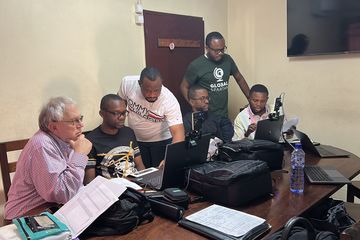
The study is led by Dr. Itziar Familiar-Lopez and Dr. Michael Boivin of the Department of Psychiatry at Michigan State University. Dr. Boivin brings more than three decades of experience in child neurodevelopment research in Sub-Saharan Africa, while Dr. Familiar-Lopez contributes extensive expertise in maternal mental health, family systems, and longitudinal global mental health research. In-country leadership and partnership are central to the project’s success, with Dr. Desire Tshala and his team at the Institute National pour la Recherche Biomedical working closely with Dr. Zacharie Mulumba, a Congolese researcher and Mandela Washington Fellow.
For Dr. Mulumba, the project has been both professional and deeply personal. After being selected among more than 10,000 applicants for the Mandela Washington Fellowship, he completed a six-week Civic Engagement program at Michigan State University. There, an introduction to Dr. Boivin sparked a collaboration that would take him from East Lansing to Kahemba, a remote region in the DRC heavily affected by konzo—a neurological condition linked to cyanide exposure from improperly processed cassava.
Before returning home, Dr. Mulumba received training in eye-tracking technology, which was being used for the first time in this setting. Soon after, he traveled by road for two days—nearly 19 hours on the second day alone—to reach Kahemba. The challenges were immense: impassable roads, limited infrastructure, families relying on seasonal forest activities for survival, and children affected by konzo with severe motor impairments. Despite these barriers, the research team conducted eye-tracking assessments with approximately 130 children. Community members were welcoming, and conversations with parents—particularly mothers—offered powerful insight into daily realities and resilience.
Returning to Kinshasa after weeks in Kahemba felt, in Dr. Mulumba’s words, like “entering another world.” The experience underscored a central lesson of global health research: local context, patience, and partnership are indispensable.
Mental health disorders account for a growing burden of disease globally, yet prevention strategies tailored for LMIC contexts remain limited. By establishing whether early parenting support produces durable mental health benefits—and identifying the family and developmental mechanisms that drive those effects—this study provides critical evidence for scalable, culturally responsive interventions.
At its core, this work reminds us that strengthening caregiver–child relationships early in life may be one of the most powerful tools we have to promote resilience, dignity, and long-term well-being. Through sustained partnership and shared commitment, this collaboration between researchers in the United States and the DRC is helping to shape a future where children’s mental health is supported not only in theory, but in practice—within the communities where it matters most.
By:
Baboki Gaolaolwe-Major
Friday, Mar 20, 2026
HEALTH AND NUTRITION
+1
Leave a comment
African Futures Scholar Gladys Gakenia Njoroge
“As I leave here, I want to build a product that is of quality, something that can be used out there in the world, something bigger than myself.” 🌟Meet Dr. Gladys Gakenia Njoroge, Assistant Professor and researcher in Biostatistics at United States International University - Africa, Nairobi, Kenya.She reflects on her journey: “This experience gave me a chance to concentrate on my work, I wake up every day thinking about my project and growth.” ✨The program supported Gladys in refining her skills, focusing on impactful work, and preparing her to create meaningful contributions beyond her research.
By:
Baboki Gaolaolwe-Major
Wednesday, Mar 4, 2026
EDUCATION
Leave a comment
Bridging Traditional Medicine and Data Science: A Transcontinental Approach to Diabetes-Related
As the global health community increasingly recognizes that the most persistent health challenges require collaborative interdisciplinary solution, the intersection of traditional knowledge and modern statistical innovation offers particularly promising avenues for advancement. Through the Alliance of African Partnership’s (AAP) African Futures Program, my year as a visiting scholar at Michigan State University in (MSU) has embodied this collaborative spirit, marrying Africa’s rich ethnobotanical heritage with innovative biostatistical methodologies to address one of the continent’s most pressing, yet often overlooked, diabetes complications.
Diabetes-induced erectile dysfunction (DIED) affects an estimated two-thirds of male diabetic patients globally, with prevalence rates exceeding 71% in African populations. Despite these staggering figures, conventional pharmacological interventions, primarily phosphodiesterase type 5 inhibitors, offer merely symptomatic relief while failing to address underlying hormonal and metabolic dysregulation. Moreover, these treatments remain inaccessible to many due to cost, adverse effects and contraindications in cardiovascular compromised patients. This clinical gap has driven my research focus toward evaluating indigenous medicinal plants that have supported African communities for generations, specifically Mondia whitei (Mw) and Withania somnifera (Ws), traditionally renowned for their adaptogenic and aphrodisiac properties.
The African Futures Program has provided the essential infrastructure to transform this research from a localized inquiry into a globally informed investigation. I have spent the 2025 academic year collaborating closely with my two mentors: Prof. Yuehua Cui in MSU's Department of Statistics & Probability and Prof Calvin Omolo of USIU-Africa, Department of Pharmacy Practice & Public Health. This partnership has been instrumental in elevating our methodological approach by moving beyond standard herbal efficacy testing to implement mixture design experiments and advanced regression analyses that can detect subtle synergistic interactions between bioactive compounds.
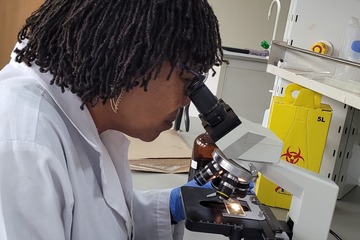
Our recent study, conducted at USIU - Africa Pharmacy Laboratories represents a paradigm shift in phytotherapeutic research methodology. Rather than testing herbs in isolation, a common limitation in traditional medicine research, we employed advanced mixture design methodologies to evaluate the combined effects of Mondia whitei and Withania somnifera in alloxan-induced diabetic rat models. The results have been compelling. While the individual extracts showed modest improvements in testosterone restoration and glycemic control, an optimized herbal combination demonstrated statistically significant synergistic effects producing the greatest improvement in testosterone levels and substantial reductions in fasting blood glucose compared to single-herb treatments. These findings suggest that strategic combination of these herbs may simultaneously address the metabolic deregulation and vascular dysfunction underlying DIED through complimentary pathways, Withania somnifera improving insulin sensitivity and systemic metabolic health while Mondia whitei enhances local nitric oxide critical for erectile function. Further research is underway to identify optimal formulation ratios and validate these effects in clinical settings.
What distinguishes this research within the global health landscape is its commitment to methodological rigour that meets international standards while remaining culturally grounded and accessible. During my tenure at MSU, I have actively disseminated these findings through high-impact academic channels including presentations at the Dahshu Data Science Symposium on "Innovative Frontiers: AI and Data-Driven Advances in Drug Development" and at the 2025 Women in Statistics and Data Science Conference. These platforms have not only amplified African pharmaceutical research within global scientific discourse but have also facilitated crucial networking with biostatisticians and epidemiologists exploring similar One Health intersections between plant-based interventions and chronic disease management.
Beyond the laboratory and conference podium came other openings through this fellowship. Our research team was recently selected for the 3rd cohort of the Collaborative Online International Learning (COIL) Faculty Fellows Program. This will enable us to develop virtual exchange curricula that will train the next generation of African Epidemiology and Public Health researchers in advanced biostatistical methods. Additionally, I have engaged extensively with MSU’s research ecosystem through workshops hosted by the American Statistical Association, the Department of Epidemiology & Biostatistics, and specialized training in machine learning applications for healthcare data skills that are already informing grant proposals aimed at securing sustainable funding for this research trajectory.
As we look toward translating these preclinical findings into clinical applications, the importance of sustained international partnership becomes increasingly evident. Current pharmacological solutions for DIED remain inadequate for Africa’s growing diabetic population, projected to double by 2045. The development of evidence-based Phytomedicines, validated through rigorous statistical frameworks yet derived from accessible indigenous resources, represents a uniquely African solution to a global health challenge. However, realizing this potential requires continued collaboration between African research institutions and international partners who can provide advanced analytical capabilities, funding access, and platforms for global advocacy.
The AAP’s version of advancing health through collaboration finds its truest expression in such transcontinental research partnerships. By connecting USIU - Africa’s ethno-botanical expertise with MSU’s statistical progress, we are not merely studying herbal extracts; We are modeling a new approach to global health research, one that respects traditional knowledge systems while demanding scientific excellence. As we finalize our first publication and prepare grant applications for expanded clinical trials, I am reminded that the most powerful innovations in health often emerge not from isolated laboratories, but from the fertile intersection of diverse perspectives, methodologies, and shared commitment to healing.
In an era where pharmaceutical accessibility remains profoundly equitable, partnerships that validate and optimize Indigenous medicinal resources offer more than academic advancement, they offer hope for sustained, culturally congruent healthcare solutions. Through the African Futures Program, we are demonstrating that when African traditional medicine meets rigorous biostatistical science, the result is not just better research, but a pathway toward health equity that honors both our scientific aspirations and our cultural heritage.
Gladys G. Njoroge is a research scholar with the Alliance for African Partnership at Michigan State University and faculty member at USIU-Africa, Department of Pharmacy Practice & Public Health. Her research focuses on phytotherapeutic interventions for diabetes complications and the application of advanced statistical methodologies in traditional medicine research.
By:
Baboki Gaolaolwe-Major
Tuesday, Mar 3, 2026
HEALTH AND NUTRITION
+1

Leave a comment