

Feed
-
CALL FOR WRITTEN RESPONSES TO THE CIES 2023 CONFERENCE THEMECALL FOR WRITTEN RESPONSES TO THE CIES 2023 CONFERENCE THEME "IMPROVING EDUCATION IN A MORE EQUITABLE WORLD" The 2023 Conference Theme was announced in Minneapolis at our annual gathering on Apr. 18-22, 2022. The landing page of our next year’s conference is at this link. You are warmly invited to submit a written response to the 2023 Conference Theme “Improving Education for a More Equitable World”. The response will be a 3,000 or more-word essay addressing anything meaningful around the conference theme, covering one or more of the three broad areas, i.e., improvement and equity (and social justice) in comparative/international education.This is a great opportunity for you to respond to the conference theme around such critical questions as: How should we critically look at and meet the desired outcomes across times and spaces? in what ways may micro, meso, and/or macro educational strategies, structures, and processes be improved along with their environments? How do we know through rigorous methods we ARE making progress responsively? What changes can bring about responsible and sustainable advancement in learning, teaching, and schooling? What implications may these changes have on individual systems, contexts, and the already vulnerable planet? How may our endeavors help redefine comparative and international education in a way that reconnects it with contextualized educational policy and practice?You are also encouraged to touch on any other critical questions about the conference theme.Your written response will have an opportunity to be published after review on the CIES 2023 website along with our online submission system this summer.Please submit your written response to the conference theme by June. 15, 2022. All submissions should be sent as a Microsoft Word attachment to cies2023@cies.us with Written Response in your subject line.Please follow APA style with a cover page including your full name and passport-size photo, affiliations, the title for your written response, and a complete reference list ending your essay. By your submission, you authorize CIES to publicize the information on the cover page together with your written response. As a by-product, written responses will be planned for an edited volume or a special issue after the annual conference in 2023! Please help circulate this announcement to anybody, especially academics, practitioners, and students, who may have an interest in joining our conversations for CIES 2023 Conference on February 18-22, Washington, D.C.By: Raquel AcostaThursday, Apr 28, 2022EDUCATION
 No Preview Available
 -
Call for Applications for the 2022 Ife Institute of Advanced StudiesCall for Applications for the 2022 Ife Institute of Advanced Studies’ summer institute with doctoral and postdoctoral researchers in the humanities, the social sciences, and STEM affiliated with your institution and related networks.The Ife Summer Institute is an international platform for nurturing a new generation of scholars in the humanities and social sciences held for three years at Ile-Ife in Nigeria, and virtually in 2020-2021 to accommodate COVID-19 pandemic restrictions. The institute hosts participants from all over the world and boasts distinguished faculty engaging contemporary scholarly topics.This year’s Institute will be held both in-person and via Zoom. Certificates of participation will be awarded to all registered participants at the end of the Institute.More details about the online application are available on our website: https://www.ias-ife.com/<https://urldefense.com/v3/__https://www.ias-ife.com/__;!!HXCxUKc!iFM-iw4Hrc2buEwZzpnc791_EE0KuPMSXRZ8ZM5i6kNVTuvob3AJYw2dQVuqTSc$ .We can also be reached for questions or clarification at iiasng.office@gmail.com<mailto:iiasng.office@gmail.com or summerinstituteife.ng@gmail.com<mailto:summerinstituteife.ng@gmail.com>.By: Raquel AcostaTuesday, Apr 26, 2022WATER, ENERGY, AND THE ENVIRONMENT+1
-
Displacement and Belonging: Lessons from the Indian Ocean and Beyond/ Circulations et appartenancesDisplacement and Belonging :Lessons from the Indian Ocean and BeyondIn Honor of Pier Larson Circulations et appartenances :leçons de l’océan Indien et au-delàEn l'honneur de Pier Larson Online international conference organized by:Klara Boyer-Rossol (CIRESC and BCDSS, Bonn University),Jennifer Cole (The University of Chicago),Tasha Rijke-Epstein (Vanderbilt University),Samuel Sanchez (Université Paris 1 - Panthéon Sorbonne),Dominique Somda (Huma - University of Cape Town). Thursday 5 May 2022 & Friday 6 May 2022 PROGRAMMEAbstracts Register hereBy: Raquel AcostaTuesday, Apr 26, 2022CULTURE AND SOCIETY

-
AAP Public Dialogue “Peace and its Reflection in African Art”AAP will be hosting our next Public Dialogue “Peace and its Reflection in African Art”, Wednesday, April 27th at 8:00am- 9:30am EDT. This dialogue session will be co-hosted by AAP consortium member -Université des Lettres et des Sciences Humaines de Bamako. Art is a reflection, a mental representation of an object, an idea, or a concept whether it be abstract or concrete. Therefore, when we pass any judgment on a work of art based on the image or the idea that we have of this object and outside of its historical, geographical, social, or ethnic context, it is likely that this will be a subjective judgment and often based on prejudices. Unfortunately, contemporary artistic production on the African continent is often focused on and reflects fixed concepts and structures "imposed" by the West. It no longer responds to the aesthetic concerns of the populations who, in principle, should generate it. This panel will bring together specialists focused on art and peace within Africa. This subject is especially timely given the current context of global upheaval. To register please visit: https://msu.zoom.us/webinar/register/7716492601543/WN_FyyKDq_zT6ug4vxHi_ApEw?fbclid=IwAR0sa0-aPf6sGkp5GbY8ScMZsEJZwIhPAz6K1QEOWqURxqhngLA_tYc9mRcBy: Raquel AcostaTuesday, Apr 26, 2022OTHER

-
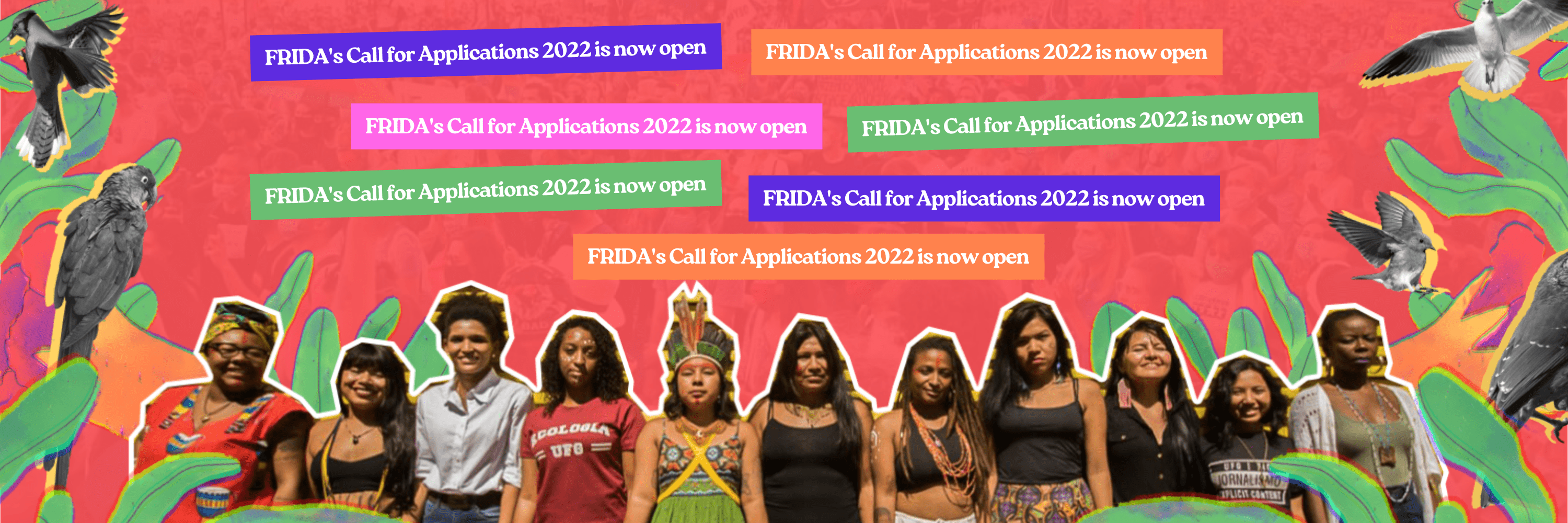
FRIDA's 8th grant cycleApplications from young feminist groups from all majority countries to apply. More information is here.By: Rajalakshmi Nadadur KannanMonday, Apr 25, 2022CULTURE AND SOCIETY+2
 No Preview Available
 -
New edited collection on LGBTQI+ displacement in and from East AfricaSince the early 1990s, political, social and economic instability in East Africa,1 including long-running conflicts in Sudan, Somalia, Ethiopia and Burundi, has produced high rates of displacement. Movement within and from the region has led to substantial refugee populations being housed in Kenya, Tanzania and Uganda, as well as a large diaspora of East Africans scattered across the globe. Among those leaving their countries of origin are a significant number of lesbian, gay, bisexual, transgender, queer and intersex (LGBTQI+) persons. Many are fleeing state-sanctioned violence, including arrest, prosecution and imprisonment, while others seek to escape oppressive social norms and community opprobrium, often experienced as gossip, beatings, outings, extortion, familial abuse and forced marriage. These efforts to preserve the heteronormative social order are buttressed by the expansion of colonial-era penal codes, the growing influence of anti-LGBTQI+ religious movements and the strategic use of anti-LGBTQI+ discourses by political elites looking to consolidate their power and authority. While LGBTQI+ refugees and asylum seekers in East African have recently begun to attract media attention, there is yet to be sustained academic engagement with their lives and experiences. This collection will address this knowledge gap by bringing together diverse scholarship on the drivers, impacts and consequences of displacement linked to sexual orientation and/or gender identity and expression. It will do so by exploring all aspects of LGBTQI+ migration, including displacement catalysts, mobility pathways, transit routes, migration governance, encampment policies, humanitarian interventions, resettlement challenges, integration strategies, livelihood programmes and public advocacy. By centring the experiences of LGBTQI+ East Africans who move, the collection will produce new insights into the geographical, historical and cultural specificities of a region that both produces and hosts individuals fleeing homophobic and transphobic persecution. This will be an interdisciplinary publication, and we invite submissions from all academic fields, including migration studies, gender studies, border studies, religious studies, media studies, legal studies, literary studies, public health, history, sociology and anthropology. We also welcome abstracts that consider the lives of LGBTQI+ East Africans in the diaspora and the impacts of LGBTQI+ East Africans on global, regional or local protection mechanisms. Those working outside of the academy (humanitarian workers, legal practitioners, service providers, etc.) are welcome to submit abstracts of a scholarly nature. Possible topic areas include, but are not limited to, the following: The state of research: Trends in LGBTQI+ migration research and knowledge gaps. Theorising LGBTQI+ displacement: Looking beyond South-North migration trajectories, rethinking movement, boundaries and borderlands, challenging European 'exceptionalism' and so on. Methodological tensions: Unpacking the ethics and practices of researching and representing LGBTQI+ mobilities, the use of arts-based methodologies, decolonial approaches to migration research and so on. Law and justice: Making sense of legal challenges and opportunities relating to LGBTQI+ migration, including local, regional and international protection mechanisms, state responses to decriminalisation and so on. Structures of asylum and migration: Encampment, waiting, documentation, border controls, online fundraising campaigns, illegality as orientation, the finitude of language and so on. Documenting, archiving and disseminating knowledge: Partnerships (civil society, government, policy-makers, etc.), research uptake beyond the academy, data security, keeping LGBTQI+ communities safe when 'going public' and so on. Representations in film, literature and media: Reflections on how LGBTQI+ displacement in/from East Africa is produced, discussed and circulated through creative works. The role of religion and culture: The relationship of institutions, practices, networks and discourses with migration, with faith as a mediator of belonging or dispossession. Research in action: Empirical findings from recent studies on LGBTQI+ displacement in the region. Prospective authors are asked to submit an abstract (500 words max) and a short bio to queerdisplacementea@gmail.com by 1 April 2022.By: Raquel AcostaMonday, Mar 28, 2022CULTURE AND SOCIETY

-
Journal for the History of Knowledge – Call for ProposalsThe Journal for the History of Knowledge features an annual special issue, compiled by guest editors, which explores a theme central to the journal’s scope. The special issues of previous years have been Histories of Bureaucratic Knowledge (2020) and Histories of Ignorance(2021). We are currently accepting proposals for the 2024 Special Issue. Proposals should contain the following: A description of the proposed theme (1500-2000 words) highlighting its significance for the history of knowledge A table of contents (typically 8-12 articles of 8000 words) Abstracts of the articles Two-page CVs of the editors; short biographies of the contributors An outline of the production process up to manuscript submission. All manuscripts must be submitted to the journal by May 2023. Please send your proposal to: jhokjournal@gmail.com Proposal deadline: 1 May 2022Notification of acceptance: by 30 July 2022 After submission, all manuscripts will go through a process of peer-review, author’s revisions, and copy-editing. JHoK is a diamond Open Access journal, at no charge to the authors. Details of the journal’s scope and a full list of the editorial team and advisory editorial board is available on the journal's website.By: Raquel AcostaMonday, Mar 28, 2022EDUCATION
 No Preview Available

Leave a comment