

Browse
Harnessing Africa's Bounty: Promoting Indigenous and Traditional Crops for Sustainable Food Systems
Recording on May 15th, 2024 as part of AAP Public Dialogue Series
By:
Justin Rabineau
Monday, Jan 27, 2025
AGRI-FOOD SYSTEMS
Leave a comment
Harnessing Artificial Intelligence for Transformative Education in Africa
Recorded on Nov 20th, 2024 as part of AAP Public Dialogue Series
By:
Justin Rabineau
Monday, Jan 27, 2025
SCIENCE, TECHNOLOGY AND INNOVATION
Leave a comment
CALL FOR PAPERS, JOURNAL OF WEST AFRICAN HISTORY
CALL FOR PAPERS, JOURNAL OF WEST AFRICAN HISTORY
Journal of West African History•01/09/2025Announcement
Location
Michigan, United States
Subject Fields
African History / Studies
CALL FOR PAPERS, JOURNAL OF WEST AFRICAN HISTORY
Founding Editor-in-Chief: Nwando AchebeEditors: Saheed Aderinto, Trevor R. Getz, Toby Green, Vincent Hiribarren, Harry Nii Koney Odamtten. Book Review Editors: Mark Deets, Nana Kesse, Madina Thiam.
The Journal of West African History (JWAH) is a peer-reviewed, interdisciplinary research journal dedicated to publishing high-quality scholarship on West African history. Positioned at the forefront of new research, JWAH addresses representation gaps by fostering critical scholarship on topics such as women and gender, sexuality, slavery, oral history, popular and public culture, and religion. The editorial board invites submissions that engage diverse topical, theoretical, and methodological approaches. Committed to rigorous analysis and international in scope, JWAH offers a critical intervention in knowledge production. Each issue includes scholarly book reviews, and articles are published in English, French, and Portuguese, with African-language abstracts. JWAH is published by Michigan State University Press.
The editorial board invites scholars to submit original article-length manuscripts (not exceeding 10,000 words including endnotes) accompanied by an abstract that summarizes the argument and significance of the work. Review essays should engage the interpretation, meaning, or importance of an author’s argument for a wider scholarly audience. See what we have available for review on our Book Reviews page. Please contact our Book Review Editors at mark.deets@aucegypt.edu, madina.thiam@nyu.edu, or nkesse@clarku.edu for more information.
Manuscripts submitted to the Journal of West African History should be submitted online at https://ojs.msupress.org/index.php/JWAH/submission/wizard. In order to submit an article, you will have to create an account. The site will guide you through this process.
Contact Email
jwah@msu.edu
By:
Baboki Gaolaolwe-Major
Wednesday, Jan 15, 2025
CULTURE AND SOCIETY

No Preview Available
Leave a comment
Announcing Journal of West African History, Volume 10, Issue 1
Journal of West African History
Announcement Type
Journal
Location
MI, United States
Announcing Journal of West African History, Volume 10, Issue 1
Founding Editor-in-Chief: Nwando AchebeAssociate Editors: Saheed Aderinto, Trevor R. Getz, Toby Green, Vincent Hiribarren, Harry Nii Koney Odamtten. Book Review Editors: Mark Deets, Madina Thiam, Nana Kesse.
Volume 10, Issue I, NOW AVAILABLE!
The Journal of West African History (JWAH) is an interdisciplinary peer-reviewed research journal that publishes the highest quality articles on West African history. Located at the cutting edge of new scholarship on the social, cultural, economic, and political history of West Africa, JWAH fills a representational gap by providing a forum for serious scholarship and debate on women and gender, sexuality, slavery, oral history, popular and public culture, and religion. The editorial board encourages authors to explore a wide range of topical, theoretical, methodological, and empirical perspectives in new and exciting ways. The journal is committed to rigorous thinking and analysis; is international in scope; and offers a critical intervention about knowledge production. Scholarly reviews of current books in the field appear in every issue. JWAH publishes primarily in English but recently published its first French issue. JWAH also plans to publish articles in Portuguese and is experimenting with African-language abstracts in forthcoming issues. JWAH is published by Michigan State University Press.
Editor's Introduction
Nwando Achebe, “Amaechina”
Articles
Cassandra Mark-Thiesen, “Progressive Empire?: Liberian Agriculture, Black American Farming Experts and World War II Engaging Africa and the World”
Emmanuel Asiedu-Acquah, “Engaging Africa and the World”
Caroline Maguire, “Artification and Decolonization at the Musée d’Art Africain de l’IFAN, Dakar”
Sarah Zimmerman, “Legacies of French Colonial Militarization and Gender-Based Violence in the Sahel”
Riina Turtio, “Soviet Military Assistance to Mali and Guinea, 1958-1980”
Book Reviews
Transcripts of the Sacred in Nigeria: Beautiful, Monstrous, Ridiculous (by Nimi Wariboko), Reviewed by Tara Hollies.
State-building and National Militaries in Postcolonial West Africa: Decolonizing the Means of Coercion 1958–1974 (by Riina Turtio), Reviewed by Joe Gazeley.
Letters, Kinship, and Social Mobility in Nigeria (by Olufemi Vaughan), Reviewed by Lisa Lindsay.
Mieux vaut tard que jamais: Sur les traces de six tirailleurs guinéens fusillés à Clamecy en juin 1940 (by Daniel Couriol), Reviewed by Madia Thomson.
Decolonizing Independence: Statecraft in Nigeria's First Republic and Israeli Interventions (by Lynn Schler), reviewed by Rouven Kunstmann.
Submissions
The editorial board invites scholars to submit original article-length manuscripts (not exceeding 10,000 words including endnotes) accompanied by an abstract that summarizes the argument and significance of the work. Review essays should engage the interpretation, meaning, or importance of an author’s argument for a wider scholarly audience. Please contact our Book Review Editors at mark.deets@aucegypt.edu, madina.thiam@nyu.edu, or nkesse@clarku.edu for more information.
Contact Email:jwah@msu.edu
By:
Baboki Gaolaolwe-Major
Wednesday, Jan 15, 2025
CULTURE AND SOCIETY
+1
No Preview Available
Leave a comment
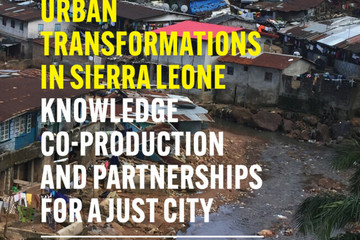
Tackling Urban Challenges in Freetown
With over 1 million residents, Freetown, Sierra Leone’s capital, faces critical challenges in housing, infrastructure, and service provision—issues intensified by climate change. Many residents live in informal settlements; up to 70% of the population works in the informal sector.
In response, the Sierra Leone Urban Research Centre (SLURC) was established in 2015 to address these pressing issues through research, capacity building, and advocacy, focusing on health, land, housing, and mobility. SLURC has become a vital platform for dialogue, bringing together urban stakeholders to shape Freetown’s future.
Urban Transformations in Sierra Leone captures SLURC’s impactful journey, showcasing key findings from diverse research projects and highlighting the power of transdisciplinary collaboration.
Discover how knowledge and partnerships are reshaping Freetown.Download the book for free: https://ow.ly/AivJ50UlstO
By:
Baboki Gaolaolwe-Major
Saturday, Dec 7, 2024
CULTURE AND SOCIETY
+1
Leave a comment
Advancing African Entrepreneurship Through Research and Mentorship- Anastasia Mamanbulo
Anastasia Mamabolo, Associate Professor at the Gordon Institute of Business Science (GIBS) and at the University of Pretoria, is a visionary leader in entrepreneurship. Her work is shaping how entrepreneurship is taught and highlighting the critical role of research and mentorship in driving economic growth across Africa.
Anastasia's research identifies the essential skills entrepreneurs need at different stages of their ventures. “My research looks at the skills entrepreneurs require when they start their businesses and how these skills evolve as the businesses grow,” she shared. Her work has resulted in a comprehensive framework that training institutions can use to measure and develop entrepreneurial skills, ensuring tailored support for aspiring business owners.
One of her proudest achievements is the publication of a paper on the role of religion in entrepreneurship, which was recognized as the Best Paper for 2022 by the Journal of World Business. “This recognition is a testament to the relevance of understanding not just the economic but also the cultural and spiritual dimensions of entrepreneurship in Africa,” she said.
In addition to her research, Anastasia was recently appointed the APSA Chair of Entrepreneurship at GIBS, a role that will enable her to lead several initiatives, including a school incubation program for entrepreneurial training and the development of an African Entrepreneurship Index. “This index will measure the competencies of entrepreneurs across Africa, helping us build a credible database that researchers and practitioners can use to improve entrepreneurial development,” she explained.
AAP’s Role in Her Journey
Anastasia’s journey as a researcher has been significantly shaped by the Alliance for African Partnership (AAP). Introduced to AAP by her former dean, Professor Nicola Klein, Anastasia participated in the African Futures Research Leadership Program, which provided her with the opportunity to focus on her research, gain mentorship, and collaborate with international scholars.
“The mentorship I received through AAP was invaluable,” Anastasia emphasized. Under the guidance of Professor Jerry McNamara, a leading strategy scholar, she learned how to conduct high-quality research that resonates with both African and global audiences. “AAP helped me build my confidence as a scholar, gave me an academic voice, and equipped me to bridge the gap between research and practice,” she added.
The Future: Strengthening African Entrepreneurship
Looking to the future, Anastasia envisions becoming a thought leader in African entrepreneurship research. “We don’t have enough research on the incredible entrepreneurial activities happening across the continent,” she said. “My goal is to strengthen the voice of African researchers in this field and foster collaborations that will advance entrepreneurship.”
She also plans to focus on bridging the gap between academia and practice by supporting students in their research efforts, developing actionable insights for entrepreneurs, and continuing her work through the APSA Chair to promote financial inclusion and access to resources for African entrepreneurs.
Advice for Early Career Researchers
Reflecting on her journey, Anastasia emphasized the importance of mentorship and the integration of research into academic work. “Mentorship is crucial for early-career researchers. I was fortunate to have a mentor who guided me through academia, helping me position myself as a research-focused academic,” she noted.
Her advice to young scholars? “Don't neglect your research. Incorporate it into your teaching, and don’t be afraid to seek mentorship—even from those outside your field. It’s through collaboration and consistent research efforts that you’ll grow and make meaningful contributions.”
Anastasia’s work exemplifies the impact of research, mentorship, and dedication to advancing entrepreneurship in Africa. With her leadership, the future of African entrepreneurship looks promising and filled with potential for growth and innovation.
By:
Baboki Gaolaolwe-Major
Tuesday, Nov 12, 2024
EDUCATION
Leave a comment
Empowering Change through Research – An Interview with Dr. Binta Kuita
At the forefront of academic leadership and research in Mali, Dr. Binta Kuita, an Associate Professor of Applied Linguistics at the University of Letters and Humanities of Bamako, has made significant strides in inclusion, diversity, and disability advocacy. As an African Future Fellow for the Alliance for the African Partnership (AAP) from 2021-2022, Dr. Kuita’s journey reflects resilience, empowerment, and commitment to driving change in her community and beyond.
Dr. Kuita’s research has evolved from her PhD work in Applied Linguistics, which focused on the cultural impacts of learning English as a foreign language, to a broader spectrum of social issues. Today, her work encompasses language education, diversity, and inclusion, particularly advocating for the rights of people with disabilities in Mali. This transformative shift in her research aligns with her appointment as Associate Professor at the University of Letters and Humanities of Bamako and her continuous collaboration with leading academic mentors.
“I've recently focused on diversifying my research, especially towards inclusion and equity for women and people with disabilities,” Dr. Kuita shared, highlighting her pivotal research project on the inclusion of people with disabilities, carried out under the mentorship of Professors Pony Tsang from Michigan State University (MSU) and Idrissa Soeba Traore from her home institution in Mali.
The Role of AAP in Career Growth
As an African Future Fellow, Dr. Kuita credits AAP with providing the platform and support to accelerate her academic career. “AAP has uplifted me not just as a researcher, but as a leader,” she explained. The fellowship provided her with the resources and mentorship to overcome societal and cultural barriers, enabling her to concentrate on her research and career growth.
Workshops and networking opportunities through AAP and MSU have been particularly influential in building her academic and leadership capacities. “These workshops, often led by women in academia, were inspiring because their stories were very similar to mine,” she said. The collaborative bonds formed through these experiences continue to bolster her professional development, aiding in manuscript production, grant writing, and conference participation.
Her Vision for the Future
Dr. Kuita’s vision for the future is filled with promise, not only for herself but for those she impacts through her work. “I want to continue to open doors for young researchers,” she expressed, underlining her commitment to mentoring junior academics. One of her current initiatives is the establishment of a disability and inclusive unit at her university, aimed at creating a supportive environment for students with disabilities. This project is innovative in Mali, and Dr. Kuita hopes it will be replicated across other institutions in the country.
In addition to her academic goals, she is also committed to nurturing the next generation of scholars through mentorship programs that foster collaboration between African researchers and international academic communities, particularly through her strong ties with AAP and MSU.
Words of Advice
For young researchers, Dr. Kuita has one clear message: “Believe in your dreams and hold on to your goals.” She encourages aspiring academics to build robust, collaborative networks and take advantage of opportunities like the AAP African Future program, which she describes as “life changing.”
Dr. Kuita’s journey is a testament to the power of resilience, mentorship, and the transformative potential of research. As she continues to pave the way for others, her work stands as a beacon of hope for women, people with disabilities, and young researchers striving to make a difference.
By:
Baboki Gaolaolwe-Major
Tuesday, Nov 12, 2024
EDUCATION

Leave a comment
A Journey of Academic Excellence through Community Engagement
Translating scientific knowledge for societal benefit has long posed a challenge in research. Until about two decades ago, this crucial aspect of science received limited emphasis. However, community engagement—often referred to as public engagement or science communication—has now become a critical component that facilitates the application of research by end users. The scientific community has increasingly recognized that research is incomplete without involving key stakeholders and end users, necessitating a human-centric approach to research and development.
Dr. Mercy Kaburu, an accomplished Assistant Professor of International Relations at Kenya’s United States International University (USIU), exemplifies this approach. She is dedicated to using community engagement to effectively translate research on Kenya’s foreign policy, its role in regional and global politics, regional integration within the East African Community (EAC), and women’s political participation, especially in Kenya.
As an emerging leader in science and her community, Dr. Kaburu has achieved notable successes, has led impactful research initiatives, and has engaged with her community in ways that underscore her impressive academic journey. Her research focuses on three core areas: Kenya’s foreign policy, regional integration within the EAC, and enhancing women’s political participation in Kenya. Over the last three years, she has published articles on key topics such as Kenya's elections, gender-based violence, and regional integration. One of her most notable achievements was securing a prestigious publication in the Washington Post on regional integration within the EAC, along with a forthcoming book chapter on Kenya's foreign policy.
In addition to her publications, Dr. Kaburu is leading a joint research initiative between USIU, the University of Nairobi, and the Free Pentecostal Fellowship in Kenya. This five-year project, which focuses on child protection in Busia County, highlights her dedication to community engagement and research that has a real-world impact. "This project will allow me to make a difference, especially on issues relating to policy and child protection," she explains with enthusiasm.
AAP’s Role in Her Journey
After participating in the Alliance for African Partnership (AAP) program at Michigan State University (MSU), Dr. Kaburu was promoted to Assistant Professor. Reflecting on the impact of AAP, she says, “One of the biggest things AAP did for me was open my spaces for conferencing and partnership, attending academic conferences, and creating new collaborations.”
Her time at MSU, supported by AAP, broadened her academic horizons through conference presentations and the establishment of crucial partnerships. Dr. Kaburu expressed her gratitude for the mentorship she received, particularly from Professor Caroline Logan, who played an instrumental role in guiding her conference participation and subsequent publications. “Thanks to my mentor, I was able to attend key conferences, which played a major role in helping me meet the guidelines for promotion,” she adds.
Looking Ahead
Dr. Kaburu’s future shines brightly as she continues to expand her academic and community-based endeavors. Recently appointed by Afrobarometer as the Coordinator for Capacity Building for Early Career Scholars in Africa, Dr. Kaburu is excited about furthering her research and mentoring new scholars. “I am looking at myself engaging more with the community,” she shares. “I believe I can have my fingerprint on policy, especially regarding women and political participation in Kenya.”
Her current focus includes securing more research grants and influencing policy. Looking ahead, she aspires to become an Associate Professor within the next three years. “I am giving myself the next three years to meet the requirements of an Associate Professor. Growth, for me, is very important,” she says confidently.
Dr. Kaburu’s inspiring story serves as a testament to the transformative power of opportunities like the AAP program. Her advice to other scholars, particularly women, is to seize opportunities for growth and mentorship. “When a woman scholar gets the opportunity, please take it up, and always try to build lasting relationships with your mentor,” she advises.
As she continues to make strides in her career and community involvement, we look forward to seeing the incredible impact she will undoubtedly continue to make.
By:
Baboki Gaolaolwe-Major
Tuesday, Nov 12, 2024
EDUCATION
+1
Leave a comment
Makerere University is determined to end Sickle Cell Disorder in Africa, in the lead of this mission
As you’re reading this sentence someone lost the opportunity of a lifetime simply because they are a woman. And as you’re reading this sentence, someone else was denied their dream for the exact same reason. Worldwide the proverbial glass ceiling has been cracked and battered over the past century. For most of us, we live in a world where women can vote, have aspirations, and are considered equal human beings instead of someone’s property. But damaged as the glass ceiling may be, it still hangs over the heads of many women. If you find this hard to believe, just ask any woman you know, and they will tell you how hard they had to fight for the same thing others take for granted. So, how can a woman become a leader in a world dominated by men?
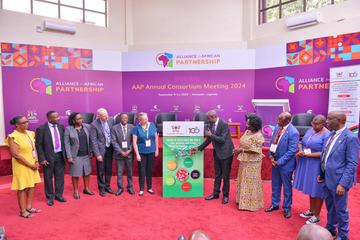
The Alliance for African Partnership (AAP) recently launched a Centre of Excellence for Sickle Cell Anemia and Other Neglected Tropical Diseases during their annual consortium meeting at Makerere University (MAK). Nothing fell short of a tag “impressive”. Sarah Kiguli, a MAK scholar based in Uganda, has not only consistently been a leader amongst the academic and medical academic community, but she has been on the forefront of decisions affecting the country’s future. She sat on the council for Makerere University for eight years, she served as the president of the Association of Uganda Women Medical Doctors for four years and most recently, she has founded the Centre of Excellence for Sickle Cell Anemia and Other Neglected Tropical Diseases and spear heading this noble idea.
The center promises to be a turning point for Uganda, doing research on how to combat diseases which have been plaguing Uganda unabetted for years. Despite the center only existing for a month, it has already set up a system to register patients with sickle cell disease. By registering them, they and others will be aware of the risks of passing this disease down to the next generation and can take the necessary steps to prevent that.
Sarah’s resume of consistence excellence in leadership is a testament to her determination, but as with every woman before her she needed to scratch and claw at the glass ceiling to reach where she is today. Thanks to the leadership of Vice Chancellor, Prof Barnabas Nawangwe of recognizing these challenges, Sarah finds herself at the helm of this noble institution. When asked about the challenges she and other Ugandan woman have faced, she spoke about the difficulty of gaining the necessary skills to lead while raising a family. Worldwide, the common perception is that the women raise the family, and the men earn the money. Even if a woman is doing her best to earn, she is expected to shoulder the burden of cooking, cleaning, tending to the children. Can you imagine earning a bachelor’s degree, two master’s degrees and fellowship while having to juggle being a mother? Many people don’t need to imagine, and still, like Sarah, they manage to thrive. Even with less sleep, even with more stress, they succeed.
But despite her climb through the ceiling, Sarah is humble. Her story is not known because she does not go out of her way to share it. Partially due to introversion, Sarah does not make the obstacles she has broken through evident to those around her. Instead, she uses her passion to inspire. Using Vice Chancellor Nawangwe as an example, she explained that her passion for helping Ugandans suffering from diseases such as anemia is often enough to persuade him to trust in her ideas. This wouldn’t be the only time her passion for helping others aided her in her journey. She would note that she didn’t ascend the ladder to leadership alone. While her world is indeed dominated by men, many of them were swayed by her care for others and her willingness to do whatever is needed as she went through training in medical school as well as through her service in pediatrics. They mentored and supported her on her path to leadership, and she feels that without them she would not be where she is today.
She pays this forward to women that she works with. As she keeps an eye out for women to add to her team or to mentor into becoming leaders of their own. According to Sarah, she doesn’t just do this out of the kindness of her heart though, she knows and understands that women are necessary for science to continue to surge forward. When asked on the perspectives that women bring to science she used her experiences in Uganda as an example. In her culture, she noted that most women think broadly, beyond science, but the social and psychosocial effects of what they are studying and how to best mobilize communities to put solutions into effect. When looking at sickle cell research itself, she noted that the nurturing perspectives of older women allows for better research and mobilization teams to be built as well as patient care to be improved.
Finally, when Sarah Kiguli was asked to give advice to women who want to become leaders, or women who have been inspired by her story, she had the following to say: Think that woman should believe in herself. Believe in yourself, set your goals so that you can know where you want to go. Make targets, work with other people, work with people who support you. It is lonely, it is a lonely path moving up there, but also being up there is extremely lonely, especially if you are successful. It is lonely. So, surround yourself with people who support you. And we should always look out for each other as women. I know that there are groups holding researchers i know for doctors, we have groups holding doctors. But find, find, find a mentor if you don't have a mentor. mentorship is really important and find men and women who are willing to look out for you. So that they support you as you go through this journey. And it is actually possible. It is possible!
If you want to go there, identify what your niche is, what you want to do.
And then start the journey.
By:
Baboki Gaolaolwe-Major
Tuesday, Nov 12, 2024
HEALTH AND NUTRITION
+1
Leave a comment
Breaking the Glass Ceiling: Why Women in Science Must Be Visible, Viable, and Valuable
As Africa faces numerous developmental, unemployment, and health challenges that hinder its progress toward achieving the United Nations Sustainable Development Goals (UNSDGs), women often bear the brunt. Only 30% of academic professionals in Africa are women, a statistic that contributes to the continent’s slow progress. Addressing this issue at the recent UN Women in Science Dialogue, hosted by AAP, Teresa highlighted essential steps to dismantle barriers for women in science. She underscored the importance of increasing visibility for women, ensuring institutional accountability, and creating sustainable programs that empower and support women in science. Despite decades of global efforts to promote gender equality, the world continues to face significant challenges in advancing women into leadership roles and providing equal access to opportunities, particularly in science and technology. Patriarchal structures often still shape decisions made behind closed doors, in interviews, and within boardrooms, subtly reinforcing biases that prevent many women from rising to their full potential. Even in countries that have made notable strides in this area, a pervasive glass ceiling remains—a barrier that limits women’s progression to the highest levels of leadership and restricts access to decision-making spaces traditionally dominated by men. The situation is even more challenging for women in Africa, particularly those pursuing careers in science. While the continent is home to a rich pool of talent, cultural norms and systemic barriers often make it more difficult for women to break through in fields traditionally dominated by men. In sub-Saharan Africa, women make up only 30% of the research workforce, and even fewer hold leadership roles in scientific institutions. This imbalance is further exacerbated by limited access to quality education, lack of mentorship, and societal expectations around gender roles, which disproportionately affect women, especially in rural areas. According to the World Economic Forum’s 2023 Global Gender Gap Report, while some progress has been made, it will still take an estimated 131 years to close the global gender gap at the current pace of change. In science, technology, engineering, and mathematics (STEM), the disparity is even more stark. In Africa, female representation in STEM leadership remains low despite the critical role that women scientists play in addressing the continent’s pressing challenges, from healthcare to climate change. The glass ceiling for African women in science is often much thicker and more complex, as they face not only professional biases but also deeply ingrained cultural and societal barriers. Despite these hurdles, many African women have risen to make groundbreaking contributions in science, yet their stories often go untold, and the systemic issues they face persist largely unchanged. As I addressed the 79th UN General Assembly Science Summit on the topic of “Advancing the Role of Women in Science for Sustainable Development in Africa,” I underscored the need to break down barriers and empower women to lead. I believe the way forward is clear: we must make women visible, viable, and valuable in science. Let me explain why these three principles are essential to advancing gender equality and ensuring a more sustainable future for global science. Visibility: A Global Call to Action
First and foremost, women must be made visible. We cannot be content with merely having women present in scientific fields—we need women to be seen in leadership roles, on boards, in governance, and making economic decisions that shape the future of our world. The United Nations' Sustainable Development Goal 5 calls for achieving gender equality and empowering all women and girls, but progress is slow. Women must be included at every level of decision-making, from academia to industry, from policy to practice. Visibility also means safety. Women cannot be expected to thrive if they are not secure in their environments—whether that’s in the lab or in the broader societal context. In regions impacted by conflict or disaster, such as the flood-ravaged areas of Pakistan or war-torn zones in Africa, institutional resilience and support for women are more important than ever. We must create pathways for women to participate, even in the most difficult of circumstances, through technology, mentorship, and policy reforms. From remote parts of Africa to the most elite scientific institutions, we need to make women visible in ways that inspire confidence and foster success. Viability: Institutional Responsibility
While global initiatives are vital, I firmly believe that the real work begins at home. Higher education institutions have a critical role to play in ensuring women are viable throughout their scientific careers. Sadly, women continue to be the missing link in academia. In the United States, for example, women make up over 50% of life sciences doctorate earners but account for only 26% of full professors. In Africa, the numbers are even starker. In Nigeria, for instance, there are just 1,800 female faculty members out of a total of 11,877 professors. This is unacceptable, and universities must take responsibility for fixing it. We need to interrupt biased processes in recruitment, hiring, and promotion. We need to create inclusive environments where women can flourish. At Michigan State University (MSU), we’ve implemented specific programs designed to lower barriers for women and scholars from diverse backgrounds. For example, our professoriate program provides central support for faculty in any department, ensuring that women and other underrepresented groups are not left behind in their career trajectories. We’ve also partnered with the Alliance for African Partnership (AAP) to invest in African women scientists. Our African Futures program focuses on strengthening the research capacity of early-career African women scholars, providing them with the resources, mentorship, and institutional support they need to succeed. These kinds of targeted interventions are crucial to ensuring that women remain viable throughout their careers, contributing to the scientific community and leading the next generation of discoveries. Value: Sustaining Women in Leadership
Finally, we must recognize the value women bring to science and leadership, and we must act to sustain that value over time. The attrition of women in the sciences is a failure that we cannot afford. Women face unique challenges that can lead to burnout and career drop-off, from work-life balance struggles to gender bias in salary and funding allocations. I’ve seen these disparities firsthand. In my research, I found that women received $25,000 less than their male counterparts in their first NIH grants—a gap that can have lasting impacts on their careers. Institutions must take proactive steps to address these inequities. At MSU, we conducted a salary equity study during my first year as Provost, and we’ve made adjustments to ensure women are compensated fairly for their work. But salary is just one part of the equation. We must also invest in programs that support women throughout their careers, from mentoring young girls to ensuring women have the resources they need to thrive in senior leadership roles. Creating value means ensuring that women in science have the opportunities, resources, and support to lead, mentor, and inspire others. This is not just about gender equity—it’s about advancing science. A diverse and inclusive scientific community is essential to driving innovation and addressing the global challenges we face, from climate change to healthcare crises. A Call to Action
The time to act is now. Higher education leaders, policymakers, and scientists alike must commit to making women visible, viable, and valuable in science. The future of science depends on it, and more importantly, the future of our world depends on it. As I said at the UN General Assembly, “Science needs us all, but more importantly—the future needs us all.” We must work together to break the barriers that hold women back and ensure that they have the tools they need to lead us into the future.
By:
Baboki Gaolaolwe-Major
Monday, Nov 18, 2024
EDUCATION
+1

Leave a comment
Editor's note: AAP Connect 3rd Issue- Dr Jose Jackson-Malete
Dear AAP Consortium Members and Stakeholders I am delighted to introduce the third issue of AAP Connect, dedicated to celebrating African Women in Science. Recently, at the Science Summit during the 79th United Nations General Assembly (UNGA), we engaged in a pivotal dialogue on advancing women’s roles in science for sustainable development in Africa. This conversation emphasized the critical role of higher education institution leadership in challenging cultural norms, fostering gender equity, developing inclusive policies, and securing resources to support the career progression of women scholars.
In this issue, we spotlight the extraordinary contributions of women within the AAP consortium who are paving the way for future generations in science, technology, and innovation. We are honored to feature Dr. Teresa K. Woodruff, President Emerita of Michigan State University. Her transformative leadership and unwavering advocacy for gender equity have been a guiding light for aspiring female scientists. In her recent UNGA address, Dr. Woodruff underscored the need to create inclusive environments that empower women to follow their passions and assume leadership roles. She poignantly stated, “When women thrive in science, we all benefit; their insights and innovations lead to transformative changes that enhance our collective understanding and address the world’s most pressing challenges.”
Additionally, we are privileged to highlight the remarkable work of Dr. Sarah Kiguli, Professor of Pediatrics and Child Health at Makerere University and Principal Investigator of the newly established Center of Excellence on Sickle Cell and Other Tropical Diseases. Her groundbreaking research and leadership exemplify how women can drive solutions to pressing community health challenges while inspiring the next generation of female scientists in Africa.
As we prepare to welcome a new cohort of early-career scholars into the African Futures Program, which has consistently supported women researchers, we take pride in celebrating the achievements of our AAP African Futures beneficiaries. These women are more than researchers; they are trailblazers, innovators, and leaders pushing the boundaries of research and discovery across Africa.
As we reflect on these inspiring stories, we are reminded of the importance of cultivating an environment that uplifts and supports women in science. By amplifying their voices and championing their achievements, we move closer to a more equitable and inclusive scientific community. Together, let us continue to inspire and empower the next generation of women scholars.
Thank you for joining us in celebrating these remarkable journeys. We invite you to share your experiences—whether in the US or Africa—on advancing your career and supporting future African scholars.
Warm regards,Dr Jose Jackson-Malete
By:
Baboki Gaolaolwe-Major
Tuesday, Nov 19, 2024
EDUCATION
+1
Leave a comment
Announcement of Selected Teams: 2nd Cohort of COIL Faculty Fellows Program-Africa
MSU’s Global Youth Advancement Network (GYAN), Alliance for African Partnership (AAP), and Office for Education Abroad are pleased to announce the selected teams for the second cohort of the COIL Faculty Fellows Program-Africa. Sponsored by AAP, this online fellowship program is an opportunity for teaching faculty from any discipline to explore the theory and practice of Collaborative Online International Learning (COIL) through global partnerships connecting institutions within the AAP Consortium.
Approximately 45 highly esteemed teaching faculty expressed interest in partaking in our fellowship program and the selection committee was so impressed by the quality of all team applications received that seven teams were selected, rather than six teams as initially planned. In this second cohort of our fellowship program, MSU fellows representing the Broad College of Business, College of Agriculture & Natural Resources, College of Arts & Letters, College of Education, College of Engineering, and College of Osteopathic Medicine will collaborate with African fellows from Kenya, Nigeria, and South Africa.
Join us in congratulating and welcoming the seven teams below:
Antoinette Tessmer, Broad College of Business (Finance Dept.), Michigan State University.
Jade Verbeek, Faculty of Economic and Management Sciences (Dept. of Marketing Management), University of Pretoria (South Africa).
Christina Dokter, College of Osteopathic Medicine (Dept. of Pharmacology & Toxicology), Michigan State University.
Ngozi Chioma Okoronkwo, Faculty of Agriculture (Dept. of Food Science and Technology), University of Nigeria Nsukka (Nigeria).
Daniel Uyeh, College of Agriculture and Natural Resources & College of Engineering (Dept. of Biosystems & Agricultural Engineering), Michigan State University.
Ifeoma Quinette Anugwa, Faculty of Agriculture (Dept. of Agricultural Extension), University of Nigeria Nsukka (Nigeria).
Ilce Gabriela Medina Meza, College of Agriculture and Natural Resources & College of Engineering (Dept. of Biosystems & Agricultural Engineering), Michigan State University.
Oluchukwu Margaret Mary Nwadi, Faculty of Agriculture (Dept. of Food Science and Technology), University of Nigeria Nsukka (Nigeria).
Thomas Rimer, Broad College of Business (Finance Dept.), Michigan State University.
Chukwudi Kingsley Onyeachu, Institute of Social Policy, University of Nigeria Nsukka (Nigeria).
Trixie G. Smith, College of Arts and Letters (Dept. of Writing, Rhetoric, and Cultures), Michigan State University.
Folake Ruth Aluko, Faculty of Education (Unit for Distance Education), University of Pretoria (South Africa).
Vaughn W. M. Watson, College of Education (Dept. Teacher Education), Michigan State University.
Everlyn Oluoch-Suleh, School of Humanities and Social Sciences (Dept. of Languages and Literature), United States International University-Africa (Kenya).
Our most sincere thanks to all applicants and to those who helped share this opportunity within their networks. Stay tuned to GYAN's COIL webpage for future events or new Calls for Fellows.
By:
Justin Rabineau
Tuesday, Jul 30, 2024
EDUCATION

Leave a comment