

Browse
Health And Nutrition

No Preview Available
Leukemia Research Foundation Grant Program
Deadline: Feb 14, 2025
Donor: Leukemia Research Foundation
Grant Type: Grant
Grant Size: $100,000 to $500,000
Countries/Regions: All Countries
Area: Cancer, Research
The Leukemia Research Foundation provides grants for new investigator research projects that will have an impact on leukemia.
For more information, visit https://leukemiarf.org/research/grant-programs/guidelines-application/
Premium Link: https://grants.fundsforngospremium.com/opportunity/op/leukemia-research-foundation-grant-program
Read more

By: Baboki Gaolaolwe-Major
Due Date: Feb, 14, 2025
Health and nutrition
Leave a comment
No Preview Available
UNESCO-Equatorial Guinea International Prize for Research in the Life Sciences 2025
Area: Agriculture Food & Nutrition, Environment, Research, Scientific Research, Science
The call for nominations for the ninth edition of the UNESCO-Equatorial Guinea International Prize for Research in the Life Sciences is now open.
For more information, visit https://www.unesco.org/en/articles/call-applications-unesco-equatorial-guinea-international-prize-research-life-sciences-0
Premium Link: https://grants.fundsforngospremium.com/opportunity/op/unescoequatorial-guinea-international-prize-for-research-in-the-life-sciences-2025
Read more
By: Baboki Gaolaolwe-Major
Due Date: Mar, 31, 2025
Agri-food systems
+2
Leave a comment
No Preview Available
PEPFAR: Combination Prevention Solutions to reach Epidemic Control in South Africa
Deadline: Feb 20, 2025
Donor: United States - Department of Health and Human Services
Grant Type: Grant
Grant Size: More than $1 million
Countries/Regions: South Africa
Area: Health, Mental Health & Crisis Support, Public Health, Reproductive Health & Family Planning, HIV/AIDS, Youth & Adolescents
The United States Department of Health and Human Services is seeking grant proposals to provide targeted combination prevention solutions and approaches to vulnerable, high-risk priority populations, including adolescents and young people, aged between 10-24, in workplaces, schools, and communities.
For more information, visit https://grants.gov/search-results-detail/355652
Premium Link: https://grants.fundsforngospremium.com/opportunity/op/pepfar-combination-prevention-solutions-to-reach-epidemic-control-in-south-africa
Read more
By: Baboki Gaolaolwe-Major
Due Date: Feb, 20, 2025
Health and nutrition
Leave a comment

No Preview Available
CFAs: Kellogg-Morgan Stanley Sustainable Investing Challenge 2025
Deadline: Jan 26, 2025
Donor: Kellogg-Morgan Stanley
Grant Type: Awards, Prizes and Challenges
Grant Size: $1000 to $10,000
Countries/Regions: All Countries
Area: Agriculture Food & Nutrition, Economic Development, Education, Climate Change, Conservation, Energy, Environment, Land Conservation, Health care, Leadership, Sustainable Development
The Kellogg-Morgan Stanley Sustainable Investing Challenge invites teams of graduate students from around the world to develop and pitch creative financial approaches to tackle pressing social and environmental challenges.
For more information, visit https://www.sustainableinvestingchallenge.org/
Premium Link: https://grants.fundsforngospremium.com/opportunity/op/cfas-kelloggmorgan-stanley-sustainable-investing-challenge-2025
Read more
By: Baboki Gaolaolwe-Major
Due Date: Jan, 26, 2025
Agri-food systems
+2
Leave a comment
No Preview Available
Grant Assistance for Grassroots Human Security Projects in Uganda
Deadline: Feb 15, 2025
Donor: Embassy of Japan in Uganda
Grant Type: Grant
Grant Size: $10,000 to $100,000
Countries/Regions: Uganda
Area: Financial Assistance, Agriculture Food & Nutrition, Children, Community Development, Disability, Education, Primary Education, Secondary Education, Vocational Education, Health care, Reproductive Health & Family Planning, Disaster Preparedness, Water & Sanitation, Women & Gender
The Embassy of Japan in Uganda is pleased to announce the Grant Assistance for Grassroots Human Security Projects to provide financial assistance to non-profit, development-oriented organizations to support community development projects which directly benefit people at the grassroots level.
For more information, visit https://www.ug.emb-japan.go.jp/itpr_en/ggp_en.html#header
Premium Link: https://grants.fundsforngospremium.com/opportunity/op/grant-assistance-for-grassroots-human-security-projects-in-uganda
Read more
By: Baboki Gaolaolwe-Major
Due Date: Feb, 15, 2025
Agri-food systems
+3
Leave a comment
No Preview Available
CFPs: Improving quality of Care and Health Outcomes through Innovative systems and Technologies (M
Deadline: Feb 21, 2025
Donor: Centers for Disease Control-GHC
Grant Type: Grant
Grant Size: More than $1 million
Countries/Regions: Malawi
Area: Health, HIV/AIDS, Information Technology, Innovation
The Centers for Disease Control-GHC is accepting proposals to improve quality of care and health outcomes through innovative systems and technologies in Malawi under the President's Emergency Plan for AIDS Relief (PEPFAR).
For more information, visit https://grants.gov/search-results-detail/355447
Premium Link: https://grants.fundsforngospremium.com/opportunity/op/cfps-improving-quality-of-care-and-health-outcomes-through-innovative-systems-and-technologies-malawi
Read more
By: Baboki Gaolaolwe-Major
Due Date: Feb, 21, 2025
Health and nutrition
Leave a comment
No Preview Available
PEPFAR: Strengthening and Modernizing Sustainable Public Health Systems and Workforce in Uganda
Deadline: Feb 18, 2025
Donor: Centers for Disease Control and Prevention Foundation (CDC)
Grant Type: Grant
Grant Size: More than $1 million
Countries/Regions: Uganda
Area: Capacity Building, Diseases, Health, Public Health, HIV/AIDS, Information Technology, Technology, Sustainable Development
The Government of Uganda (GOU) in partnership with the Ministry of Health (MOH) are inviting applications for the Strengthening and Modernizing Sustainable Public Health Systems and Workforce Initiative to strengthen and modernize data systems and workforce, enabling more timely and integrated data for high-quality, data-driven decision-making.
For more information, visit https://grants.gov/search-results-detail/355650
Premium Link: https://grants.fundsforngospremium.com/opportunity/op/pepfar-strengthening-and-modernizing-sustainable-public-health-systems-and-workforce-in-uganda
Read more
By: Baboki Gaolaolwe-Major
Due Date: Feb, 18, 2025
Health and nutrition
Leave a comment
No Preview Available
NOFO: President's Emergency Plan for AIDS Relief (PEPFAR) - Malawi
Deadline: Feb 18, 2025
Donor: Centers for Disease Control and Prevention Foundation (CDC)
Grant Type: Grant
Grant Size: More than $1 million
Countries/Regions: Malawi
Area: Health, HIV/AIDS, Sustainable Development
Submissions are now open for the President's Emergency Plan for AIDS Relief (PEPFAR) to support the Ministry of Health (MOH) to scale comprehensive HIV prevention interventions in select Malawi districts that have high HIV incidence, prevalence, and large gaps in HIV testing.
For more information, visit https://grants.gov/search-results-detail/355445
Premium Link: https://grants.fundsforngospremium.com/opportunity/op/nofo-presidents-emergency-plan-for-aids-relief-pepfar-malawi
Read more
By: Baboki Gaolaolwe-Major
Due Date: Feb, 18, 2025
Health and nutrition
Leave a comment
No Preview Available
Grants to celebrate the contribution of African Food to American Cuisine (Uganda)
The U.S. Embassy in Uganda is inviting applications for its culinary diplomacy program, “Celebrating the Contribution of African Food to American Cuisine,” in honor of Black History Month 2025.
💰 Grant Size: $10,000 - $100,000📍 Eligible Country: Uganda
This program seeks innovative projects that celebrate the rich influence of African cuisine on American food culture. Grants will be awarded to projects in:
🌱 Agriculture, Food & Nutrition
🎨 Arts & Culture
🍽 Hotels, Restaurants, and Hospitality
📈 Economic Development
🛠 Career Development
💡 Innovation
For more information, visit https://grants.gov/search-results-detail/356842
Premium Link: https://grants.fundsforngospremium.com/opportunity/op/celebrating-the-contribution-of-african-food-to-american-cuisine-uganda
Read more
By: Baboki Gaolaolwe-Major
Due Date: Nov, 30, 2024
Culture and society
+2
Leave a comment
No Preview Available
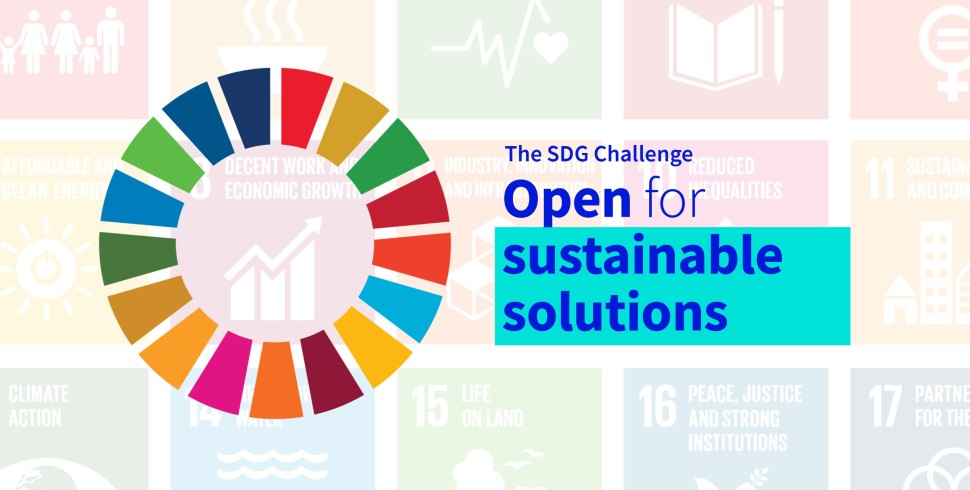
IRELAND: SFI Sustainable Development Challenge (Over €1,000,000 Grant) 2025
Grant size: 1 million Euros
Donor: The Science Foundation Ireland
The SDG Challenge seeks to support diverse, transdisciplinary teams to develop transformative, sustainable solutions that will contribute to addressing development challenges under the UN SDGs in countries where Irish Aid works.
SFI and Irish Aid are seeking solutions that contribute to SDG 2: Zero Hunger, “End hunger, achieve food security and improved nutrition and promote sustainable agriculture”.
The SDG Challenge supports highly motivated, transdisciplinary teams developing transformative, sustainable solutions for UN SDGs in Irish Aid’s partner countries. Furthermore, interested applicants should take note of the following criteria:
Teams must be transdisciplinary and focused on developing sustainable solutions for UN SDGs in Irish Aid’s partner countries.
Teams should combine technical and non-technical skills and represent collaborative partnerships between researchers in Ireland and the partner country.
Expertise in a STEM research area is necessary ,along with knowledge or experience in complementary fields like international development, economics, or behavioral science.
Two academic researchers must be in the core team, with at least one from a relevant STEM discipline.
Funding should reflect the contributions of all team members.
https://www.afterschoolafrica.com/87048/science-foundation-ireland-sfi-2024-sustainable-development-challenge-over-e1000000-grant/
Read more
By: Tony Milanzi
Due Date: Oct, 8, 2024
Agri-food systems
+5
Leave a comment
No Preview Available
The Mastercard Foundation Fund for Resilience and Prosperity Agribusiness Challenge Fund
Grant size: $500,000 - $2,500,000
Donor: Mastercard Foundation
The Agribusiness Challenge Fund will provide SMEs with innovative and commercially viable agribusinesses across 20 countries in Sub-Saharan Africa the opportunity to receive support to upscale their businesses in a bid to create sustainable employment opportunities for young people, with particular focus on young women.
Selected SMEs will receive support from the Fund, including grants ranging from US$ 500,000 to US$ 2,500,000, disbursed over a 3-year period, based on the applicants’ development stage, scalability and business model, in accordance with agreed periodic milestone targets. The funding structure will be determined on a case-by-case basis after evaluating proposals and organizations. Additional support to successful applicants will include tailored technical assistance in alignment with FRP objectives over the 3-year period.
https://mastercardfdn.org/all/the-mastercard-foundation-fund-for-resilience-and-prosperity-launches-agribusiness-challenge-fund/
Read more
By: Tony Milanzi
Due Date: Nov, 24, 2024
Agri-food systems
+2
Leave a comment
No Preview Available
AREF Research Development Fellowship Programme (Africa)
Deadline: 4th October 2024
Grant size: Fellowship
Donor: AREF Research Development
The Africa Research Excellence Fund is pleased to launch the call for the 2024/25 AREF Research Development Fellowship Programme.
Programme Overview
Aim. To support researchers in Africa who are emerging leaders and working on important challenges for human health, to develop their skills as a researcher.
What we offer. A three to nine-month placement at a leading research institution in the UK, Europe or Africa, with additional support at your home institution before and after the placement. Up to £47,000 available
Who is eligible? Early career researchers. These are research active post-doctoral scientists and clinicians with higher qualifications who are nationals of and employed in Africa (see detailed eligibility criteria).
How to apply. Read the guidance documents carefully before developing your proposal and starting your application. Complete the application form via the portal at https://programmes.aref-africa.org.uk/
https://africaresearchexcellencefund.org.uk/funding-calls/open-funding-research-development-fellowship-2024-25/
Read more
By: Tony Milanzi
Due Date: Oct, 4, 2024
Culture and society
+4

Leave a comment