

Browse

No Preview Available
Nominations open for Gender Just Climate Solutions Awards 2026
Deadline: Jul 12, 2026
Donor: Women Engage for a Common Future (WECF)
Grant Type: Awards, Prizes and Challenges
Grant Size: $1000 to $10,000
Countries/Regions: Afghanistan, Algeria, Angola, Antigua and Barbuda, Aruba, Bahamas, Bangladesh, Barbados, Benin, Bhutan, Botswana, Brunei, Burkina Faso, Burundi, Cambodia, Cameroon, Cape Verde, Cayman Islands, Central African Republic, Chad, China, Comoros, Congo (Brazzaville), Congo DR, Cote DIvoire (Ivory Coast), Cuba, Djibouti, Dominica, Dominican Republic, Egypt, Equatorial Guinea, Eritrea, Ethiopia, Fiji, Gabon, Gambia, Ghana, Grenada, Guadeloupe, Guinea, Guinea-Bissau, Haiti, India, Indonesia, Jamaica, Kazakhstan, Kenya, Kiribati, North Korea, Kyrgyzstan, Laos, Lesotho, Liberia, Libya, Madagascar, Malawi, Malaysia, Maldives, Mali, Marshall Islands, Martinique, Mauritania, Mauritius, Mayotte, Micronesia Federated States Of, Mongolia, Morocco, Mozambique, Myanmar, Namibia, Nauru, Nepal, Netherlands Antilles, Niger, Nigeria, Oman, Pakistan, Palau, Papua New Guinea, Philippines, Puerto Rico, Qatar, Reunion, Russia, Rwanda, Saint Helena, Saint Kitts And Nevis, Saint Lucia, Saint Vincent And The Grenadines, Samoa, Sao Tome And Principe, Senegal, Seychelles, Sierra Leone, Singapore, Solomon Islands, Somalia, South Africa, Sri Lanka, Sudan, Eswatini, Tajikistan, Tanzania, Thailand, East Timor (Timor-Leste), Togo, Tonga, Trinidad And Tobago, Tunisia, Turkey, Turkmenistan, Turks And Caicos Islands, Tuvalu, Uganda, Uzbekistan, Vanuatu, Vietnam, United States Virgin Islands, Western Sahara, Zambia, Zimbabwe, Saint Barthélemy, South Sudan , Saint Martin (French Part), Sint Maarten (Dutch Part)
Area: Food Safety, Capacity Building, Learning, Climate Change, Energy, Individuals, Innovation, Water, Gender Equality
The Gender Just Climate Solutions Awards 2026 invite organizations and initiatives from around the world to showcase innovative approaches that advance both climate action and gender equality.
For more information, visit https://www.wecf.org/gender-just-climate-solutions-awards-2026-applications-now-open/
Premium Link: https://grants.fundsforngospremium.com/opportunity/op/Nominations-open-for-Gender-Just-Climate-Solutions-Awards-2026
Read more

By: Baboki Gaolaolwe-Major
Due Date: Jul, 12, 2026
Other
Leave a comment
No Preview Available
RFPs: Community-Driven Environmental and Sustainable Development Initiatives (Uganda)
Deadline: Jul 02, 2026
Donor: United Nations Development Programme(UNDP)
Grant Type: Grant
Grant Size: $10,000 to $100,000
Countries/Regions: Uganda
Area: Agriculture Food & Nutrition, Food Safety, Fisheries, Civil Society Development, Community Development, Climate Change, Conservation, Environment, Natural Resources, Innovation, Livelihood
The Global Environment Facility Small Grants Programme (GEF-SGP), implemented by UNDP Uganda, is inviting eligible community-based organizations, civil society organizations, and non-governmental organizations to submit proposals for community-led initiatives that address environmental challenges while improving livelihoods and generating global environmental benefits.
For more information, visit https://www.undp.org/uganda/publications/call-proposals-community-driven-environmental-and-sustainable-development-initiatives-under-gef-sgp-op8
Premium Link: https://grants.fundsforngospremium.com/opportunity/op/rfps-communitydriven-environmental-and-sustainable-development-initiatives-uganda
Read more
By: Baboki Gaolaolwe-Major
Due Date: Jul, 2, 2026
Agri-food systems
+1
Leave a comment
No Preview Available
CFAs: Advancing Cleantech Innovation and Entrepreneurship for Sustainable Development (South Africa)
Deadline: Jul 10, 2026
Donor: Technology Innovation Agency
Grant Type: Training
Grant Size: Not Available
Countries/Regions: South Africa
Area: Business & Industry, Entrepreneurship, Climate Change, Innovation, Technology, Sustainable Development, Water
The Cleantech Innovation Programme is now accepting applications to support South African enterprises advancing innovative solutions for climate and sustainability challenges.
For more information, visit https://www.tia.org.za/call-for-proposals-advancing-cleantech-innovation-and-entrepreneurship-for-climate-action-and-sustainable-development-in-south-africa/
Premium Link: https://grants.fundsforngospremium.com/opportunity/op/cfas-advancing-cleantech-innovation-and-entrepreneurship-for-sustainable-development-south-africa
Read more
By: Baboki Gaolaolwe-Major
Due Date: Jul, 10, 2026
Science, Technology an...
Leave a comment
No Preview Available
CFPs: Host Institution for a Wastewater Biorefinery Innovation Cluster (South Africa)
Deadline: Aug 17, 2026
Donor: Technology Innovation Agency
Grant Type: Grant
Grant Size: $100,000 to $500,000
Countries/Regions: South Africa
Area: Business & Industry, Recycling, Innovation, Water
The Technology Innovation Agency is inviting applications from public and private organisations to establish a Wastewater Biorefinery Innovation Cluster aimed at addressing critical challenges and unlocking opportunities within the wastewater and biorefinery sectors.
For more information, visit https://www.tia.org.za/call-for-proposals-host-institution-for-a-wastewater-biorefinery-innovation-cluster/
Premium Link: https://grants.fundsforngospremium.com/opportunity/op/cfps-host-institution-for-a-wastewater-biorefinery-innovation-cluster-south-africa
Read more
By: Baboki Gaolaolwe-Major
Due Date: Aug, 17, 2026
Other
Leave a comment

No Preview Available
Apply now for CYD Proof of Concept Fellowships Program
Deadline: Dec 31, 2026
Donor: EPFL
Grant Type: Fellowship
Grant Size: $100,000 to $500,000
Countries/Regions: All Countries
Area: Individuals, Artificial Intelligence, Cyber Security, Research, Technology
CYD Proof of Concept Fellowship program is inviting applicants with innovative cyber-defence ideas to develop applied research projects aimed at building and validating proof-of-concept solutions.
For more information, visit https://www.epfl.ch/research/funding/epfl-programmes/cyd/cyd-poc/
Premium Link: https://grants.fundsforngospremium.com/opportunity/op/apply-now-for-cyd-proof-of-concept-fellowships-program
Read more
By: Baboki Gaolaolwe-Major
Due Date: Dec, 31, 2026
Education
+1
Leave a comment
No Preview Available
Applications open for Thiel Fellowship for Young Innovators and Entrepreneurs
Deadline: Dec 31, 2026
Donor: Thiel Fellowship
Grant Type: Fellowship
Grant Size: $100,000 to $500,000
Countries/Regions: All Countries
Area: Entrepreneurship, Students, Innovation, Research, Youth & Adolescents
The Thiel Fellowship provides funding to young people who want to build new things instead of pursuing a traditional university education.
For more information, visit https://thielfellowship.org/
Premium Link: https://grants.fundsforngospremium.com/opportunity/op/applications-open-for-thiel-fellowship-for-young-innovators-and-entrepreneurs
Read more
By: Baboki Gaolaolwe-Major
Due Date: Dec, 31, 2026
Youth empowerment
+1
Leave a comment
No Preview Available
Submit Applications for Pernod Ricard Scholarship
Deadline: Jul 14, 2026
Donor: One Young World
Grant Type: Scholarship
Grant Size: Not Available
Countries/Regions: All Countries
Area: Community Development, Individuals, Leaders, Researchers, Leadership, Research, Youth & Adolescents
The One Young World Pernod Ricard Scholarship is offering support to young leaders committed to creating safer, more inclusive, and balanced social environments while addressing the harmful impacts of excessive alcohol consumption and social isolation.
For more information, visit https://www.oneyoungworld.com/scholarship/pernod-ricard-scholarship-2026
Premium Link: https://grants.fundsforngospremium.com/opportunity/op/submit-applications-for-pernod-ricard-scholarship
Read more
By: Baboki Gaolaolwe-Major
Due Date: Jul, 14, 2026
Youth empowerment
+1
Leave a comment

No Preview Available
Submissions open for Discovery Research Grants
Deadline: Sep 08, 2026
Donor: March of Dimes
Grant Type: Grant
Grant Size: $100,000 to $500,000
Countries/Regions: All Countries
Area: Health, , Researchers, Research
The Discovery Research Grants program provides funding support to established researchers conducting translational research aimed at improving maternal and infant health outcomes.
For more information, visit https://www.marchofdimes.org/our-work/research/grants-awards/discovery-research-grants
Premium Link: https://grants.fundsforngospremium.com/opportunity/op/submissions-open-for-discovery-research-grants
Read more
By: Baboki Gaolaolwe-Major
Due Date: Sep, 8, 2026
Health and nutrition
+1
Leave a comment
No Preview Available
RFPs: Royal Society Entrepreneur in Residence Scheme
Deadline: Aug 19, 2026
Donor: The Royal Society
Grant Type: Grant
Grant Size: $10,000 to $100,000
Countries/Regions: All Countries
Area: Entrepreneurship, , Entrepreneurs, Innovation, Research
The Royal Society Entrepreneur in Residence Scheme provides an opportunity for experienced industrial scientists and entrepreneurs to collaborate with UK universities and support innovation, research translation and entrepreneurship.
For more information, visit https://royalsociety.org/grants/entrepreneur-in-residence/
Premium Link: https://grants.fundsforngospremium.com/opportunity/op/rfps-royal-society-entrepreneur-in-residence-scheme
Read more
By: Baboki Gaolaolwe-Major
Due Date: Aug, 19, 2026
Education
+1
Leave a comment
No Preview Available
CFAs: Advancing Equality and Inclusion for LGBTI People
Deadline: Jul 03, 2026
Donor: The Other Foundation
Grant Type: Grant
Grant Size: Less than $1000
Countries/Regions: Angola, Botswana, Lesotho, Madagascar, Malawi, Mauritius, Mozambique, Namibia, Seychelles, South Africa, Eswatini, Zambia, Zimbabwe
Area: Individuals, LGBTQ, Research
The Other Foundation is inviting grant applications from eligible organizations in Southern Africa to support initiatives that advance and protect the freedom, equality, dignity, and social and economic participation of lesbian, gay, bisexual, transgender, and intersex (LGBTI) people.
For more information, visit https://theotherfoundation.org/general-grants/
Premium Link: https://grants.fundsforngospremium.com/opportunity/op/CFAs-Advancing-Equality-and-Inclusion-for-LGBTI-People
Read more
By: Baboki Gaolaolwe-Major
Due Date: Jul, 3, 2026
Education
Leave a comment
No Preview Available
Call for Nominations: 16th Annual Pursuit Award
Deadline: Sep 11, 2026
Donor: Holland Bloorview Kids Rehabilitation Hospital Foundation
Grant Type: Awards, Prizes and Challenges
Grant Size: $1000 to $10,000
Countries/Regions: All Countries
Area: Disability, PhD Holder, Research, Youth & Adolescents
Applications open for the 16th Annual Pursuit Award which is an international research award to recognize PhD students and recent doctoral graduates working in pediatric disability research.
For more information, visit https://hollandbloorview.ca/research-education/bloorview-research-institute/awards-events/pursuit-award
Premium Link: https://grants.fundsforngospremium.com/opportunity/op/call-for-nominations-16th-annual-pursuit-award
Read more
By: Baboki Gaolaolwe-Major
Due Date: Sep, 11, 2026
Youth empowerment
Leave a comment
No Preview Available
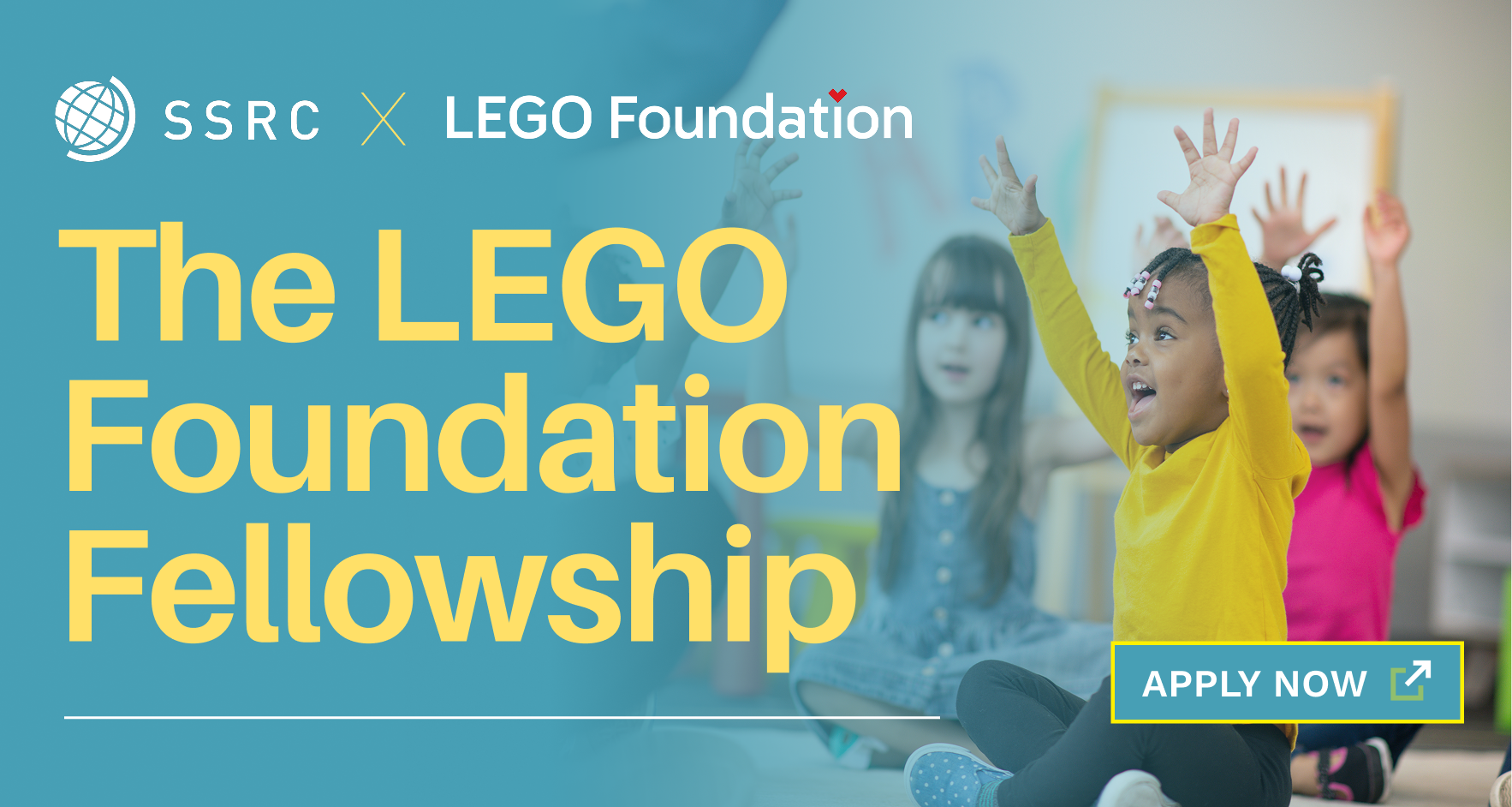
Apply for LEGO Foundation Fellowship 2027
Deadline: Jul 31, 2026
Donor: LEGO Foundation
Grant Type: Fellowship
Grant Size: $100,000 to $500,000
Countries/Regions: Aland Islands, Albania, Algeria, American Samoa, Andorra, Angola, Anguilla, Antarctica, Antigua and Barbuda, Argentina, Armenia, Aruba, Australia, Austria, Azerbaijan, Bahamas, Bahrain, Bangladesh, Barbados, Belgium, Belize, Benin, Bermuda, Bhutan, Bolivia, Botswana, Bouvet Island, Brazil, British Indian Ocean Territory, Brunei, Bulgaria, Burkina Faso, Cambodia, Cameroon, Canada, Cape Verde, Cayman Islands, Chad, Chile, Christmas Island, Cocos (Keeling) Islands, Colombia, Comoros, Congo (Brazzaville), Cook Islands, Costa Rica, Cote DIvoire (Ivory Coast), Croatia, Cyprus, Czech Republic, Denmark, Djibouti, Dominica, Dominican Republic, Ecuador, Egypt, El Salvador, Equatorial Guinea, Eritrea, Estonia, Ethiopia, Falkland Islands (Malvinas), Faroe Islands, Fiji, Finland, France, French Guiana, French Polynesia, French Southern Territories, Gabon, Gambia, Georgia, Germany, Ghana, Gibraltar, Greece, Greenland, Grenada, Guadeloupe, Guam, Guernsey, Guyana, Heard Island And Mcdonald Islands, Holy See (Vatican City State), Honduras, Hong Kong SAR, Hungary, Iceland, India, Indonesia, Ireland, Isle Of Man, Israel, Italy, Jamaica, Japan, Jersey, Jordan, Kazakhstan, Kenya, Kiribati, South Korea, Kuwait, Kyrgyzstan, Laos, Latvia, Lesotho, Liberia, Liechtenstein, Lithuania, Luxembourg, Macau, Macedonia, Madagascar, Malawi, Malaysia, Maldives, Malta, Marshall Islands, Martinique, Mauritania, Mauritius, Mayotte, Mexico, Micronesia Federated States Of, Monaco, Mongolia, Montserrat, Morocco, Mozambique, Namibia, Nauru, Nepal, Netherlands, Netherlands Antilles, New Caledonia, New Zealand, Nigeria, Niue, Norfolk Island, Northern Mariana Islands, Norway, Oman, Pakistan, Palau, Palestinian Territories, Panama, Papua New Guinea, Paraguay, Peru, Philippines, Pitcairn, Poland, Portugal, Puerto Rico, Qatar, Reunion, Romania, Rwanda, Saint Helena, Saint Kitts And Nevis, Saint Lucia, Saint Pierre And Miquelon, Saint Vincent And The Grenadines, Samoa, San Marino, Sao Tome And Principe, Saudi Arabia, Senegal, Seychelles, Sierra Leone, Singapore, Slovak Republic, Slovenia, Solomon Islands, South Africa, South Georgia And The South Sandwich Islands, Spain, Sri Lanka, Suriname, Svalbard And Jan Mayen, Eswatini, Sweden, Switzerland, Taiwan, Tajikistan, Tanzania, Thailand, East Timor (Timor-Leste), Togo, Tokelau, Tonga, Trinidad And Tobago, Turkmenistan, Turks And Caicos Islands, Tuvalu, Uganda, United Arab Emirates, United Kingdom, United States, United States Minor Outlying Islands, Uruguay, Uzbekistan, Vanuatu, Vietnam, British Virgin Islands, United States Virgin Islands, Wallis And Futuna, Western Sahara, Zambia, Saint Barthélemy, Kosovo, Curaçao, Bonaire Sint Eustatius and Saba, Saint Martin (French Part), Sint Maarten (Dutch Part)
Area: Children, Early Child Development, Research
The LEGO Foundation is inviting applications for its fellowship designed to support early- and mid-career researchers whose work advances understanding of how children thrive across diverse contexts.
For more information, visit https://www.ssrc.org/programs/the-lego-foundation-fellowship/application-details/
Premium Link: https://grants.fundsforngospremium.com/opportunity/op/apply-for-lego-foundation-fellowship-2027
Read more
By: Baboki Gaolaolwe-Major
Due Date: Jul, 31, 2026
Education

Leave a comment