

Browse

No Preview Available
Applications open for Fit 4 Start Startup Accelerator Programme
Deadline: Jul 10, 2026
Donor: Luxinnovation
Grant Type: Training
Grant Size: $100,000 to $500,000
Countries/Regions: All Countries
Area: Business & Industry, Startups, Artificial Intelligence, Information Technology, Innovation
The Fit 4 Start Startup Accelerator Programme provides support to early-stage and innovative startups with coaching, mentoring, and equity-free funding to help them launch and scale in the European market.
For more information, visit https://events.luxinnovation.lu/e/fit-4-start-17
Premium Link: https://grants.fundsforngospremium.com/opportunity/op/applications-open-for-fit-4-start-startup-accelerator-programme
Read more

By: Baboki Gaolaolwe-Major
Due Date: Jul, 10, 2026
Science, Technology an...
Leave a comment
No Preview Available
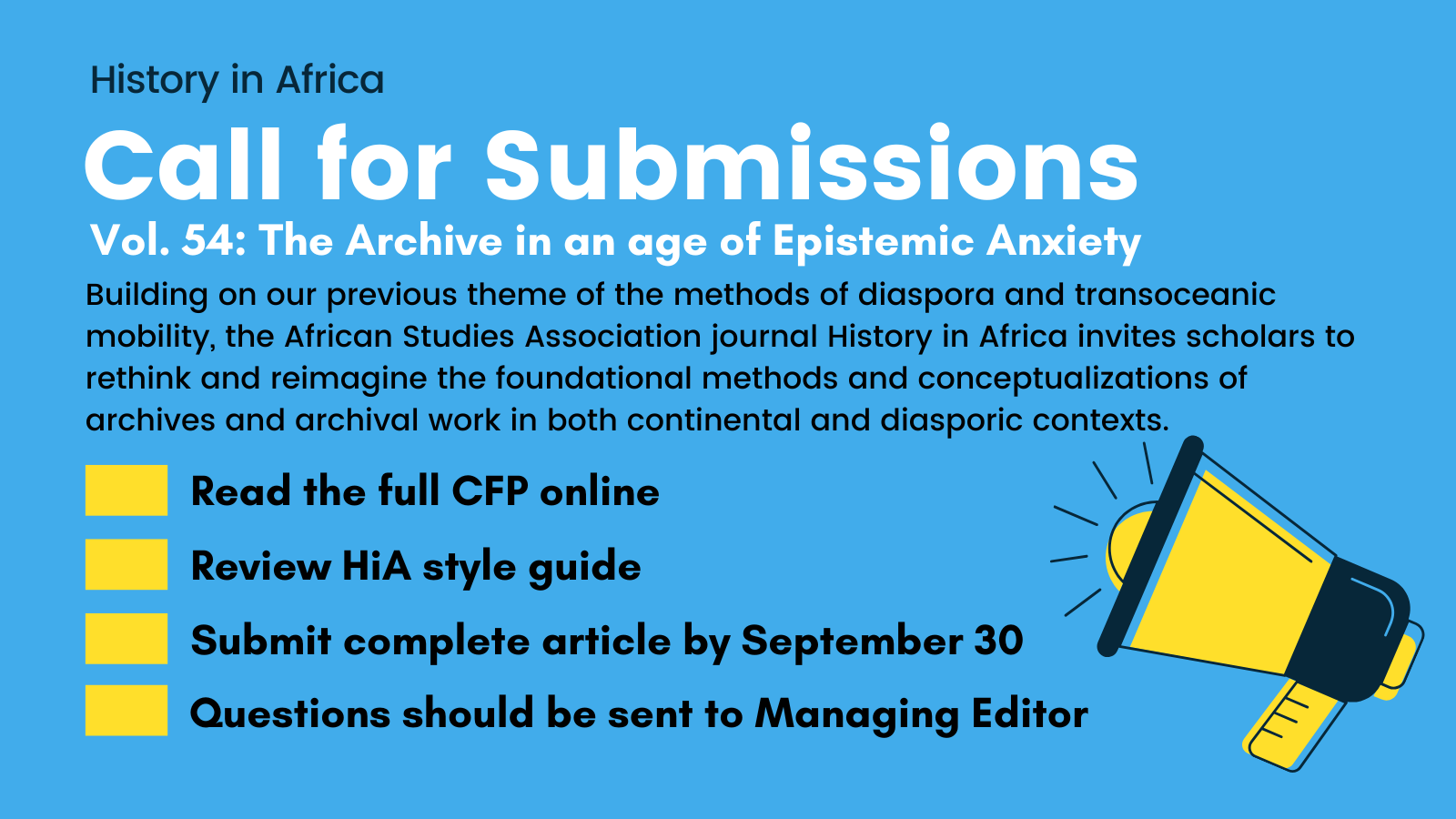
Submit to HiA's Vol 54 CFP!
The History in Africa editorial team is seeking submissions for the upcoming volume. Articles selected for publication will be included in the 2027 volume of History in Africa. The Archive in an age of Epistemic Anxiety:Building on our previous theme of the methods of diaspora and transoceanic mobility, the African Studies Association journal History in Africa invites scholars to rethink and reimagine the foundational methods and conceptualizations of archives and archival work in both continental and diasporic contexts. Read the full call and submission guidelines online.
As always, submissions that fall outside the scope of this call are welcome by the deadline and throughout the year.
We welcome single authored and collaborative scholarship from senior scholars and emerging scholars alike.Review the journal style guide and submit by September 30, 2026.
Read more
By: Baboki Gaolaolwe-Major
Due Date: Sep, 30, 2026
Education
Leave a comment

CfA: IV. International Symposium on Clothing Culture in Social Sciences btw. 21.–23.10.2026
V. International Symposium on Clothing Culture in Social Sciences btw. 21.–23.10.2026 at the Marmara University, Istanbul (Hybrid)
Planned as a continuation of the SOB?TÜRK Symposium, the SOB?TÜRK 2026 themed around Clothing Culture aims to examine the phenomenon of clothing from a multidisciplinary social sciences perspective. Among the primary objectives of the symposium are to investigate the transformations of clothing culture throughout cultural geography from past to present and to discuss the interaction between traditional clothing patterns and modern/global fashion understandings.
Within this context, our symposium aims to reveal the aesthetic values and symbolic meanings of clothing culture while also discussing how this cultural heritage can be preserved and adapted to contemporary life. With the contributions of scholars from various disciplines within the social sciences, clothing culture will be addressed from historical, sociological, anthropological, economic, geographical, artistic, and literary perspectives, thereby providing an interdisciplinary platform for understanding broader social transformations.
Abstracts should be submitted in accordance with the abstract submission form until 30 July 2026 to: sobiturk@marmara.edu.tr.
Read more
By: Baboki Gaolaolwe-Major
Due Date: Jul, 31, 2026
Education
Leave a comment
Call for contributions: Workshop: The Theft of Art? Art Theories in Light of Global Art History
Call for contributions: Workshop: The Theft of Art? Art Theories in Light of Global Art History
(University of Strasbourg, 8 January 2027)
Building on Jack Goody’s (2007) highly influential thesis of The Theft of History, this workshop aims to address an “institution” that this critique of the Eurocentric historiographical model imposed on “the rest of the world” left largely unaddressed: the institution of art. By asking why art has escaped this ambitious and coherent theory in terms of its self-reflexivity and decentring, the workshop intends to put forward the hypothesis of a theft of art in the sense of a process of conceptual capture through which the authoritative, hegemonic, European theorising and historicising doxa has normalised its own, situated, artistic experience while obscuring its minority, or “provincial”, status, thus “stealing” the plurality of artistic concepts, terminologies, languages, and narratives produced by other cultures. Despite its heuristic value, Goody’s theft thesis, along with his work on the image—particularly his theory of the cognitive contradiction caused by representation (Goody, 1997; Chevalier & Mayor, 2009)—paradoxically appears to be a case in point of the cognitive contradictions embedded in discourses on art that purport to be self-reflexive and decentred, yet which perpetuate Eurocentric, asymmetrical and hierarchical frames of reference and teleological narratives. This workshop proposes to scrutinise this paradox.
Read more
By: Baboki Gaolaolwe-Major
Due Date: Jul, 17, 2026
Education
Leave a comment
Call for Applications: Global Geographies of the Holocaust: Mapping Jewish Refugee Resettlement
Moskowitz/Rafalowicz International Research Workshop
October 5–7, 2026 and July 26–30, 2027
Application deadline: Friday, July 17, 2026
The Jack, Joseph and Morton Mandel Center for Advanced Holocaust Studies at the United States Holocaust Memorial Museum invites applications for the Moskowitz/Rafalowicz International Research Workshop Global Geographies of the Holocaust: Mapping Jewish Refugee Resettlement. The Mandel Center will co-convene this workshop with Sandra Gruner-Domic and Pragya Kaul Guido in cooperation with NYU Washington, DC. Anne Kelly Knowles, the 2026-27 Ina Levine Invitational Scholar, will serve as an advisor to the workshop participants. The workshop will meet in two sessions in Washington, DC, and will include research and convenings at the United States Holocaust Memorial Museum and NYU Washington, DC. The first session will be held October 5–7, 2026 and the second July 26–30, 2027.
Read more
By: Baboki Gaolaolwe-Major
Due Date: Jul, 17, 2026
Education
Leave a comment
No Preview Available
Call for Papers + Conference Opportunity | "Teaching World History in the Postmodern Classroom"
Opportunity Summary
World History Bulletin (World History Association) is seeking submissions for a special issue on Teaching World History in the Postmodern Classroom. The issue explores how world history education can foster empathy, critical thinking, civil discourse, and global understanding while helping students engage with diverse perspectives and complex historical and contemporary issues.
Suggested Topics
Historical empathy and perspective-taking
Critical thinking and evaluating historical evidence
Civil discourse and difficult conversations
Storytelling and historical understanding
Global connections and contemporary relevance
Public history and community engagement
Preparing students for global citizenship
Submission Types
Research articles
Pedagogical essays
Classroom case studies
Curriculum projects
Reflective practitioner essays
Public history and community-engaged learning initiatives
Conference Opportunity
Authors are encouraged to present at the 2026 H-Net Teaching Conference (August 17–20, 2026, virtual). Accepted conference presenters will receive first consideration for inclusion in the special issue.
Deadlines
H-Net Conference Abstracts
Deadline: July 1, 2026
Requirements:
200-word abstract
Brief CV
Contact: Heather Brothers (brothe10@msu.edu)
Special Issue Submissions
Deadline: September 15, 2026
Requirements:
Articles: 1,500–6,000 words
Chicago Manual of Style (18th ed.)
Endnotes, American English, 11-point Garamond
Contact
Joseph M. SnyderEditor-in-Chief, World History Bulletinjmsnyder@semo.edu
Website: https://www.thewha.org/world-history-bulletin
Read more

By: Yasmine Ben Slimane
Due Date: Jul, 1, 2026
Education
+1
Leave a comment
Business History Special Issue – Call for Papers
Theme
Indigenous Entrepreneurship under Colonialism and Beyond:Institutional Negotiation, Exclusion and Resilience
Looking for papers on
Indigenous entrepreneurship
Colonialism
Business history
Consumer culture
Markets
Institutions
Entrepreneurship
Timeline:
Informal enquiries welcome: June-September 2026
Abstract / proposal deadline (800–1,000 words)
1 October 2026
Decisions on abstracts
1 November 2026
Paper-development workshop(s)
Newcastle Business School, Northumbria University
Full paper submission deadline
1 May 2027
First-round peer-review decisions
September 2027
Revised paper deadline
1 February 2028
Final revision deadline
1 May 2028
Final acceptance target
June 2028
Expected online publication and launch
Autumn 2028
Expected print publication
Early to mid-2029
Submission Requirements: Authors are invited to submit an extended abstract or proposal for initial consideration. Submissions should be approximately 800–1,000 words and clearly set out the article’s research question, historical scope (including timeframe and location), sources and methodology, and anticipated contribution to the literature. Please also provide a tentative title, author name(s), affiliation(s), and contact information.
Proposals should be sent by 1 October 2026 to himadri@xlri.ac.in, with the other editors copied in: marktadajewski@gmail.com, andrew.perchard@otago.ac.nz, and zpittaki001@dundee.ac.uk. The email subject line should read: “CFP – Indigenous Entrepreneurship under Colonialism and Beyond Special Issue.”
Formatting and Length: Final papers should adhere to Business History guidelines (typically in the range of 8,000–10,000 words, including notes and references). Authors will be provided detailed instructions for manuscript preparation upon acceptance of proposals. We welcome informal inquiries if you have questions about the fit of a topic or the preparation of your proposal. All articles will be submitted through the Submission Portal for the journal in order to be peer-reviewed before acceptance for publication.
Read more
By: Yasmine Ben Slimane
Due Date: Oct, 1, 2026
Culture and society
+1
Leave a comment
No Preview Available
NCSA BIPOC Scholars Prize
Award Amount: $500
Eligibility: Scholars who identify as BIPOC and have published a qualifying article.
Requirement: Published article related to the long nineteenth century.Link: https://ncsaweb.net/bipoc-scholars-prize/
Deadline: July 1, 2026
Read more
By: Yasmine Ben Slimane
Due Date: Jul, 1, 2026
Other
Leave a comment
No Preview Available
NCSA Article Prize
Award Amount
$500
Eligibility
Anyone with a qualifying scholarly article on the long nineteenth century.
Requirement
Published article in:
2025
January–June 2026
Link https://ncsaweb.net/ncsa-article-prize/Deadline
📅 July 1, 2026
Read more
By: Yasmine Ben Slimane
Due Date: Jul, 1, 2026
Culture and society
+1
Leave a comment
No Preview Available
NCSA Emerging Scholars Award
Award Amount
$500
For scholars:
Currently in doctoral studies OR
Within 6 years of earning a doctorate
Requirement
A published article from:
2025
January–June 2026
Link
https://ncsaweb.net/ncsa-emerging-scholars-award/
Deadline
📅 July 1, 2026
Best for
PhD students and early-career scholars.
Read more
By: Yasmine Ben Slimane
Due Date: Jul, 1, 2026
Youth empowerment
+2
Leave a comment

Journal of the History of Ideas Graduate Student Symposium 2026
Theme
"Prophecy, Prediction, and the Politics of Futurity"
What it is
A graduate-student-only symposium where accepted participants present article-length papers and receive feedback from editors.
Format
Virtual (Zoom)
October 17, 2026
Eligibility
Graduate students at any stage.
Benefits
Present your work
Receive editorial feedback
Network with scholars
Strengthen future publication prospects
Application Requirement
Abstract under 500 words.
Deadline
📅 June 22, 2026
Key details regarding the event:
Abstract Submission: Applicants must submit a 500-word abstract to blogjhi@gmail.com.
Email Subject Line: Must include "Symposium Abstract".
Event Structure: Accepted students will pre-circulate their papers, present on a panel, and receive direct feedback from peers and Journal of the History of Ideas editorial board members.
Precirculation Deadline: Accepted students will need to send a journal-length paper by October 2, 2026. [1, 2]
For detailed guidelines and thematic context, you can read the official JHI Graduate Student Symposium 2026 Call for Proposals. [1]
Read more
By: Yasmine Ben Slimane
Due Date: Jun, 22, 2026
Culture and society
+1
Leave a comment

Matrix Journal – Call for Papers
Theme: Gender, Sexualities, and African Matricultures
What it is
A peer-reviewed academic journal issue seeking research articles, creative works, and personal reflections on gender, sexuality, women, motherhood, and femininity in African societies.
Who can apply
Graduate students
Researchers
Academics
Independent scholars
Creative practitioners
Submission Requirements
200-word abstract
50-word biography
Deadline
📅 June 29, 2026
Publication
Issue 6:1 (Spring 2027) of Matrix: A Journal for Matricultural Studies
Contact
lrowlatt@networkonculture.cahttps://journal.networkonculture.ca/index.php/matrix/announcement/view/5
Read more
By: Yasmine Ben Slimane
Due Date: Jun, 29, 2026
Culture and society
+1

Leave a comment