

Feed
-
ArticleUB–MSU Partnership Builds Bridges Between Science and SocietyThe University of Botswana (UB) and Michigan State University (MSU) are working together to strengthen the role of science, technology, and innovation (STI) in solving pressing global challenges through their joint project, Promoting Science Communication and Engagement through Training and Digital Media Platforms. Supported by the Alliance for African Partnership’s (AAP) Partnership for Innovative Research in Africa (PIRA) seed funding program, the initiative seeks to bridge the gap between science and society by equipping young scholars and early-career researchers with essential science communication skills. The award-winning project focuses on improving scientists' ability to engage diverse audiences, including policymakers, funders, and the wider public. Its goal is to foster scientific literacy, build public trust in research, and ensure that scientific knowledge directly contributes to solving pressing societal challenges. Key activities include science communication training workshops for postgraduate students and early-career researchers; mentorship programs pairing young scientists with experienced communicators; a 3-Minute Thesis (3MT) competition, which provides a platform for students to showcase their research in clear and engaging ways; and digital media platforms designed to create interactive spaces between scientists and the public. Dr. Mogopodi (University of Botswana) emphasized that “science communication is not just about simplifying research, but about creating meaningful dialogue between scientists and communities.” Dr. McFarlane-Alvarez (Michigan State University) highlighted the importance of international collaboration, noting that the partnership between UB and MSU “brings together diverse perspectives from the global North and South, creating models of training and engagement that can be replicated across Africa.” The project also aligns with the Alliance for African Partnership (AAP) imperatives, with a strong focus on education, youth empowerment, and gender equality, ensuring that underrepresented groups, particularly women in STEM, are included in science communication initiatives. With this award, the team plans to expand its activities, improve its digital platforms, and extend outreach to broader audiences. The recognition underscores the vital role of science communication in advancing research impact, attracting funding, and shaping evidence-based policies. This achievement marks a milestone in the growing movement to make science more accessible, inclusive, and impactful across Africa and beyond.By: Baboki Gaolaolwe-MajorWednesday, Sep 17, 2025EDUCATION+1

-
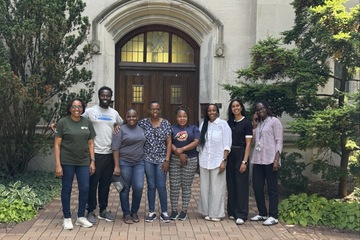
ArticleAfrican Futures Cohort 5 Arrives On CampusAlliance for African Partnership (AAP), a consortium of ten leading African universities, Michigan State University (MSU), and a network of African research institutes, is excited to welcome the fifth cohort of the African Futures Research Leadership Program to MSU for the in-person portion of the program. Each early career scholar is paired with a faculty mentor from MSU and their home institution for one year of virtual and in-person collaboration to strengthen research skills, innovations in teaching, writing of scholarly and/or policy publications, dissemination of research results and grant proposals. A consortium-wide initiative, the African Futures program is designed to strengthen the capacity of a cadre of African researchers to return to their home institutions and become scientific leaders in their community, establish long-term partnerships with MSU faculty, co-create innovative solutions to Africa’s challenges, and in turn become trainers of the next generation of researchers. African Futures Cohort 5: Alfdaniels Mabingo Performing Arts and Film Makerere University Home Mentor - Sylvia Antonia Nakimera Nannyonga-Tamusuza, Dept of Performing Arts and FilmMSU Mentor – Philip Effiong, Dept of English, Theater Studies & Humanities & Gianina Strother, Dept of African American and African Studies Gladys Gakenia Njoroge Pharmacy Practice and Public Health United States International University – Africa Home Mentor - Calvin A. Omolo, Dept of Pharmacy Practice and Public HealthMSU Mentor - Yuehua Cui, Dept of Statistics and Probability Seynabou Sene Plant Biology University Cheikh Anna Diop Home Mentor - Abdala Gamby Diedhiou, Dept of Plan BiologyMSU Mentor - Lisa Tiemann, Dept of Plant, Soil, and Microbial Sciences Portia T. Loeto Educational Foundations (Gender Studies Section) University of Botswana Home Mentor - Godi Mookode, Dept of SociologyMSU Mentor - Soma Chauduri, Dept of Sociology Betina Lukwambe Aquaculture Technology University of Dar es Salaam Home Mentor – Samwel Mchele Limbu, Dept of AquacultureMSU Mentor - Abigail Bennett, Dept of Fisheries and Wildlife & Maria Claudia Lopez, Dept of Community Sustainability Assilah Agigi Business Management University of PretoriaHome Mentor - Alex Antonites, Dept of Business Management MSU Mentor - Sriram Narayanan, Dept of Supply Chain Management Miriam Nthenya Kyule Agricultural Education and Extension Egerton University Home Mentor - Miriam Karwitha Charimbu, Dept of Crops, Horticulture and Soils MSU Mentor - Susan Wyche, Dept of Media and Information Studies Asha Nalunga Agribusiness and Natural Resource Economics Makerere University Home Mentor - Bernard Bashaasha, Dept of Agribusiness and Natural Resource Economics MSU Mentor - Saweda Liverpool-Tasie, Dept of Agricultural, Food, and Resource Economics Ezinne Ezepue (participating virtually)Theatre & Film Studies University of Nigeria, Nsukka Home Mentor - Chinenye Amonyeze, Dept of Theatre & Film StudiesMSU Mentor - Jeff Wray, Dept of English “We were extremely impressed with the quality and diversity of applications we received for this cohort of the African Futures program. We are excited to build on the successes of past cohorts and continue to evolve this program as we support the next generation of African research leaders,” said Jose Jackson-Malete, co-director of the Alliance for African Partnership. Differing from previous cohorts, Cohort 5 is piloting a hybrid model of the African Futures program. The scholars began their work in February 2025 virtually, then will spend the fall semester at Michigan State University working closely with their MSU mentor. They will then complete the rest of their year back at their home institution, culminating in a research showcase in February 2026 to share the research they’ve done. Partnerships between mentors and mentees are expected to continue beyond the end of the program and lead to sustainable collaboration and future funding opportunities.By: Baboki Gaolaolwe-MajorWednesday, Sep 17, 2025EDUCATION
-
PostScience Communication Workshop 4 with Dr. John Besley on August 11, 2025 https://youtu.be/yuOzUHGBgeQBy: Justin RabineauWednesday, Sep 17, 2025EDUCATION
-
ArticleEngineering a Sustainable Future Through Climate-Smart AgricultureA profile of MSU Assistant Professor and AAP GEF Awardee, Dr. Daniel Uyeh Science and technology are central to tackling global challenges like climate change and food insecurity. In June 2025, the Alliance for African Partnership (AAP) launched the Faculty Global Engagement Fund (GEF) to help faculty maintain momentum in their research endeavors and international collaborations by providing travel support to engage with African partner institutions and/or to present their research at conferences or other public forums. Among the inaugural GEF cohort is MSU faculty member Dr. Daniel Uyeh, a Nigerian scientist and engineer whose work integrates advanced sensors, automated weather stations, and AI-enabled decision-support systems to turn real-time climate data into actionable guidance for farmers and policymakers—strengthening food security and resilience across the continent. Born and raised in Nigeria, Dr. Uyeh spent most of his childhood in rural neighborhoods. There he witnessed firsthand how the practice of farming and knowledge of agriculture shaped community livelihoods. He also witnessed the work of his father, a vocational teacher who taught agriculture to the community to better improve their farming capabilities. Inspired by his father’s role as a teacher and his experience in farming communities, Uyeh focused his academic career on agriculture. From his internships in biotechnology and pharmaceuticals to his Bachelors, Masters, and PhD degrees, he has been studying the field of agriculture for over a decade. Currently, he is working as both assistant professor in the Department of Biosystems and Agricultural Engineering as well as a principal investigator in the Climate-Smart Decision Support Systems Group of MSU. He is a Nigerian scientist and engineer who, in his own words works on “multidisciplinary research projects towards improving efficiency and minimizing production costs, thus ensuring resilient and sustainable agriculture”. His resume is impressively extensive and his most recent project, which he highlighted during the application for GEF support, continues to show his dedication and experience in the field of agricultural research. This project focuses on the development and deployment of automated weather stations and other advanced sensory technologies, calibrated to an integrated decision support system (DSS). The DSS will translate real time climate data into actional insights for farmers and policy makers, allowing timely informed decisions on critical aspects of farming and agriculture. By stabilizing food supplies in the face of erratic weather, this work has the potential to deliver immediate, measurable impact for communities across Sub-Saharan Africa. Uyeh and his team have already developed and piloted an integrated platform that provides real-time, weather and advisory services for farmers, allowing them to better prepare for the challenges facing their farms and livestock. In the future he intends to expand the deployment of automated weather sensory technology as well as the DSS system across the entirety of Africa, doing so through further partnerships with African government agencies, many of whom are already investing in adaptation and agricultural digitization. In Uyeh’s words: “The end goal of my research is to create AI-enabled, climate-smart tools that make agriculture more resilient, sustainable, and profitable. My work aims to provide farmers, especially smallholders, women, and youth, with reliable, hyperlocal decision-support systems that help them adapt to climate change, reduce input costs, and improve yields. At the same time, I aim to support breeders and policymakers with enhanced data to inform varietal development, resource utilization, and climate adaptation strategies. Ultimately, my vision is to contribute to transforming agriculture from a system vulnerable to erratic weather and labor shortages into one that is data-driven, low-emission, and sustainable, securing food systems and livelihoods for millions worldwide.” In our interview for this article, Uyeh was asked what he would say to future researchers inspired by his example—just as he was by his father. His advice: “Research is about exploring the unknown, asking questions others may overlook, and learning from every setback. Stay curious, stay resilient, and view failures not as dead ends but as stepping stones toward discovery and impact.”By: Baboki Gaolaolwe-MajorWednesday, Sep 17, 2025EDUCATION+1
-
OpportunityAccelerate your career. Transform your research. Expand your impact.The CIFAR Global Scholars Program offers early-career researchers the opportunity to develop and lead high-risk, high-reward interdisciplinary research, expand their professional networks and receive focused leadership training in their pivotal first years as independent investigators. These experiences accelerate the rise of research leaders who are positioned to drive new discoveries and open new fields of inquiry. CIFAR welcomes applications from candidates across the natural, biomedical, and social sciences, as well as the humanities. Successful applicants join one of CIFAR’s interdisciplinary research programs, collaborating with global research leaders to advance transformative knowledge and address some of the most important questions facing science and humanity. Applications for the 2026-2028 cohort of CIFAR Global Scholars are open until November 5, 2025 (12 PM Eastern Standard Time).APPLY HERE: https://cifarportal.smapply.io/By: Baboki Gaolaolwe-MajorWednesday, Sep 10, 2025EDUCATION
 No Preview Available
 -
OpportunityPrinceton in Africa Fellowship 2026–27 (Fully Funded)🚨 Applications Open: Princeton in Africa Fellowship 2026–27 (Fully Funded)This prestigious fellowship offers young professionals and graduates the chance to work with leading organizations across Africa in education, health, agriculture, peacebuilding, and more.📅 Deadline: October 27, 2025💡 Open to graduates from U.S.-accredited & African universities🌍 12-month fully funded placements with living stipend, housing & insurance👉 Apply now and take your first step toward a career in international development and global leadership https://lnkd.in/et3KimxwBy: Baboki Gaolaolwe-MajorMonday, Sep 8, 2025EDUCATION
No Preview Available -
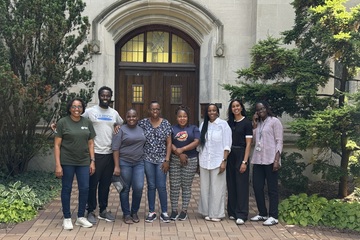
ArticleAfrican Futures Cohort 5 Arrives at MSUAlliance for African Partnership (AAP), a consortium of ten leading African universities, Michigan State University (MSU), and a network of African research institutes, is excited to welcome the fifth cohort of the African Futures Research Leadership Program to MSU for the in-person portion of the program. Each early career scholar is paired with a faculty mentor from MSU and their home institution for one year of virtual and in-person collaboration to strengthen research skills, innovations in teaching, writing of scholarly and/or policy publications, dissemination of research results and grant proposals. A consortium-wide initiative, the African Futures program is designed to strengthen the capacity of a cadre of African researchers to return to their home institutions and become scientific leaders in their community, establish long-term partnerships with MSU faculty, co-create innovative solutions to Africa’s challenges, and in turn become trainers of the next generation of researchers. African Futures Cohort 5: Alfdaniels Mabingo Performing Arts and Film Makerere University Home Mentor - Sylvia Antonia Nakimera Nannyonga-Tamusuza, Dept of Performing Arts and FilmMSU Mentor – Philip Effiong, Dept of English, Theater Studies & Humanities & Gianina Strother, Dept of African American and African Studies Gladys Gakenia Njoroge Pharmacy Practice and Public Health United States International University – Africa Home Mentor - Calvin A. Omolo, Dept of Pharmacy Practice and Public HealthMSU Mentor - Yuehua Cui, Dept of Statistics and Probability Seynabou Sene Plant Biology University Cheikh Anna Diop Home Mentor - Abdala Gamby Diedhiou, Dept of Plan BiologyMSU Mentor - Lisa Tiemann, Dept of Plant, Soil, and Microbial Sciences Portia T. Loeto Educational Foundations (Gender Studies Section) University of Botswana Home Mentor - Godi Mookode, Dept of SociologyMSU Mentor - Soma Chauduri, Dept of Sociology Betina Lukwambe Aquaculture Technology University of Dar es Salaam Home Mentor – Samwel Mchele Limbu, Dept of AquacultureMSU Mentor - Abigail Bennett, Dept of Fisheries and Wildlife & Maria Claudia Lopez, Dept of Community Sustainability Assilah Agigi Business Management University of PretoriaHome Mentor - Alex Antonites, Dept of Business Management MSU Mentor - Sriram Narayanan, Dept of Supply Chain Management Miriam Nthenya Kyule Agricultural Education and Extension Egerton University Home Mentor - Miriam Karwitha Charimbu, Dept of Crops, Horticulture and Soils MSU Mentor - Susan Wyche, Dept of Media and Information Studies Asha Nalunga Agribusiness and Natural Resource Economics Makerere University Home Mentor - Bernard Bashaasha, Dept of Agribusiness and Natural Resource Economics MSU Mentor - Saweda Liverpool-Tasie, Dept of Agricultural, Food, and Resource Economics Ezinne Ezepue (participating virtually)Theatre & Film Studies University of Nigeria, Nsukka Home Mentor - Chinenye Amonyeze, Dept of Theatre & Film StudiesMSU Mentor - Jeff Wray, Dept of English “We were extremely impressed with the quality and diversity of applications we received for this cohort of the African Futures program. We are excited to build on the successes of past cohorts and continue to evolve this program as we support the next generation of African research leaders,” said Jose Jackson-Malete, co-director of the Alliance for African Partnership. Differing from previous cohorts, Cohort 5 is piloting a hybrid model of the African Futures program. The scholars began their work in February 2025 virtually, then will spend the fall semester at Michigan State University working closely with their MSU mentor. They will then complete the rest of their year back at their home institution, culminating in a research showcase in February 2026 to share the research they’ve done. Partnerships between mentors and mentees are expected to continue beyond the end of the program and lead to sustainable collaboration and future funding opportunities. For more information, visit the Alliance for African Partnership websiteBy: Justin RabineauThursday, Sep 4, 2025AGRI-FOOD SYSTEMS+6

Leave a comment