

Feed
-
OpportunitySANRAL Scholarships for High School Learners (South Africa)Deadline: Sep 30, 2026 Donor: South African National Roads Agency SOC Limited Grant Type: Scholarship Grant Size: Not Available Countries/Regions: South Africa Area: Education, Youth & Adolescents The South African National Roads Agency (SANRAL) is inviting applications for its Scholarship Programme to support high school learners in South Africa with their educational expenses and academic development. For more information, visit https://www.nra.co.za/Scholarships Premium Link: https://grants.fundsforngospremium.com/opportunity/op/sanral-scholarships-for-high-school-learners-south-africaBy: Baboki Gaolaolwe-MajorFriday, Jun 5, 2026YOUTH EMPOWERMENT+1
 No Preview Available
 -
OpportunityStandard Funding Program in Alzheimer’s Disease ResearchDeadline: Sep 01, 2026 Donor: BrightFocus Foundation Grant Type: Grant Grant Size: $100,000 to $500,000 Countries/Regions: All Countries Area: Diseases, Health, Research The BrightFocus Foundation is accepting applications for its FY27 Standard Funding Program in Alzheimer’s Disease Research to support innovative and high-impact research focused on Alzheimer’s disease and related dementias. For more information, visit https://www.brightfocus.org/about/for-scientists/apply-for-a-research-grant/alzheimers-disease-research-request-for-proposals/ Premium Link: https://grants.fundsforngospremium.com/opportunity/op/standard-funding-program-in-alzheimers-disease-researchBy: Baboki Gaolaolwe-MajorFriday, Jun 5, 2026HEALTH AND NUTRITION
 No Preview Available
 -
OpportunityPostdoctoral Fellowship Program in Alzheimer’s Disease ResearchDeadline: Sep 01, 2026 Donor: BrightFocus Foundation Grant Type: Fellowship Grant Size: $100,000 to $500,000 Countries/Regions: All Countries Area: Diseases, Health, Research The BrightFocus Foundation is inviting applications for its FY27 Postdoctoral Fellowship Program in Alzheimer’s Disease Research to support early-career scientists conducting innovative research on Alzheimer’s disease and related dementia. For more information, visit https://www.brightfocus.org/about/for-scientists/apply-for-a-research-grant/alzheimers-disease-research-request-for-proposals/ Premium Link: https://grants.fundsforngospremium.com/opportunity/op/postdoctoral-fellowship-program-in-alzheimers-disease-researchBy: Baboki Gaolaolwe-MajorFriday, Jun 5, 2026HEALTH AND NUTRITION
No Preview Available -
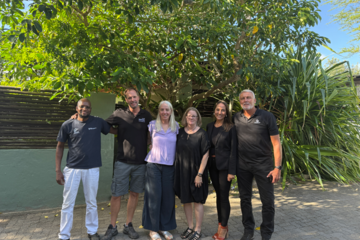
ArticleImpact of PIRA Grant on Sharks, Whales, Coral, Students, and South Africa’s Largest Marine ParkI’ll never forget hitting the submit button for our PIRA proposal, Bridging the Gap: Strengthening Conservation, Community, and Education, in South Africa’s Largest Coastal Marine Protected Area. After months of meetings, discussion, and zoom calls which led to weeks of writing and rewriting, we felt excited and hopeful. We were thankful that Michigan State had an opportunity for projects like this but were also concerned because our project was so unique and different. The hard work paid off when we were named as one of the recipients of this funding. Not only were our main partners, the University of Pretoria, and the South African NGO SharkLife Conservation thrilled, but three other universities in the United States and two in South Africa were ready to help make a difference. The main objectives of the project were to hold several zoom sessions to allow collaboration between the different entities, and also to have three workshops in Sodwana Bay in the Kwa-Zulu Natal province of South Africa. The workshops had two main goals. First, to bring together researchers that work in the area to monitor, protect, and conserve the iSimangaliso marine park and World Heritage site. Second, to engage the community in order to recognize the importance and impact of this marine park on their lives.The work with the community has been one of the highlights of this project. Overall, the Zulu culture is focused on farming and raising cattle. Their interaction with the ocean by which they live is minimal. Each year, thousands of tourists from Europe and North America come to their area to scuba dive on one of the healthiest coral reefs left in the world. Yet, the local communities have not yet been exposed to the value of this resource. This project helped to change that. Being able to take a boat full of Zulu school children out on the ocean to listen to whales and dolphins and to watch these magnificent marine mammals leap out of the ocean was incredible. It was a life changing experience for all of those on the boat, me included. A few days later when we took the same children to snorkel in the tide pools, we were again able to witness more firsts for the students. The first time using a mask, the first time seeing a fish swim, the first time appreciating the underwater world. Encouraging the students to put on a mask and lay in the water in their soccer uniform while another student held their feet in 24 inches of water for safety was the barrier. The reward was to see their faces as they stood up in the water and spoke about a hundred words of Zulu with a big smile on their face and then turned to me to say “I saw beautiful fish” in English. What was meant to be a 30-minute activity in the tide pools, turned into over an hour. Each student wanted multiple turns, and I continuously consulted my Zulu-English guide to marine organisms. We later heard that the students told their families and everyone at their school about their experience so when we asked for volunteers for the next workshop, we had a plethora. Among the scientific researchers, we had similar positive results. For the second workshop we hosted professors from Michigan State University, Texas A&M, Mississippi State University, and North Carolina State University. In addition, we had South Africans researcher from the University of Pretoria, Nelson Mandela University and several marine focused NGOs. The governmental and monitoring entities from South African and Kwa-Zulu Natal were also present. It was the first time that such a diverse group came together to protect this World Heritage site and shared their expertise to advance the research and address issues that impact the site. In particular, it was critical for the South African governmental organizations to see how the various university researchers and NGOs were all working together toward a common goal. Following this workshop, several of the pitfalls that were preventing licensing and permitting seemed to evaporate because trust was built between the groups. Data sharing agreement were made and friendships were forged. We still have one remaining workshop to build upon this strong foundation. It will be a pleasure to return to Sodwana Bay again with all the progress of the previous two workshops for more engagement with the community and outputs from the scientific partners. It is one of those rare moments in life as a conservationist when you are optimistic and sure of the win-win-win. It is a win for the community because of the spark of curiosity and scientific knowledge we have started. It is a win for the organisms in the hugely biodiverse marine park to have more people caring about the future. Finally, it is a win for scientists and NGOs who study and want to protect this World Heritage Site.By: Yasmine Ben SlimaneThursday, Jun 4, 2026WATER, ENERGY, AND THE ENVIRONMENT+2
-
ArticleEmpowering Black Youth: From Listening to Learning to Meaningful ActionBlack children and adolescents hold valuable knowledge about what supports their well-being and positive development. It’s this understanding that influences much of my research, which focuses on engaging Black youth’s voices to inform how families, schools, and communities understand youth thriving. My commitment to youth-engaged research approaches stems from the belief that young people know how to name their needs, experiences, and hopes for the future—we just need to listen. Listening to Black Youth to Reimagine the Contexts They Navigate bell hooks (1991) reminds us that theory emerges from lived experience. In this spirit, Black youth theorize as they navigate the relationships, systems, and environments that shape their growth. Recognizing young people as experts challenges adults, including researchers, educators, and community leaders, to take seriously the insights they can offer about their lives and well-being. One way this perspective has informed my work is through my involvement with the Family Voices Project, led by Dr. Emilie Smith, Professor of Human Development and Family Studies and College of Social Science Distinguished Scholar. Through focus groups with Black children ages 5–12 in mid-Michigan, our team explored youth’s experiences of racism and coping, as well as what they identify as necessary for their success in school, family, and community contexts. Even at early ages, Black youth in our study offered thoughtful and deeply perceptive reflections on what they need to thrive. Perhaps most importantly, their responses pointed to tangible policies and programs that could better foster their positive development. For example, participants consistently emphasized the importance of strong relationships and supportive environments. They described how caring family members, encouraging teachers, positive peer connections, and mentors would positively contribute to their sense of well-being and belonging. Many shared that more individualized attention and encouragement at school would strengthen both their motivation and confidence to do well in class. At the same time, children identified several barriers to their well-being. Bullying and teasing surfaced frequently, alongside a desire for more effective adult intervention and support. Concerns about community safety also emerged, particularly fears related to gun violence, highlighting a need for coordinated community safety efforts and responsive firearm policies. In addition, several children described a need for improved food access, underscoring the importance of universal school meals, summer and after school meal programs, community gardens, and other place-based initiatives that promote food security among youth and families. Listening Responsibly, Acting Responsively When Black youth articulate their needs and desires, they offer a roadmap for reshaping the environments that matter most in their lives. Their perspectives provide important insight into the conditions that support their success, as well as the barriers that may hinder their growth and well-being. Creating intentional opportunities for young people to share their experiences and perspectives helps us move beyond adult assumptions and toward programs, practices, and policies that are more responsive to the realities they navigate every day. Even so, listening alone isn’t enough. While creating space for Black youth voice is an important step toward empowerment, it is equally important that their perspectives meaningfully inform the decisions adults often make on their behalf. When youth insights are taken seriously and translated into action, we move closer to creating school, neighborhood, and community environments that are aligned with their lived experiences and developmental needs. Centering Black Youth Expertise to Create Thriving Developmental Contexts As they navigate family, school, and community life, Black youth are continually making sense of who they are, how they relate to others, and how the world responds to them. In doing so, they generate insights that can transform developmental contexts into environments that affirm their identities, respond to their needs, and support their holistic well-being. However, these possibilities can only be realized when adults commit to intentional listening and engage young people as partners in change. Through my scholarship, I aim to affirm Black children and adolescents as active contributors to envisioning healthier and more equitable communities. I’m guided by the belief that when we recognize youth expertise and act on the knowledge they share, we move closer to creating environments where young people—and the communities around them—can truly thrive. ____________________________________ Reference hooks, b. (1991). Theory as liberatory practice. Yale Journal of Law and Feminism, 4(1), 1–12.By: Yasmine Ben SlimaneThursday, Jun 4, 2026CULTURE AND SOCIETY+2
-
ArticleGrowing Opportunities: Empowering Youth & Women Through Horticultural Value ChainsCreating jobs especially for youth and women is a top priority for many African countries. Africa’s rapidly growing population where over 70% are youth has driven significant rural-to-urban migration, as young people seek employment opportunities in urban centers. However, the industry and service sectors in Africa are still growing and unable to absorb the huge influx of youth. Furthermore, the youth are resource constrained with limited access to finance and productive land which increases their vulnerability to poverty. These constraints are exacerbated by the youth’s declining interest in farming. As such, horticultural value chains provide alternative employment opportunities in processing, logistics, transport, wholesale and retailing. We conducted a survey in Nigeria to assess the extent to which the two rapidly expanding horticultural value chains (tomatoes and Green Leafy Vegetables (GLVs)) provide employment to women, men, and youth in Nigeria. Nigeria is the fourteenth-largest tomato producer globally and the second in Africa, and it grows a wide variety of green leafy vegetables (GLVs) across all regions. The study was conducted in two economically and culturally distinct regions of Nigeria, the northern region (Kaduna state) and the Southern region (Oyo state). These states were purposively selected because of their prominent roles in Nigeria’s tomato production. Kaduna state is a major supplier of tomatoes to markets nationwide, while Oyo state is a leader in regional production (for the south west) and primarily serves local and neighboring markets. Our study presents new empirical evidence from more than 4,000 agrifood enterprises spanning micro, small, and medium enterprises. The analysis of employment data from these agrifood enterprises reveals that horticulture value chains generate substantial employment opportunities in both states, not just at the farm level but across processing, transport, wholesale, and retail. Importantly, employment outcomes vary sharply by state context, meaning governors have a decisive role to play. We highlight five key findings and their implication for Nigerian states. Most horticulture farmers hire workers: about 85% of tomato farmers and 70% of GLV farmers employ non-family labor including youth. Off-farm enterprises in vegetable trading, transport, processing, and input supply commonly employ 2–3 permanent workers and about 5 casual workers each month, and these are mainly youth. Across nodes, 25% to over 90% of enterprises hire labor, making horticulture a major state-level employment engine for the youth. Permanent agrifood jobs pay ₦38,000–₦115,000 per month, comparable to semi-skilled formal jobs in Kaduna and Oyo. Casual jobs pay less and are less secure but remain critical for youth and seasonal workers. Together, these results challenge the perception that agrifood value chains are dominated by family labor and highlight their importance for employment both as entrepreneurs and as hired labor in Nigeria for youth and women. In both Kaduna and Oyo, horticulture can contribute to state government efforts to reduce poverty and increase employment. Next steps: We are developing a proposal to generate insights into the role of the horticultural sector in reducing youth unemployment in East Africa and strategies to improve the youth’s interest in farming, with a case study from Uganda and Kenya.By: Yasmine Ben SlimaneThursday, Jun 4, 2026YOUTH EMPOWERMENT+1
-
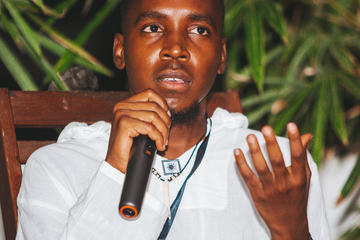
ArticleImmersive Ocean Narratives: Advancing Impact Through XR Storytelling in TanzaniaAlong the coastline of Tanzania, the Indian Ocean has shaped civilizations, livelihoods, spirituality, trade, language, and memory for centuries. From the Swahili fishing communities of the coast to the coral ecosystems surrounding islands such as Zanzibar and Kilwa, the ocean has never merely been water. It has always been an identity. Yet despite its importance, much of what is happening beneath the ocean surface remains invisible to the public eye. Coral reefs bleach silently. Fish populations decline gradually. Coastal communities struggle quietly with changing tides, rising temperatures, and unsustainable fishing pressures. Unlike floods or wildfires, the destruction of marine ecosystems happens out of sight. And because it is unseen, it is often ignored. This is precisely the urgency behind Heroes Of The Indian Ocean, one of Tanzania’s first immersive underwater XR documentary films, and Just Because You Don’t See, an immersive exhibition experience developed by Tanzanian multidisciplinary artist Alex Mkwizu through his studio SEEDE XR. Together, the XR film and exhibition that brought over 350+ ordinary citizens to the launch signal the emergence of a new creative movement in Tanzania — one where immersive storytelling, cultural heritage, documentary practice, environmental activism, and emerging technologies merge into a single emotional experience. At a time when immersive arts are transforming museums, cinemas, and cultural institutions globally, Tanzania is beginning to define its own voice within this new frontier through stories rooted in local communities, coastal realities, and African perspectives.A New Era of Storytelling in Tanzania For decades, environmental storytelling in Africa has relied heavily on traditional documentaries, photography, journalism, or policy reports. While these approaches remain important, they often struggle to emotionally connect audiences to environmental realities they rarely witness directly.Immersive storytelling changes that relationship entirely.Instead of merely observing a story, audiences enter it.Through XR, VR, spatial sound, interactive exhibition design, documentary photography, and sensory installations, immersive experiences create emotional proximity between people and distant realities. The audience no longer stands outside the narrative. They become part of it. Heroes Of The Indian Ocean and Just Because You Don’t See embrace this philosophy by inviting audiences to emotionally experience the realities of the Indian Ocean and the communities whose lives depend on it. The project asks a critical question:How do we create urgency for protecting our oceans? Its answer lies in immersion itself — allowing audiences to witness fragile coral ecosystems, hear firsthand coastal narratives, and emotionally engage with the consequences of climate change and marine destruction before it becomes irreversible.This marks a major shift in East African creative practice. Rather than separating art, science, activism, and technology, immersive storytelling combines them into one interconnected ecosystem.The Ocean as Cultural Heritage When discussing heritage in Africa, conversations often focus on architecture, archaeology, language, textiles, or oral traditions. Yet marine environments themselves are also archives of cultural memory.The Swahili coast has historically depended on the Indian Ocean for trade, food systems, navigation, spirituality, music, cuisine, and economic survival. Fishing communities possess generations of ecological knowledge — understanding tides, seasons, coral behavior, fish migration, and weather patterns through lived experience passed down over centuries.When coral reefs collapse, cultural memory disappears alongside biodiversity. Since coastal communities that have been dependent on fishing for generations and generations can’t continue their traditions. This is why immersive arts matter. They preserve not only visual records, but emotional memory, lived experience, and cultural relationships with nature. The exhibition Just Because You Don’t See follows the journey of a fisherman across seven stages of daily life: preparing equipment, sailing into the sea, setting traps, catching fish, returning to shore, and selling the catch within the community. This narrative structure is deeply significant because it centers coastal communities not as background subjects, but as protagonists of the story.Rather than presenting conservation as an abstract scientific issue, the exhibition grounds environmental change within the everyday realities of Tanzanian fishermen and coastal families. In many ways, this reflects the future of African heritage preservation: documenting living cultures through immersive media before environmental and social transformations erase them.Why Immersive Arts Create Stronger Emotional Impact Traditional media informs. Immersive media transforms perception.Unlike conventional documentaries or static exhibitions, immersive experiences activate multiple senses simultaneously. Audiences do not simply absorb information intellectually; they embody it emotionally. These layers create immersion not only technologically, but psychologically and physically. A visitor hearing the voices of fishermen while experiencing underwater imagery inside an immersive environment is far more likely to internalize the reality of marine collapse than someone scrolling through statistics online.This emotional activation is essential for conservation work because environmental crises often suffer from what psychologists describe as “distance fatigue.” People struggle to emotionally process issues that feel geographically or visually distant.Immersive arts reduce that distance.They allow audiences to feel present inside realities they would otherwise never encounter.Ocean Conservation Through Empathy One of the most powerful aspects of Heroes Of The Indian Ocean and Just Because You Don’t See is the understanding that conservation begins with empathy before policy.Society reacts immediately when forests burn or trees are cut because those events are visible. Yet coral bleaching, marine ecosystem collapse, and underwater biodiversity destruction often happen silently beneath the surface.The ocean becomes invisible infrastructure — essential to human life, yet emotionally disconnected from daily public awareness. Immersive storytelling changes this relationship by making the invisible visible.The projects highlight how oceans support food systems, oxygen production, tourism economies, and marine biodiversity while simultaneously revealing the fragility of coral ecosystems under climate pressure. Importantly, the work does not frame conservation purely as environmental protection. It frames it as cultural continuity, economic survival, intergenerational responsibility, and human connection.That distinction matters enormously in African contexts where environmental narratives have historically been disconnected from local communities and lived realities.Conclusion The significance of Heroes Of The Indian Ocean and Just Because You Don’t See extends far beyond technological innovation.They represent a new philosophy of storytelling — one where art becomes activism, memory becomes immersion, and conservation becomes emotionally personal.These projects remind audiences that the ocean is not separate from human life. It is intertwined with food systems, heritage, identity, labor, spirituality, and survival itself.Most importantly, they challenge society to confront a difficult truth: Just because we do not see environmental destruction happening beneath the ocean’s surface does not mean it is not happening. Immersive arts give us the rare ability to finally look beneath the surface — and perhaps, for the first time, truly feel the urgency before it is too late.By: Yasmine Ben SlimaneWednesday, Jun 10, 2026WATER, ENERGY, AND THE ENVIRONMENT+1

Leave a comment