

Feed
-
African Futures Scholar Betina Lukwambe“I came as a researcher, I am leaving as a global voice.” Meet Dr. Betina Lukwambe, Senior Lecturer at the University of Dar es Salaam (UDSM), Department of Aquaculture Technology, Tanzania.Through the program, she strengthened her communication and leadership skills, preparing her to make an impact beyond her research. ✨She expresses her thanks: “Asante sana (Thank you very much) to Michigan State University for this experience!”By: Baboki Gaolaolwe-MajorThursday, Feb 19, 2026EDUCATION
-
Alliance for African Partnership (AAP) welcomes the largest cohort yet of African Futures Research LFourteen scholars from across the AAP consortium are embarking on a year-long program focused on artificial intelligence and sustainable futures East Lansing, Michigan — Alliance for African Partnership (AAP), a consortium of ten leading African universities, Michigan State University (MSU), and a network of African research institutes, is pleased to announce the sixth cohort of the African Futures Research Leadership Program, a competitive visiting scholar initiative supporting early career researchers from AAP member institutions. This year’s cohort — the largest in the program’s history — will explore the theme Artificial Intelligence in Africa: Transdisciplinary Innovations for Sustainable Futures. Each scholar is paired with mentors from their home institutions and MSU for one year of impactful research, professional development, including curriculum innovation, scholarly and policy writing, grant proposal development, as well as conference attendance. Scholars will engage both virtually and in person with mentors and colleagues across disciplines to co-create research that advances sustainable futures across the continent. “This sixth cohort marks a significant turning point for the African Futures Research Leadership Program,” said Jose Jackson-Malete, co-director of the Alliance for African Partnership. “Welcoming our largest and most interdisciplinary group of scholars to date highlights both the rising demand for collaborative research leadership opportunities and the strength of our partnerships across African institutions. The focus on artificial intelligence and sustainable futures also signals how the program continues to evolve to address emerging global and continental priorities while empowering scholars to lead transformative research in their fields.” This year’s scholars are: Patrick Wafula Wamalwa– Agricultural Engineering, Egerton University Evalyn Wanjiru Mwihia– Veterinary Pathology, Microbiology and Parasitology, Egerton University Florence Ndibuuza– Higher Education, Makerere University Evah Maina– Pharmacy and Health Sciences, United States International University – Africa Keiphe Nani Setlhatlhanyo– Industrial Design and Technology, University of Botswana Bakadzi Moeti– Educational Foundations, Faculty of Education, University of Botswana Thabang Madigoe– Business Management, University of Pretoria Sean Kruger– Economic and Management Sciences, University of Pretoria Sphiwe Skhosana– Natural and Agricultural Sciences, University of Pretoria Daurice Nyirongo– Open, Distance and eLearning (ODeL), Lilongwe University of Agriculture and Natural Resources Elhadji Bassirou Toure– Mathematics and Computer Science, Université Cheikh Anta Diop Nedson Theonest Kashaija– Water Resources Engineering, University of Dar es Salaam Fochi Amabilis Nwodo– Property Law, University of Nigeria, Nsukka Salimatou Traoré– English, Université Yambo Ouologuem of Bamako The program will begin in February 2026 with virtual collaboration, followed by an in-person residency for nine of the scholars at MSU from August through December 2026, and continued virtual engagement into early 2027. Due to new visa restrictions, five scholars will participate virtually during the entire program. Scholars will receive a small grant for research, teaching, and professional development, including conference participation and publication support, as well as a stipend during their MSU residency along with visa and travel support. AAP aims for this cohort to generate innovative research aligned with AI’s potential to contribute to sustainable development in Africa — from health and education to environment, culture, governance, and entrepreneurship — and to lay the groundwork for long-term academic partnerships and future funding opportunities. For more information, visit the Alliance for African Partnership website. This project is made possible with the philanthropic support of Carnegie Corporation of New YorkBy: Justin RabineauWednesday, Feb 18, 2026AGRI-FOOD SYSTEMS+6
-
African Futures Scholar Miriam Kyule"When I go back home, I am inspired to inspire.” 🌟Meet Dr. Miriam kyule (PhD, AGED), a PhD in Agricultural Education and Lecturer of Agricultural Education at Egerton University, Kenya, and a scholar of the Research Leadership Program (Cohort 5).She reflects on her journey through the program and says: “I see this program as a platform that makes you better than coming in.” ✨🤝 Interested in connecting with Dr. Kyule and other scholars? 🎥 Watch her story and see how her journey is shaping her leadership.By: Baboki Gaolaolwe-MajorWednesday, Feb 11, 2026EDUCATION
-
African Futures Scholar Portia Loeto“My hope is really to shine a spotlight on Botswana.” 🌟Meet Dr Portia T. Loeto, Scholar of Gender and Cultural Studies University of Botswana_Official, Botswana.She reflects on her journey: “Collaborating with all these people is a space for me to learn, a space for me to be inspired, and a space for me to dream bigger.” ✨The program supported Portia in expanding her academic network, strengthening cross-disciplinary collaboration, and amplifying research that drives meaningful social dialogue beyond academia.By: Baboki Gaolaolwe-MajorThursday, Feb 5, 2026EDUCATION
-
Michigan State University and the Alliance for African Partnership Awarded $895,000 Carnegie GrantFOR IMMEDIATE RELEASE Michigan State University and the Alliance for African Partnership Awarded $895,000 Carnegie Grant for REIMAGINE Project Advancing Graduate Education and AI in Africa Michigan State University (East Lansing, Michigan) has been awarded a 36-month, $895,000 grant from the Carnegie Corporation of New York under its prestigious Higher Education in Africa program. The grant will support the Alliance for African Partnership (AAP) consortium’s efforts to advance innovative graduate education ecosystems across African universities and to develop a collaborative, transdisciplinary doctoral program focused on artificial intelligence. The AAP REIMAGINE initiative supports forward-thinking strategies that reshape higher education for the future. Through this investment, AAP—MSU’s flagship platform for equitable and sustainable collaboration with African higher education institutions—will expand its work to strengthen graduate student environments, enhance supervisory and research cultures, and foster institutional systems that enable student success on the continent. A key component of the project is the development of multiple Artificial Intelligence Doctoral Training Programs, designed to equip a new generation of African scholars with advanced AI expertise, research skills, and leadership capacity. The initiative will leverage MSU’s long-standing partnerships with universities across Africa, ensuring African-led direction, contextual relevance, and sustainability. “The REIMAGINE Project is fundamentally about examining how doctoral education and research ecosystems across African universities can evolve to better support transdisciplinary scholarship in artificial intelligence,” said Dr. Jose Jackson-Malete, Co-Director of the Alliance for African Partnership and Project Lead for the Carnegie-funded REIMAGINE initiative. “This work is critically needed now. Without intentional investment in doctoral training, supervision systems, and collaborative research environments, Africa risks falling behind in shaping—and benefiting from—the rapid advances in AI that are already transforming societies and economies worldwide.” Over the next three years, the project will: Review and strengthen policies for graduate student mentorship, supervision, and research environments across AAP member institutions. Support institutional innovations that promote student well-being, academic success, and professional development. Launch a continentally grounded transdisciplinary doctoral program focused on artificial intelligence, expanding access to emerging fields that drive economic and societal transformation. Foster deeper collaboration between MSU scholars and African research teams through joint programs, co-created curricula, and capacity-building initiatives. Since its inception in 2016, AAP has worked across the consortium and beyond to promote equitable partnerships, research excellence, and sustainable development solutions. This new investment from Carnegie marks a pivotal milestone in scaling AAP’s impact on higher education transformation. About the Alliance for African Partnership (AAP) AAP is a consortium convened by Michigan State University to promote collaborative, transdisciplinary partnerships among 10 member African institutions, MSU, and global stakeholders. The Alliance focuses on building capacity, supporting innovation, and advancing shared research priorities that address global challenges. About the Carnegie Corporation of New York Founded in 1911 by Andrew Carnegie, the Carnegie Corporation of New York is one of America’s oldest philanthropic foundations focused on advancing knowledge and understanding through grants in education, strengthening U.S. Democracy, international peace and security, and higher education in Africa, supporting initiatives that promote civic engagement, reduce polarization, and foster global cooperation, continuing Carnegie's legacy of social progress. The REIMAGINE program supports bold, future-focused approaches to revitalizing higher education and strengthening global knowledge systems.By: Baboki Gaolaolwe-MajorThursday, Jan 22, 2026YOUTH EMPOWERMENT+2
 No Preview Available
 -
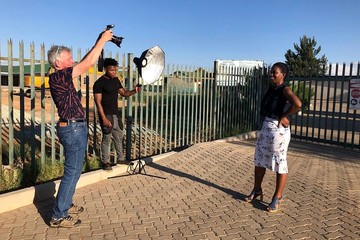
AAP Global Engagement Fund Support Arts-Based Youth Research and EngagementWhen photographer and educator Prof. Peter Glendinning of Michigan State University returned to South Africa this September, his goal went far beyond presenting artwork. Supported by the Alliance for African Partnership (AAP) Global Engagement Fund (GEF), Glendinning traveled to Johannesburg and Cape Town to advance a collaborative, arts-driven research initiative that is reshaping how youth experiences are documented and understood across Africa. For years, Glendinning has been developing Attached to the Soil, a project that pairs portrait photography with metaphor and narrative to explore young people’s aspirations, challenges, and identities. What began as a 2019 Fulbright project in South Africa has evolved—through sustained partnership—into a model for how the arts can generate meaningful social insight. This work aligns directly with AAP’s culture & society priority area, which supports projects that use cultural expression to address complex societal issues. Strengthening a Continental Research Partnership During his visit, Glendinning met with partners at University of Pretoria, one of AAP’s 12 member institutions, including Prof. Zitha Mokomane, a professor in the Department of Sociology and Deputy Dean for Teaching and Learning in the Faculty of Humanities, who has been conducting sociological analysis of the project’s original youth-created images and stories. The findings point to recurring themes: belonging, hope, fear, opportunity, and the persistence of socio-economic barriers. With support from the Global Engagement Fund, the partners spent their time together outlining the next phase of the work—a potential 2027 pan-African expansion that could engage youth from multiple institutions and countries. The goal is to create one of the most comprehensive collections of narrative and visual data on African youth aspirations to date. “The dataset we envision would allow us to compare experiences across countries, contexts, and cultures, using the arts as a bridge,” Glendinning explained. The in-person meetings made possible by the GEF award were essential for refining the research design, establishing a shared methodological framework, and preparing for future proposal development. Cultural Institutions as Crucial Partners Glendinning’s work emphasizes not only the creation of new cultural materials but also the preservation of Africa’s photographic heritage. While in Johannesburg, he met with leaders at the Bensusan Museum of Photography to advance efforts to secure funding for preserving its internationally significant collection of historic photographic equipment and images. He also held discussions at the Nelson Mandela Foundation, which held an 8-month exhibit of the project in 2023, exploring how youth-generated narratives from Attached to the Soil could contribute to public memory and civic learning through the foundation’s ongoing partnership. These engagements expand the project’s reach beyond academia and into community and heritage spaces—an approach deeply aligned with AAP’s focus on research for broader impact. Festival Participation Amplifies Youth Perspectives Glendinning’s work also reached public audiences during the inaugural Cape Town Photography Festival, where Attached to the Soil opened as an exhibition at the Simon’s Town Museum. The festival setting provided a platform for deeper conversation around the project’s themes. During a public dialogue, Glendinning and Malissa Louw, one of the original participants, spoke about the creative process and the realities behind the images—drawing attention to the power of youth storytelling as a form of social documentation. He also led two workshops: a digital photography master-class for community members and a session for 40 students at the Cape Peninsula University of Technology. Both emphasized photography as a tool for reflection, empowerment, and evidence-gathering—illustrating how artistic training can support community insight and youth leadership. A Model for Arts-Driven, Partnership-Based Research Following the festival, Glendinning continued planning with Prof. Mokomane during her September visit to Michigan State University, which was also supported by the GEF. Together, they are refining the concept for the multi-country expansion and identifying ways for AAP partners to contribute to the next phase. For AAP, Glendinning’s and project and his partnership with Mokomane exemplify the role arts and culture can play in addressing societal challenges: by elevating local narratives, strengthening community connections, and deepening understanding across diverse contexts. The Global Engagement Fund is central to this impact—making it possible for faculty like Glendinning to build the relationships and shared vision that long-term, equitable partnerships require. As plans move forward, Attached to the Soil will offer youth across the continent the chance to tell their stories—and help researchers, educators, and communities better understand the world through their eyes.By: Baboki Gaolaolwe-MajorMonday, Dec 15, 2025CULTURE AND SOCIETY+2
-
AAP Steps Up Its Global Footprint at Falling Walls 2025The Alliance for African Partnership (AAP) strengthened its global visibility this year with a significantly expanded presence at the Falling Walls Summit in Berlin, signaling a new phase in Africa’s engagement with one of the world’s leading platforms for science, innovation, and societal impact. The momentum follows a fast-growing collaboration between AAP and the Falling Walls Foundation, an alliance that has already produced tangible results. LUANAR in Malawi became the first institution in the consortium to launch a combined Falling Walls Engage and Lab, followed by the University of Botswana, which introduced the Gaborone Lab in 2025 and is preparing to roll out the Engage program in 2026. For AAP, these developments are more than individual wins: they mark the beginning of a wider rollout across the consortium, designed to strengthen research communication and create a more connected science engagement ecosystem across Africa. At this year’s Summit, AAP member universities made their strongest showing yet. Lab winners from LUANAR and the University of Botswana took the stage in Berlin, showcasing African innovation to an international audience of scientists, investors, policymakers, and global media. Senior leaders from across the consortium also attended, led by Michigan State University’s Vice-Provost for International Studies and Programs, Professor Titus Awokuse. During the delegation meeting with Falling Walls’ Executive Director, Andreas Kosmider, there was clear enthusiasm about the trajectory of the partnership. Discussions focused on deepening African participation in next year’s Summit and widening the circle of collaborators to include government ministries, policymakers, and funding agencies, an effort aimed at opening new channels for African–German cooperation. For AAP, the stakes are high. Strengthening research communication equips young African scientists to tell their stories compellingly, improving public understanding and increasing the influence of research on policy. The Labs, meanwhile, function as early-stage innovation pipelines, giving African entrepreneurs exposure, mentorship, and a global platform for emerging ideas. The partnership also enhances institutional visibility, positioning African universities as active players in global science diplomacy. Planning has already begun for next year’s Summit, with AAP leaders working on a coordinated roadmap to ensure a more visible and more diverse African presence in 2026. The goal is not simply to attend, but to shape the agenda by bringing African voices, research, and innovation to the centre of the global conversation. As AAP expands its Falling Walls footprint, the partnership is beginning to look less like a program and more like an ecosystem-building catalyst. It is strengthening the consortium internally, opening new possibilities externally, and giving African researchers and innovators a much-needed global stage. And if the early signs are anything to go by, the walls separating African science from global visibility are starting to crack, making space for a new era of collaboration and opportunity.By: Baboki Gaolaolwe-MajorThursday, Dec 11, 2025CULTURE AND SOCIETY+3


Leave a comment