

Feed
-
The world needs the contribution of African scientistsCheck out this University World News article on the need for more African scientists. According to authors Marincola and Kariuki, "African science matters not only because African people matter but also because people everywhere in the world will thrive only if science is driven by the best possible talent and initiative of all the peoples of the world." Click the link below to read more: https://www.universityworldnews.com/post.php?story=20201015080006769&fbclid=IwAR3c8vP1yTAOTXW-bH2p_6ak4_mFqREKTBdN9iRlk5jEjz3C0v8a7_wtqtkBy: Elaina LawrenceMonday, Aug 16, 2021HEALTH AND NUTRITION+2
 No Preview Available
 -
Youth as Catalysts for Agricultural Transformation - Borlaug Dialogue/WFP Side EventFollow the link to watch the Youth as Catalysts for Agricultural Transformation - Borlaug Dialogue/WFP Side Event recording. This event featured a discussion about research, programmatic and advocacy efforts underway to advance SBAE in Africa, and a call for collaboration across sectors. Sub-Saharan Africa is home to almost one billion people. By 2050, the population of the region is expected to double, and half will be under the age of 18. Known as the “youth bulge,” this sudden population explosion will exacerbate challenges around youth employment and food security unless policymakers take decisive action, today.By: Elaina LawrenceMonday, Aug 16, 2021YOUTH EMPOWERMENT+1
-
Governing the Pandemic in Large Cities: From the BRICS and BeyondThe African Cities and Internationalization Group hosted by the African Center for the Studies of the US presents Governing the Pandemic in Large Cities: From the BRICS and Beyond Date: 22-23 October 2020 Time: 1:00 PM – 4:00 PM Johannesburg TimeBy: Elaina LawrenceMonday, Aug 16, 2021CULTURE AND SOCIETY+1

-
University of Pretoria Upcoming SymposiumThe University of Pretoria will be hosting a Symposium: Reflections on the Scientific and Social Impact of the COVID-19 Pandemic, taking place on 22 – 23 October 2020. The Vice-Chancellor and Principal of the University of Pretoria, Professor Tawana Kupe, and the Centre for the Advancement of Scholarship (CAS) invite you to a two-day symposium, titled ‘Reflections on the Scientific and Social Impact of the COVID-19 Pandemic’, set to take place on 22 and 23 October 2020. To register for this event, click on the link below: https://up.everlytic.net/public/forms/h/bWEWqAZhBQE2Loju/ZjFjYWQ0YmMxYmUwYzRjYTJkYjEzNGQ5ZWUxOTQwMTBkOGYxODRlNg==By: Elaina LawrenceMonday, Aug 16, 2021HEALTH AND NUTRITION

-
Africa's rapid economic transformationCheck out this article co-authored by Thom Jayne, Adesoji Adelaja, and one of AAP's co-directors, Richard Mkandawire. The article provides a powerful message of hope for Africa. In spite of wars, famine and poverty they argue that Africa has made major strides in living standards, there is clearly a new generation that provide promise for the transformation of the continent. The underlying message is that they have in the making a cadre of African entrepreneurs that are delinking from the past. Click on the link below to read more: https://www.rural21.com/english/current-issue/detail/article/africas-rapid-economic-transformation.htmlBy: Elaina LawrenceMonday, Aug 16, 2021CULTURE AND SOCIETY+2
 No Preview Available
 -
Webinar: Graduate School Application and Experience in North America and Europe-Lagos Studies Assoc.Webinars will be held October, 3, 10, 17, and 24 hosted by the Lagos Studies Association At its annual Conference, the Lagos Studies Association organizes workshops on graduate school application and experience in North America and Europe, featuring graduate school faculty and students. Unfortunately, COVID-19 pandemic did not allow the conference to hold this year. We are happy to hold these events via Zoom Webinars on October 3, 10, 17, and 24. See full schedule below. Graduate School Application and Experience in North America: Perspectives from Graduate Students Date: October 10 Time: 5-7pm (Nigeria Time) Panelists Chair: Tosin Gbogi (Marquette University/African Literature and Popular Culture) Discussants Ayodeji Adegbite (University of Wisconsin-Madison) Samuel Kehinde Adesubokan (University of Victoria) Esther Ajayi-Lowo (Texas Woman’s University) Omoyemi Ajisebutu (Northwestern University) Theophilus Okunlola (University of Wisconsin-Madison) Yolanda Osondu (University of Calgary) Topics for discussion include but not limited to the following: • Preparing for the Graduate Record Examination • Taking the Test of English as Foreign Language/Navigating waiver • Choosing graduate program and writing statement of purpose • Coursework, qualifying exam, and reading concentration • Adjusting to a new academic culture • Conducting fieldwork and sourcing for external funding • Writing your dissertation and preparing for the job market Please click the link below to join the webinar: https://us02web.zoom.us/j/86544791933?pwd=aXBuaC9zNVNnOHM0WnNIWnpyWURYZz09 Webinar ID: 865 4479 1933 Passcode: 990616 Also via LSA Facebook Page: https://www.facebook.com/groups/205111409881162 ---------- Graduate School Application and Experience in Europe: Perspectives from Graduate School Faculty Date: Oct. 17 Time: 5-7pm (Nigeria Time) Panelists Panel Chair: Oliver Coates (University of Cambridge/History) Discussants Shola Adenekan (University of Amsterdam/African Literature and New Media) Simidele Dosekun (London School of Economics and Political Science/Feminist Studies) Emilie Guitard (French National Center for Scientific Research/Anthropology) Steven Pierce (University of Manchester/History) Dmitri van den Bersselaar (Leipzig University /History) Topics for discussion include but not limited to the following: • Things to consider when picking graduate program • Contacting prospective supervisors: Dos and Don’ts • What admission committees look for in application dossier • Writing competitive PhD proposal • Funding for graduate education Please click the link below to join the webinar: https://us02web.zoom.us/j/83891051455?pwd=aG8zeEwydWUvT0NScEFtOEluQjBLUT09 Webinar ID: 838 9105 1455 Passcode: 787421 Also via LSA Facebook Page: https://www.facebook.com/groups/205111409881162 ---------- Graduate School Application and Experience in Europe: Perspectives from Graduate Students Date: Oct. 24 Time: 5-7pm (Nigeria Time) Panelists Panel Chair: Peter Oderinde (University of Basel) Discussants Daniel Chukwuemeka (University of Bristol) Tolulope Ilesanmi (University of Basel) Jammie Titilayo (Technische Universität Darmstadt) Seun Williams (The Graduate School of International and Development Studies) Topics for discussion include but not limited to the following: • Things to consider when picking graduate program • Contacting prospective supervisors: Dos and Don’ts • What admission committees look for in application dossier • Writing competitive PhD proposal • Funding for graduate education Please click the link below to join the webinar: https://us02web.zoom.us/j/85076855946?pwd=R2MvV3RzR2RIN0NGTkp3UndXVVpiZz09 Webinar ID: 850 7685 5946 Passcode: 848810 Also via LSA Facebook Page: https://www.facebook.com/groups/205111409881162By: Amy JamisonMonday, Aug 16, 2021EDUCATION+1
 No Preview Available
 -
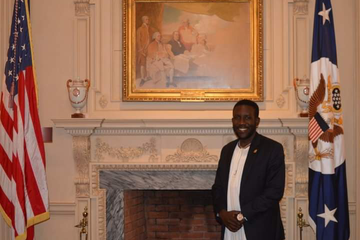
Department of State Fellows Alumnus Continued Success!AAP is excited to share that Raymond Musiima, an MSU alumnus of the U.S. Department of State, Bureau of Educational and Cultural Affairs' Professional Fellows Program, recently received a grant from Comic Relief to work with young refugees in Uganda to address mental health issues through sports. The program, Obstacle Race Against Stigma and Shame, is set to launch January 2021 and continue through the end of 2024. We congratulate you Raymond on the continued success!By: Elaina LawrenceMonday, Aug 16, 2021EDUCATION

Leave a comment