

Browse
Water, Energy, And The Environment
Submissions open for Green Future Innovation Challenge
Deadline: Jul 25, 2025
Donor: Vertex Ventures China
Grant Type: Awards, Prizes and Challenges
Grant Size: $10,000 to $100,000
Countries/Regions: All Countries
Area: Agriculture Food & Nutrition, Businesses, Companies and Enterprises, Air Pollution, Climate Change, Energy, Individuals, Innovation, Technology, Water
The Green Future Innovation Challenge (GFIC), co-organized by Vertex Ventures China and Temasek Foundation, is a climate tech competition that seeks innovative technological solutions from across the globe to address key sustainability challenges.
For more information, visit https://gfic.cn/web/home
Premium Link: https://grants.fundsforngospremium.com/opportunity/op/submissions-open-for-green-future-innovation-challenge
By:
Baboki Gaolaolwe-Major
Friday, May 30, 2025
HEALTH AND NUTRITION
+1
No Preview Available
Leave a comment
Nominations open for Neptune Awards
Donor: Ocean Exchange
Grant Type: Awards, Prizes and Challenges
Applications are now open for the Neptune Awards to help minimize their impact on these resources, even while using them for human benefit, resulting in more resilient bodies of water including healthy marine life and coastlines.
For more information, visit https://www.oceanexchange.org/register/
Premium Link: https://grants.fundsforngospremium.com/opportunity/op/nominations-open-for-neptune-awards
By:
Baboki Gaolaolwe-Major
Tuesday, Apr 29, 2025
WATER, ENERGY, AND THE ENVIRONMENT
+1

No Preview Available
Leave a comment
CFPs: Media Studies Grant Program
Deadline: Apr 14, 2025
Donor: International Federation of Television Archives
Grant Type: Grant
Grant Size: $1000 to $10,000
Countries/Regions: Afghanistan, Aland Islands, Algeria, American Samoa, Angola, Anguilla, Antarctica, Antigua and Barbuda, Argentina, Aruba, Australia, Bahamas, Bahrain, Bangladesh, Barbados, Belize, Benin, Bermuda, Bhutan, Bolivia, Botswana, Bouvet Island, Brazil, British Indian Ocean Territory, Brunei, Burkina Faso, Burundi, Cambodia, Cameroon, Canada, Cape Verde, Cayman Islands, Central African Republic, Chad, Chile, China, Christmas Island, Cocos (Keeling) Islands, Colombia, Comoros, Congo (Brazzaville), Congo DR, Cook Islands, Costa Rica, Cote DIvoire (Ivory Coast), Cuba, Djibouti, Dominica, Dominican Republic, Ecuador, Egypt, El Salvador, Equatorial Guinea, Eritrea, Ethiopia, Falkland Islands (Malvinas), Faroe Islands, Fiji, French Guiana, French Polynesia, French Southern Territories, Gabon, Gambia, Ghana, Gibraltar, Greenland, Grenada, Guadeloupe, Guam, Guatemala, Guernsey, Guinea, Guinea-Bissau, Guyana, Haiti, Heard Island And Mcdonald Islands, Honduras, Hong Kong SAR, India, Indonesia, Iran, Iraq, Isle Of Man, Israel, Jamaica, Japan, Jersey, Jordan, Kazakhstan, Kenya, Kiribati, South Korea, North Korea, Kuwait, Kyrgyzstan, Laos, Lebanon, Lesotho, Liberia, Libya, Macau, Madagascar, Malawi, Malaysia, Maldives, Mali, Marshall Islands, Martinique, Mauritania, Mauritius, Mayotte, Mexico, Micronesia Federated States Of, Mongolia, Montserrat, Morocco, Mozambique, Burma(Myanmar), Namibia, Nauru, Nepal, Netherlands Antilles, New Caledonia, New Zealand, Nicaragua, Niger, Nigeria, Niue, Norfolk Island, Northern Mariana Islands, Oman, Pakistan, Palau, Palestinian Territories, Panama, Papua New Guinea, Paraguay, Peru, Philippines, Pitcairn, Puerto Rico, Qatar, Reunion, Russia, Rwanda, Saint Helena, Saint Kitts And Nevis, Saint Lucia, Saint Pierre And Miquelon, Saint Vincent And The Grenadines, Samoa, Sao Tome And Principe, Saudi Arabia, Senegal, Seychelles, Sierra Leone, Singapore, Solomon Islands, Somalia, South Africa, South Georgia And The South Sandwich Islands, Sri Lanka, Sudan, Suriname, Svalbard And Jan Mayen, Swaziland, Syria, Taiwan, Tajikistan, Tanzania, Thailand, East Timor (Timor-Leste), Togo, Tokelau, Tonga, Trinidad And Tobago, Tunisia, Turkey, Turkmenistan, Turks And Caicos Islands, Tuvalu, Uganda, United Arab Emirates, United States, United States Minor Outlying Islands, Uruguay, Uzbekistan, Vanuatu, Venezuela, Viet Nam, British Virgin Islands, United States Virgin Islands, Wallis And Futuna, Western Sahara, Yemen, Zambia, Zimbabwe, Saint Barthélemy, Serbia, South Sudan , Curaçao, Bonaire Sint Eustatius and Saba, Saint Martin (French Part), Sint Maarten (Dutch Part)
Area: Filmmaking and Entertainment, Media, Community Development, Climate Change, Environment, Researchers, Misinformation/Disinformation, Research, Science, Technology, Sustainable Development, Gender Equality
The Media Studies Commission of the International Federation of Television Archives is excited to invite researchers from different disciplinary backgrounds to carry out research into broadcast archives.
For more information, visit https://fiatifta.org/media-studies-grant-2025/
Premium Link: https://grants.fundsforngospremium.com/opportunity/op/cfps-media-studies-grant-program
By:
Baboki Gaolaolwe-Major
Monday, Mar 10, 2025
WATER, ENERGY, AND THE ENVIRONMENT
+1

No Preview Available
Leave a comment
Submit Applications for Managing Global Governance Academy
Deadline: Mar 16, 2025
Donor: German Institute of Development and Sustainability
Grant Type: Training
Grant Size: $1000 to $10,000
Countries/Regions: Austria, Belgium, Brazil, Bulgaria, China, Croatia, Cyprus, Czech Republic, Denmark, Estonia, Finland, France, Germany, Greece, Hungary, India, Indonesia, Ireland, Italy, Latvia, Lithuania, Luxembourg, Malta, Mexico, Netherlands, Poland, Portugal, Romania, Slovak Republic, Slovenia, South Africa, Spain, Sweden, United Kingdom
Area: Community Development, Democracy & Good Governance, Learning, Career Development, Climate Change, Individuals, Information Technology, Leadership, Sustainable Development
The Managing Global Governance Academy is a training and dialogue format for highly qualified early to mid-career professionals from global powers and the European Union.
For more information, visit https://mgg.network/page/mgg-academy
Premium Link: https://grants.fundsforngospremium.com/opportunity/op/submit-applications-for-managing-global-governance-academy
By:
Baboki Gaolaolwe-Major
Monday, Mar 10, 2025
WATER, ENERGY, AND THE ENVIRONMENT
No Preview Available
Leave a comment
Apply Now: Global Economic Prosperity Challenge 2025
Deadline: Apr 17, 2025
Donor: Massachusetts Institute of Technology
Grant Type: Awards, Prizes and Challenges
Grant Size: $100,000 to $500,000
Countries/Regions: All Countries
Area: Fintech, Agriculture Food & Nutrition, Capacity Building, Community Development, Architecture and Planning, Economic Development, Education, Career Development, Employment & Labor, Individuals, Artificial Intelligence, Cyber Security, Innovation, Leadership, Science, Technology, Sustainable Development
The Massachusetts Institute of Technology: Solve is seeking exceptional technology-driven solutions to increase economic prosperity for all.
For more information, visit https://solve.mit.edu/challenges/2025-global-economic-prosperity-challenge
Premium Link: https://grants.fundsforngospremium.com/opportunity/op/apply-now-global-economic-prosperity-challenge-2025
By:
Baboki Gaolaolwe-Major
Wednesday, Feb 5, 2025
AGRI-FOOD SYSTEMS
+2
No Preview Available
Leave a comment
Submissions open for Global Climate Challenge 2025
Deadline: Apr 17, 2025
Donor: Massachusetts Institute of Technology
Grant Type: Awards, Prizes and Challenges
Grant Size: $100,000 to $500,000
Countries/Regions: All Countries
Area: Agriculture Food & Nutrition, Fisheries, Marine, Capacity Building, Community Development, Architecture and Planning, Construction, Economic Development, Education, Employment & Labor, Climate Change, Conservation, Energy, Indigenous Communities, Individuals, Artificial Intelligence, Innovation, Leadership, Technology, Sustainable Development
The Massachusetts Institute of Technology: Solve seeks exceptional solutions that leverage technology to address any aspect of the climate crisis.
For more information, visit https://solve.mit.edu/challenges/2025-global-climate-challenge
Premium Link: https://grants.fundsforngospremium.com/opportunity/op/submissions-open-for-global-climate-challenge-2025
By:
Baboki Gaolaolwe-Major
Wednesday, Feb 5, 2025
AGRI-FOOD SYSTEMS
+2
No Preview Available
Leave a comment
LDC Climate Resilience Prize 2025
Deadline: Mar 05, 2025
Donor: MassChallenge
Grant Type: Awards, Prizes and Challenges
Grant Size: $100,000 to $500,000
Countries/Regions: All Countries
Area: Agriculture Food & Nutrition, Business & Industry, Startups, Climate Change, Technology
Louis Dreyfus Company (LDC) and MassChallenge Switzerland are pleased to introduce the third edition of the LDC Climate Resilience Prize - an unconditional and non-dilutive cash prize to support startups working to drive climate resilience in agriculture and food value chains.
For more information, visit https://apply.masschallenge.org/en/en-us/mcch-ldc-climateprize-2025
Premium Link: https://grants.fundsforngospremium.com/opportunity/op/ldc-climate-resilience-prize-2025
By:
Baboki Gaolaolwe-Major
Wednesday, Feb 5, 2025
AGRI-FOOD SYSTEMS
+1

No Preview Available
Leave a comment
Apply Now: Young Forest Champions Initiative
Deadline: Feb 14, 2025
Donor: Food and Agriculture Organization of the United Nations (FAO)
Grant Type: Events
Grant Size: Not Available
Countries/Regions: Ghana, Kenya, Peru, Uganda, Zambia
Area: Climate Change, Conservation, Environment, Individuals, Persons with Disabilities, Students, Women and Girls, Youth, Leadership, Technology, Youth & Adolescents
Be one of 10 young leaders in your country to join a global network of changemakers, working together to safeguard forests, combat climate change, and build a better future. If you’re passionate about making a difference, this is your opportunity to take action!
For more information, visit https://www.fao.org/in-action/aim4forests/activities/youth-engagement/young-forest-champions/en
Premium Link: https://grants.fundsforngospremium.com/opportunity/op/apply-now-young-forest-champions-initiative
By:
Baboki Gaolaolwe-Major
Sunday, Feb 2, 2025
AGRI-FOOD SYSTEMS
+1
No Preview Available
Leave a comment
Call for Applications: Zayed Sustainability Prize
Deadline: Jun 23, 2025
Donor: Masdar
Grant Type: Awards, Prizes and Challenges
Area: Agriculture Food & Nutrition, Climate Change, Conservation, Energy, Health, Health care, Malaria, Tuberculosis, Innovation, Technology, Water & Sanitation
Applications are now open for the Zayed Sustainability Prize that recognises and rewards small to medium-sized enterprises (SMEs), nonprofit organisations (NPOs), and global high schools with impactful, innovative and inspiring sustainable solutions.
For more information, visit https://entry.zayedsustainabilityprize.com/ZSPHome
Premium Link: https://grants.fundsforngospremium.com/opportunity/op/call-for-applications-zayed-sustainability-prize
By:
Baboki Gaolaolwe-Major
Sunday, Feb 2, 2025
AGRI-FOOD SYSTEMS
+2
No Preview Available
Leave a comment
AAP announces 8 new PIRA partnership awards
Alliance for African Partnership (AAP), a consortium of ten leading African universities, Michigan State University (MSU), and a network of African research institutes, is excited to announce the recipients of the 2024 Partnerships for Innovative Research in Africa (PIRA) seed funding. Each team is composed of at least one lead from an AAP African member institution and one MSU lead. Some teams also include additional partners from NGOs and/or other universities from outside of AAP’s consortium. A consortium-wide initiative, PIRA grants are a tiered funding opportunity designed to cultivate and support multidirectional and transregional research partnerships at any stage of their development, whether it be initiatives to explore and create new relationships or scale existing ones. The total amount of PIRA grants awarded in 2024 is over $500,000.
Awarded projects cover diverse disciplinary perspectives and span AAP’s seven priority areas:
Agri-food systems
Water, Energy and Environment
Culture and Society
Youth Empowerment
Education
Health and Nutrition
Science, Technology and Innovation
All projects will integrate gender, equityand and inclusion issues in all stages of the project.
This year’s winning projects include:
Towards the Implementation of Smart Villages in the Rural Communities of Taraba State in Nigeria
Research leads: Shanelle N. Foster (MSU), Chidimma Frances Igboeli (University of Nigeria, Nsukka), Mbika Mutega (University of Johannesburg), Sari Stark (University of Lapland)
Institutional partners: Michigan State University (College of Engineering), University of Nigeria, Nsukka, University of Johannesburg and University of Lapland
Funding tier: Scaling grant (up to $100,000)
Green Technology Extraction and Characterization of Bioactive Components from Edible Fruits of Vitex donania and Uvaria chamae
Research leads: Leslie D. Bourquin (MSU), Insa Seck (UCAD)
Institutional partners: Michigan State University (College of Agriculture & Natural Resources), Universite Cheikh Anta Diop
Funding tier: Planning grant (up to $50,000)
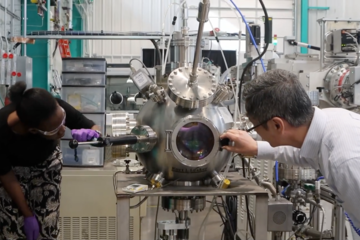
Qi Hua Fan of MSU (left) and Tabitha Amollo of Egerton University (right) working in their solar cell lab.
Develop a Partnership for Renewable Energy Research and Education
Research leads: Qi Hua Fan (MSU), Tabitha Amollo (Egerton)
Institutional partners: Michigan State University (College of Engineering), Egerton University
Funding tier: Scaling grant (up to $100,000)
Bridging the Gap: Strengthening Research, Management and Community Alliances in South Africa’s Largest Coastal Marine Protected Area
Research leads: Amber K. Peters (MSU), Els Vermeulen (UP), Grant Smith (Sharklife)
Institutional partners: Michigan State University (College of Agriculture and Natural Resources), University of Pretoria, Sharklife Conservation Group
Funding tier: Planning grant (up to $50,000)
Changing Public Attitudes and Behaviors of Buying Counterfeits through Evidence-Based Education and Awareness-Raising Campaigns in Kenya
Research leads: Saleem Alhabash (MSU), Maureen Kangu (USIU), Robi Koki Ochieng (USIU), John Akoten (Anti-Counterfeit Authority)
Institutional partners: Michigan State University (College of Communication Arts & Sciences), United States International University-Africa, Anti-Counterfeit Authority
Funding tier: Planning grant (up to $50,000)
Leveraging Tourism and Hospitality Ecosystems to Expand Youth Entrepreneurship and Empowerment in Botswana
Research leads: Karthik Namasivayam (MSU), Mokgogi Lenao (UB)
Institutional partners: Michigan State University (Broad College of Business), University of Botswana
Funding tier: Planning grant (up to $50,000)
Children attending Pre-school in Tanzania benefit from the research project of Bethany Wilinski of MSU and Subilaga M Kejo of University of Dar es Salaam.
Tucheze Pamoja: Co-Creating Feasible and Sustainable Play-based Learning Approaches in Tanzania
Research leads: Bethany Wilinski (MSU), Subilaga M Kejo (UDSM)
Institutional partners: Michigan State University (College of Education), University of Dar es Salaam
Funding tier: Scaling grant (up to $100,000)
Promoting Science Communication and Engagement through Training and Digital Media Platforms
Research leads: Susan McFarlane-Alvarez (MSU), Dikabo Mogopodi (UB)
Institutional partners: Michigan State University (College of Communication Arts and Sciences), University of Botswana
Funding tier: Planning grant (up to $50,000)
“We were extremely impressed with the quality and diversity of proposals we received for this cycle of the PIRA program. The projects that were awarded all embody AAP’s commitment to innovation, equitable partnership, and our shared vision of transforming lives in Africa and beyond,” said Amy Jamison, co-director of the Alliance for African Partnership.
A unique aspect of PIRA grants is the expectation that institutions will establish and develop equitable partnerships from conception to close out of their respective projects. These equitable partnerships will be among the research team members themselves and include relevant local stakeholders. Teams will involve these local stakeholders as appropriate throughout the project, respecting their knowledge and expertise, and taking an adaptive approach that is responsive to the local context.
We invite you to join our virtual PIRA launch and showcase event at 8 a.m., Tuesday, Feb. 25 when all of our awardees will be discussing their projects. You can register for the event on Zoom.For more information, visit the Alliance for African Partnership website.
By:
Justin Rabineau
Monday, Jan 27, 2025
AGRI-FOOD SYSTEMS
+6
Leave a comment
Multidimensional impact of environmental change in the African Great Lakes
Recorded on March 24th, 2023 as part of AAP Public Dialogue Series
By:
Justin Rabineau
Monday, Jan 27, 2025
WATER, ENERGY, AND THE ENVIRONMENT
Leave a comment
Applications open for Reece Foundation Grant Program
Deadline: Dec 31, 2025
Donor: Reece Foundation
Grant Type: Grant
Grant Size: $10,000 to $100,000
Countries/Regions: All Countries
Area: Food Safety, Community Development, Water
Applications are now open for the Reece Foundation Grant Program to support locally led initiatives that help communities in Australia and overseas with access to clean water, sanitation or food security through irrigation.
For more information, visit https://www.reecefoundation.charity/get-involved
Premium Link: https://grants.fundsforngospremium.com/opportunity/op/applications-open-for-reece-foundation-grant-program
By:
Baboki Gaolaolwe-Major
Thursday, Jan 16, 2025
WATER, ENERGY, AND THE ENVIRONMENT
No Preview Available

Leave a comment