

Browse
Agri Food Systems
TWAS-DFG Cooperation Visits Programme - SSA
The TWAS-DFG Cooperation Visits Programme provides postdoctoral researchers living and working in sub-Saharan Africa with the opportunity to make a three-month ‘Cooperation Visit’ to a research institute in Germany. Such visits must be undertaken within 12 months of the award.
The aim of the visit is to initiate research collaboration between African and German scientists with the ultimate goal of developing longer-term links, perhaps through other Deutsche Forschungsgemeinschaft (DFG, or German Research Foundation) programmes. DFG will cover travel expenses and provide subsistence costs for the stay in Germany. The administration and financial operation of TWAS is undertaken by UNESCO in accordance with an agreement signed by the two organizations.
Deadline: 15 April 2026
Eligibility
Applicants need to hold a PhD obtained not earlier than 2021; however, for female applicants the year limit for the PhD can be extended by two years per child, i.e. for a woman with one child the PhD year would be 2019 or later. This exception for female applicants has a limit of three children which equals a maximum of six years. Therefore, the PhD of a female applicant with three or more children should not have been obtained before 2015.
At the time of submission of the proposal applicants hold a research position at an institution located in a sub-Saharan African country.
Applicants need to have been engaged in a science system (including graduate and postgraduate training, research, teaching) for at least five years prior to a respective call in a sub-Saharan African country or MENA country.
Applicants already on site in Germany are not eligible.
Applicants with an established collaboration with the intended host are not eligible. Examples of established collaboration include one common publication with the host Professor; the host Professor was previously the applicant's MSc or PhD supervisor; or other types of extensive collaboration. Preparatory interactions (such as virtual meetings, including other forms of communication) prior to the planned guest visit are encouraged.
Previous recipients of a TWAS-DFG Cooperation Visit cannot reapply. For a second visit, the German host can apply for funding under the DFG Initiation of International Collaboration Programme.
Women scientists are especially encouraged to apply.
All academic fields will be considered.
Finding a German host
Please click here for useful information on how to identify the best German host in your field.TWAS and DFG cannot provide any assistance in identifying a German host.
Information sheet for the host institution in Germany:https://www.dfg.de/twas_information_sheet_host_institution_germany/
Informationsblatt für die gastgebende Einrichtung in Deutschland:https://www.dfg.de/twas_infoblatt_gastgebende_einrichtung_deutschland/
Submitting your application
Applicants must complete the online application form by clicking on the 'Apply now' button at the bottom of this page. While filling in the online application, applicants also need to upload the following documentation:
scanned copy of your passport, even if expired (page with your name and surname);
a recent invitation letter from a German host:
- maximum two pages on the host institution’s letterhead paper,
- it should contain the proposed time of the visit (up to 3 months) and should refer to the proposed cooperation. The results of the selection will be available in January/February 2027. Therefore, the visit can take place between February 2027 and February 2028.
- It should be made evident that the applicant and the proposed host have mutually agreed on the research proposal that will be submitted;
- confirmation that the necessary research facilities are available;
two reference letters from senior scientists familiar with your work. The letters need to be on headed paper and signed;
copy of the PhD certificate;
evidence of proficiency in either English or German;
supporting statement from the Head/Director of the applicant's home institute: it must confirm that the Head/Director is favourable to the application and that the applicant will be granted leave to take up the cooperation visit in Germany if awarded.
Other information
TWAS-DFG Cooperation Visits do not include provisions for accompanying family members.
Applications for part-time visits will be considered ineligible.
Successful applicants must not take up other assignments during the period of their Cooperation Visits.
DFG shall be entitled to a repayment of all or part of any funds paid to an applicant hereunder, in the event that the applicant intentionally or negligently fails to fulfil any or all of the above conditions. The applicant agrees to pay any reasonable legal and/or collection costs incurred by DFG to obtain the repayment.
Please be advised that applicants may apply for only one programme per calendar year in the TWAS and OWSD portfolio. Applicants will not be eligible to visit another institution in that year under the TWAS Visiting Professor programmes. One exception: the head of an institution who invites an external scholar to share his/her expertise under the TWAS Visiting Professor programmes may still apply for another programme.
Please note that a detailed research proposal should be mutually agreed between the German host and the applicant before submitting it.
Contact email:
exchanges@twas.orgAPPLY NOW
By:
Aaron Dorner
Monday, Feb 23, 2026
AGRI-FOOD SYSTEMS
+5
No Preview Available
Leave a comment
Alliance for African Partnership (AAP) welcomes the largest cohort yet of African Futures Research L
Fourteen scholars from across the AAP consortium are embarking on a year-long program focused on artificial intelligence and sustainable futures
East Lansing, Michigan — Alliance for African Partnership (AAP), a consortium of ten leading African universities, Michigan State University (MSU), and a network of African research institutes, is pleased to announce the sixth cohort of the African Futures Research Leadership Program, a competitive visiting scholar initiative supporting early career researchers from AAP member institutions. This year’s cohort — the largest in the program’s history — will explore the theme Artificial Intelligence in Africa: Transdisciplinary Innovations for Sustainable Futures.
Each scholar is paired with mentors from their home institutions and MSU for one year of impactful research, professional development, including curriculum innovation, scholarly and policy writing, grant proposal development, as well as conference attendance. Scholars will engage both virtually and in person with mentors and colleagues across disciplines to co-create research that advances sustainable futures across the continent.
“This sixth cohort marks a significant turning point for the African Futures Research Leadership Program,” said Jose Jackson-Malete, co-director of the Alliance for African Partnership. “Welcoming our largest and most interdisciplinary group of scholars to date highlights both the rising demand for collaborative research leadership opportunities and the strength of our partnerships across African institutions. The focus on artificial intelligence and sustainable futures also signals how the program continues to evolve to address emerging global and continental priorities while empowering scholars to lead transformative research in their fields.”
This year’s scholars are:
Patrick Wafula Wamalwa– Agricultural Engineering, Egerton University
Evalyn Wanjiru Mwihia– Veterinary Pathology, Microbiology and Parasitology, Egerton University
Florence Ndibuuza– Higher Education, Makerere University
Evah Maina– Pharmacy and Health Sciences, United States International University – Africa
Keiphe Nani Setlhatlhanyo– Industrial Design and Technology, University of Botswana
Bakadzi Moeti– Educational Foundations, Faculty of Education, University of Botswana
Thabang Madigoe– Business Management, University of Pretoria
Sean Kruger– Economic and Management Sciences, University of Pretoria
Sphiwe Skhosana– Natural and Agricultural Sciences, University of Pretoria
Daurice Nyirongo– Open, Distance and eLearning (ODeL), Lilongwe University of Agriculture and Natural Resources
Elhadji Bassirou Toure– Mathematics and Computer Science, Université Cheikh Anta Diop
Nedson Theonest Kashaija– Water Resources Engineering, University of Dar es Salaam
Fochi Amabilis Nwodo– Property Law, University of Nigeria, Nsukka
Salimatou Traoré– English, Université Yambo Ouologuem of Bamako
The program will begin in February 2026 with virtual collaboration, followed by an in-person residency for nine of the scholars at MSU from August through December 2026, and continued virtual engagement into early 2027. Due to new visa restrictions, five scholars will participate virtually during the entire program. Scholars will receive a small grant for research, teaching, and professional development, including conference participation and publication support, as well as a stipend during their MSU residency along with visa and travel support.
AAP aims for this cohort to generate innovative research aligned with AI’s potential to contribute to sustainable development in Africa — from health and education to environment, culture, governance, and entrepreneurship — and to lay the groundwork for long-term academic partnerships and future funding opportunities.
For more information, visit the Alliance for African Partnership website.
This project is made possible with the philanthropic support of Carnegie Corporation of New York
By:
Justin Rabineau
Wednesday, Feb 18, 2026
AGRI-FOOD SYSTEMS
+6
Leave a comment
Africa Global Partnership Scholars
In an era where complex global challenges demand collective action, the need for international collaboration and knowledge sharing has never been more critical. Africa Global Partnership Scholars Program (Africa GPS) is a cohort-based program, designed for early to mid-career MSU faculty to create and deepen new scholarly partnerships with collaborators and peer institutions in Africa in support of MSU’s global mission.
PROGRAM OBJECTIVES:
Foster the development of a group of faculty members dedicated to establishing and enhancing international research connections, collaborating on solutions with African partners, and adopting a global perspective in their scholarly work
Support MSU’s 2030 strategic plan goal of discovery, creativity and innovation for excellence and global impact
Connect MSU faculty with potential collaborators and mentors in Africa, expand the scholars' international networks, and offer support for establishing long-lasting collaborations
Heighten global awareness and research dialogue
Elevate the status of MSU’s global mission
Capitalize on opportunities to leverage external resources and form partnerships
ELIGIBILITY FOR APPLICATION
Tenure-stream or fixed term faculty at Michigan State University without prior scholarly experience in Africa are eligible to apply for Africa GPS.
REQUIRED APPLICATION MATERIALS
As part of the application process, the applicant must submit the following materials:
Completed application questionnaire
An up-to-date curriculum vitae (max 4 pages)
A one-page statement that describes your reasons for applying, potential research focus, and if known, the AAP consortium institution and African country of interest for the collaboration. If needed, AAP can help identify the country, mentor and/or the collaboration partner based on the applicant’s interests.
A letter expressing strong support from the Chair/School Director/Dean. The letter should affirm:
The candidate’s international interest, experience, and/or research
The candidate’s strengths as a researcher within the context of unit expectations
The candidate’s proposed project will advance the mission and goals of the academic unit, be supported by the unit, and benefit international partners
Applicants are encouraged to obtain a commitment from their unit or college to provide a 20% cost share. While cost sharing is not required, preference will be given to proposals that include this match.
FUNDING
To facilitate the participation of faculty members selected as Africa GPS Fellows, AAP will provide support for the following:
Up to $10,000 in support of international travel and scholarly collaborations with a researcher and/or mentor at an AAP Consortium member institution. The $10,000 may be used to support the MSU faculty members’ individual travel, collaborative research activities or to bring an African partner to MSU.
Connection with potential collaborators, mentors, and institutions in Africa
Structured workshops on establishing and navigating international partnerships
Financial Guidelines:
The financial support must be expended prior to the end of the program (one year after awarded).
Preference will be given to applicants who provide a 20% match from the applicant’s unit, department or college.
PROGRAM EXPECTATIONS
Africa GPS participants are expected to develop a sustainable collaboration with peer researchers at an AAP consortium institution. As a result, within two years of being selected for the program, the scholar is expected to achieve the following outputs:
A collaborative research paper coauthored with their African collaborator to be submitted for publication.
A concept note of a proposal submitted to a funding agency to sustain the partnership with the African collaborator.
Progress reports submitted every six months to AAP documenting how the collaboration is progressing and any challenges that may have arisen.
Attend program orientation, professional development workshops organized by AAP, and other relevant events as shared by the AAP team.
SELECTION CRITERIA FOR GLOBAL RESEARCH FELLOWS
The criteria below will be utilized to evaluate candidates for their selection to the Africa GPS program:
Commitment Level: Applicants need to show a readiness to dedicate the necessary time to maximize the benefits of the Fellowship year, along with a proven scholarly potential that supports such a commitment.
Research Interest: Candidates should demonstrate a strong commitment to international research and articulate how participation in Africa GPS will contribute to their personal and professional development
Unit Support: Candidates must have strong support from relevant departmental or school and college administrators, indicated by enthusiastic recommendations.
Alignment of Interests: The applicant’s international research interests should align with the Africa GPS’s mission to foster excellence in international research.
Apply here: https://msu.co1.qualtrics.com/jfe/form/SV_bIS1j4JJxUE2voq
SELECTION OF FELLOWS
Application materials will be reviewed by a selection committee in International Studies and Programs. Scholars will be announced by May 2026. Funds must be transferred to selected scholars by June 30, 2026.
If you have any questions, please contact Justin Rabineau at: rabinea1@msu.edu
By:
Justin Rabineau
Monday, Mar 9, 2026
AGRI-FOOD SYSTEMS
+6

Leave a comment
Glad to be part of this community. I am passionate about using technology to solve food insecurity challenges. Talk about data farming, embedded system design in agriculture, cold-chain, and AI in agriculture. I am open to collaboration, mentorships, and opportunities relating to Agritech.
By:
Asogwa Christian Onyemaechi
Saturday, Oct 11, 2025
AGRI-FOOD SYSTEMS
+1

Leave a comment
African Futures Research Leadership Program - Cohort 6 Call for Applicants
AAP AFRICAN FUTURES RESEARCH LEADERSHIP PROGRAM
Artificial Intelligence in Africa: Transdisciplinary Innovations for Sustainable Futures
Cohort 6 Call for Applicants
Alliance for African Partnership (AAP) invites applications for the sixth cohort of the African Futures Research Leadership Program. This competitive visiting scholar program supports early career researchers from AAP consortium universities to collaborate for one year with faculty members at Michigan State University (MSU) and their home institutions. The program focuses on strengthening skills in impactful research, curriculum development, innovative teaching, scholarly and policy writing, dissemination of research results, and grant proposal development. Scholars will also participate in a structured professional development program while building meaningful and lasting connections with MSU faculty and fellow scholars.
The primary goal of the African Futures Program is to strengthen the capacity of emerging African researchers to become scientific leaders in their communities. The program seeks to foster long-term partnerships with MSU faculty, co-create innovative solutions to Africa’s challenges, and cultivate the next generation of research mentors and leaders.
AAP invites applications from early career researchers to join the upcoming cohort, which will begin virtually in February 2026. Scholars will spend September through December 2026 at MSU for the in-person phase of the program, followed by continued virtual collaboration through early 2027. Each scholar will receive a small grant to support research, teaching, and professional development activities, including conference participation and publication. Scholars will also receive a stipend during their time at MSU, visa support, and round-trip travel from their home institution.
Potential Teaching and Research Areas
The 2026 theme, “Artificial Intelligence in Africa: Transdisciplinary Innovations for Sustainable Futures,” highlights the potential of AI to address Africa’s most critical challenges and opportunities. AI research must be ethical, contextualized, and socially responsible, drawing insights from science, engineering, the arts, business, culture, and society. In addition to thematic research, scholars will contribute to the development of curricula for a transdisciplinary doctoral program in AI in Africa and explore innovations in teaching and learning.
We particularly encourage cross-disciplinary projects exploring AI’s transformative potential in:
Agri-food systems – leveraging AI for food security, sustainable agriculture, and resilient supply chains
Health and nutrition – applying AI in disease prevention, diagnostics, personalized medicine, and strengthening health systems
Climate change, water, energy, and environment – using AI for mitigation, adaptation, monitoring, and sustainable resource management
Ethics, governance, and society – integrating human rights, accountability, and inclusivity in AI design and deployment
Culture and the arts – examining how AI interacts with African languages, creative expression, heritage preservation, and digital storytelling
Engineering and science – developing AI-driven technologies suited to African contexts
Education – enhancing equitable access to learning, bridging digital divides, and improving pedagogy through AI
Business and entrepreneurship – fostering inclusive growth, financial technologies, and youth-led AI innovations to shape Africa’s digital future
Through transdisciplinary collaboration, the program aims to promote AI research and teaching that bridges technical and social disciplines, ensuring innovation reflects Africa’s diverse values and aspirations.
Program Benefits
Professional Development – Structured workshops on equitable partnerships, teaching innovation, academic time management, proposal development, budgeting, and research communication to enhance research, teaching, writing, and leadership skills
Leadership Development – A research leadership retreat focused on building leadership competencies, self-reflection, and career development for research advancement
Collaboration Networks – Each scholar will collaborate with MSU and home institution partners. Collaborators may conduct reciprocal one-week visits. Scholars will also join AAP’s network of researchers at MSU, across Africa, and globally to foster lasting institutional partnerships
Expected Outcomes
By the end of the program, each scholar and their team are expected to achieve at least:
Submission or publication of one to three joint manuscripts
Submission of at least one grant proposal
Presentation at one or more academic or professional conferences
Collaborations are designed to extend beyond the program’s duration. Scholars are encouraged to engage broadly with MSU faculty and maintain partnerships after completion. Participants must submit regular progress reports to AAP and their home institution focal point. Failure to meet program or partnership expectations may result in early termination.
Eligibility
Citizenship in an African country
PhD awarded within the last 10 years
Current employment as Academic Staff at one of the AAP African member universities including Egerton University, Makerere University, University of Dar es Salaam, Lilongwe University of Agriculture and Natural Resources, University of Botswana, University of Nigeria, Nsukka, University Cheikh Anta Diop, Yambo Ouologuem University of Bamako, United States International University-Africa, or University of Pretoria
Official approval of leave or sabbatical for the in-person phase
A home institution partner committed to collaborating throughout the program
Research aligned with the program’s thematic areas, focusing on AI in Africa
Submission of only one proposal per applicant in this round of funding
Application Requirements
An updated CV outlining professional accomplishments
A one-page letter of interest detailing alignment with program priorities, research approach, and potential societal impact
Names of up to three potential MSU faculty collaborators (identified from MSU department websites; applicants should not contact faculty directly—AAP will initiate contact)
Two relevant peer-reviewed publications
Two professional references providing context on the relationship and an assessment of the applicant’s expertise
A one-page letter from the home institution collaborator confirming willingness to participate and travel to MSU for collaboration
A one-page endorsement letter from the Head of Department approving leave
A one-page letter of support from the institution’s AAP Focal Point
Selection Criteria:
Professional merit, scientific ability, and potential for career impact (evaluated through CV, publications, letters, and references)
Institutional assurance of continued employment and support post-fellowship
Commitment to return to the home country after the fellowship
Consideration for diversity across disciplines, institutions, and regions. Priority will be given to projects that demonstrate transdisciplinary approaches integrating technology, culture, ethics, and societal impact
EXTENDED DEADLINE: Applications are due by November 28, 2025
Apply: https://msu.co1.qualtrics.com/jfe/form/SV_eVb2iErQhRpmAPs
For questions, please contact José Jackson-Malete at jacks184@msu.edu or +1-517-884-8587.
This project is made possible with the philanthropic support of Carnegie Corporation of New York
By:
Justin Rabineau
Wednesday, Nov 19, 2025
AGRI-FOOD SYSTEMS
+7
Leave a comment
African Futures Cohort 5 Arrives at MSU
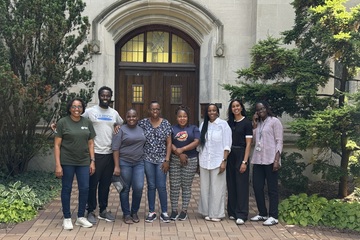
Alliance for African Partnership (AAP), a consortium of ten leading African universities, Michigan State University (MSU), and a network of African research institutes, is excited to welcome the fifth cohort of the African Futures Research Leadership Program to MSU for the in-person portion of the program. Each early career scholar is paired with a faculty mentor from MSU and their home institution for one year of virtual and in-person collaboration to strengthen research skills, innovations in teaching, writing of scholarly and/or policy publications, dissemination of research results and grant proposals.
A consortium-wide initiative, the African Futures program is designed to strengthen the capacity of a cadre of African researchers to return to their home institutions and become scientific leaders in their community, establish long-term partnerships with MSU faculty, co-create innovative solutions to Africa’s challenges, and in turn become trainers of the next generation of researchers.
African Futures Cohort 5: Alfdaniels Mabingo Performing Arts and Film Makerere University Home Mentor - Sylvia Antonia Nakimera Nannyonga-Tamusuza, Dept of Performing Arts and FilmMSU Mentor – Philip Effiong, Dept of English, Theater Studies & Humanities & Gianina Strother, Dept of African American and African Studies Gladys Gakenia Njoroge Pharmacy Practice and Public Health United States International University – Africa Home Mentor - Calvin A. Omolo, Dept of Pharmacy Practice and Public HealthMSU Mentor - Yuehua Cui, Dept of Statistics and Probability Seynabou Sene Plant Biology University Cheikh Anna Diop Home Mentor - Abdala Gamby Diedhiou, Dept of Plan BiologyMSU Mentor - Lisa Tiemann, Dept of Plant, Soil, and Microbial Sciences Portia T. Loeto Educational Foundations (Gender Studies Section) University of Botswana Home Mentor - Godi Mookode, Dept of SociologyMSU Mentor - Soma Chauduri, Dept of Sociology Betina Lukwambe Aquaculture Technology University of Dar es Salaam Home Mentor – Samwel Mchele Limbu, Dept of AquacultureMSU Mentor - Abigail Bennett, Dept of Fisheries and Wildlife & Maria Claudia Lopez, Dept of Community Sustainability Assilah Agigi Business Management University of PretoriaHome Mentor - Alex Antonites, Dept of Business Management MSU Mentor - Sriram Narayanan, Dept of Supply Chain Management Miriam Nthenya Kyule Agricultural Education and Extension Egerton University Home Mentor - Miriam Karwitha Charimbu, Dept of Crops, Horticulture and Soils MSU Mentor - Susan Wyche, Dept of Media and Information Studies Asha Nalunga Agribusiness and Natural Resource Economics Makerere University Home Mentor - Bernard Bashaasha, Dept of Agribusiness and Natural Resource Economics MSU Mentor - Saweda Liverpool-Tasie, Dept of Agricultural, Food, and Resource Economics
Ezinne Ezepue (participating virtually)Theatre & Film Studies University of Nigeria, Nsukka Home Mentor - Chinenye Amonyeze, Dept of Theatre & Film StudiesMSU Mentor - Jeff Wray, Dept of English
“We were extremely impressed with the quality and diversity of applications we received for this cohort of the African Futures program. We are excited to build on the successes of past cohorts and continue to evolve this program as we support the next generation of African research leaders,” said Jose Jackson-Malete, co-director of the Alliance for African Partnership.
Differing from previous cohorts, Cohort 5 is piloting a hybrid model of the African Futures program. The scholars began their work in February 2025 virtually, then will spend the fall semester at Michigan State University working closely with their MSU mentor. They will then complete the rest of their year back at their home institution, culminating in a research showcase in February 2026 to share the research they’ve done. Partnerships between mentors and mentees are expected to continue beyond the end of the program and lead to sustainable collaboration and future funding opportunities.
For more information, visit the Alliance for African Partnership website
By:
Justin Rabineau
Thursday, Sep 4, 2025
AGRI-FOOD SYSTEMS
+6
Leave a comment
Entries open for Young Environmentalist Innovative Challenge (Kenya)
Deadline: Sep 30, 2025
Donor: Kenya Community Development Foundation
Grant Type: Awards, Prizes and Challenges
Grant Size: $10,000 to $100,000
Countries/Regions: Kenya
Area: Agriculture Food & Nutrition, Capacity Building, Community Development, Education, Learning, Climate Change, Conservation, Energy, Environment, Natural Resources, Individuals, Youth, Innovation, Livelihood, Sustainable Development, Youth & Adolescents
The Young Environmentalist Innovative Challenge invites submissions of innovative solutions that inculcate the spirit of environmental conservation and sustainable management.
For more information, visit https://kcdf.or.ke/our-focus-areas/community-led-development/environmentalist-innovative-challenge-yeic/
Premium Link: https://grants.fundsforngospremium.com/opportunity/op/entries-open-for-young-environmentalist-innovative-challenge-kenya
By:
Baboki Gaolaolwe-Major
Monday, Aug 25, 2025
AGRI-FOOD SYSTEMS
+1

No Preview Available
Leave a comment
Nutrition Impact at Scale Incubation Program 2025 (Kenya)
Deadline: Jul 30, 2025
Donor: Global Alliance for Improved Nutrition
Grant Type: Training
Grant Size: $1000 to $10,000
Countries/Regions: Kenya
Area: Financial Management, Agriculture Food & Nutrition, Food Safety, Nutrition, Businesses, Companies and Enterprises, Entrepreneurship
Submissions are now open for the Nutrition Impact at Scale Incubation Program that is a powerful crash course on entrepreneurship – as well as adapting a nutrition lens the business.
For more information, visit https://gain.nakurubox.co.ke/incubation/
Premium Link: https://grants.fundsforngospremium.com/opportunity/op/nutrition-impact-at-scale-incubation-program-2025-kenya
By:
Baboki Gaolaolwe-Major
Thursday, Jul 24, 2025
AGRI-FOOD SYSTEMS
+2

No Preview Available
Leave a comment
COIL Faculty Fellows Program - Africa
Collaborative Online International Learning (COIL) is an educational methodology focused on fostering online intercultural learning experiences within universities in different countries. MSU’s Center for Global Learning and Innovation, Alliance for African Partnership (AAP), and African Studies Center (ASC) anticipate welcoming to the third cohort of the COIL Faculty Fellows Program-Africa a mix of bilateral and trilateral COIL projects. Prior experience in COIL is not required; faculty from any discipline are welcome!
https://globalyouth.isp.msu.edu/partnerships/coil/coil-faculty-fellows-program-africa/coil-faculty-fellows-cohort-3/
By:
Justin Rabineau
Friday, Jul 11, 2025
AGRI-FOOD SYSTEMS
+6
Leave a comment
Celebrating a Legacy of Vision, Dedication, and Continental Impact
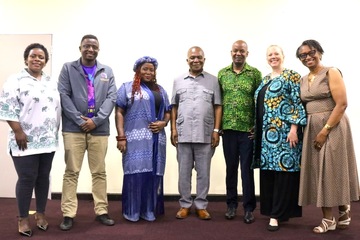
We take this opportunity to honour one of our most visionary leaders, Professor Richard Mkandawire, who retires after years of exceptional service as the Director of the AAP Africa Office, as the Alliance for African Partnership (AAP) continues to grow in strength and purpose. The experience Professor Mkandawire has had with AAP has been nothing short of revolutionary. Richard was a well-known development expert and supporter of soil health who approached his work with insight, moral character, and endless enthusiasm. AAP has become a reliable forum for cooperative research, policy engagement, and capacity building as a result of his dedication to cultivating partnerships throughout Africa. He oversaw the expansion of the AAP throughout African institutions, fostering connections between policy, academia, and the public. From empowering young researchers to advocating for agricultural reform and ensuring soil health remained a top priority for food security on the continent, Richard's enthusiasm for Africa's prosperity was evident in every project he supported. Partners, mentees, and colleagues from around the world gathered at his farewell dinner, held on the last night of the AAP Consortium Meeting 2025 in Lilongwe, Malawi, to honor a man whose work has left a legacy. He was described as a leader, a mentor, and most importantly, a true servant of Africa, in the flood of tributes that poured in. Richard Mkandawire, AAP honors you. Your legacy will continue to inspire, your vision will keep guiding us, and your influence on the lives you have impacted and the organizations you have influenced will only grow. Richard, thank you. We wish you a peaceful, happy, and well-earned retirement.
By:
Baboki Gaolaolwe-Major
Thursday, Jul 10, 2025
AGRI-FOOD SYSTEMS
+2
Leave a comment
Apply Now: Africa Agri-food Development Programme
Deadline: Aug 15, 2025
Donor: Department of Foreign Affairs and Trade
Grant Type: Grant
Grant Size: Not Available
Countries/Regions: Botswana, Cote DIvoire (Ivory Coast), Ethiopia, Ghana, Ireland, Kenya, Lesotho, Liberia, Malawi, Mozambique, Namibia, Nigeria, Rwanda, Senegal, Sierra Leone, South Africa, Tanzania, Uganda, Zambia, Zimbabwe
Area: Agriculture Food & Nutrition, Business & Industry, Businesses, Companies and Enterprises
The Africa Agri-Food Development Programme (AADP) supports and enables Irish and African companies to realise their ambition of doing business together in Africa, through matched grant funding for feasibility studies and full commercial projects.
For more information, visit https://www.gov.ie/en/department-of-foreign-affairs/services/apply-for-aadp/
Premium Link: https://grants.fundsforngospremium.com/opportunity/op/apply-now-africa-agrifood-development-programme
By:
Baboki Gaolaolwe-Major
Monday, Jun 30, 2025
AGRI-FOOD SYSTEMS
+1
No Preview Available
Leave a comment
Request for Proposals: Agribusiness Project Funding (South Africa)
Deadline: Jul 18, 2025
Donor: Agribusiness Development Agency
Grant Type: Grant
Grant Size: Not Available
Countries/Regions: South Africa
Area: Agriculture Food & Nutrition, Businesses, Companies and Enterprises, Black
The Agribusiness Development Agency (ADA) presents an opportunity for Registered Black owned Agribusinesses operating within the KZN Province to apply for project funding for the 2026/27 financial year.
For more information, visit https://ada-kzn.co.za/download/call-for-applications-for-agribusiness-project-funding-for-2026-27/
Premium Link: https://grants.fundsforngospremium.com/opportunity/op/Request-for-Proposals-Agribusiness-Project-Funding-south-Africa
By:
Baboki Gaolaolwe-Major
Monday, Jun 30, 2025
AGRI-FOOD SYSTEMS
+1
No Preview Available

Leave a comment