

Browse
Education
Editor's Note: Richard Mkandawire, AAP Africa Director
Dear AAP Members, Stakeholders, Partners and the Public
I am pleased to present the second issue of AAP Connect, focusing on AAP’s strategic goal of research for impact. In this issue, we use the example of a critical theme that lies at the heart of sustainable agriculture and food security in Africa: soil health, fertilizer usage, and agri-food systems. Our inaugural AAP Connect issue published in April, focused on building sustainable networks in research. We wanted to highlight some of the unorthodox approaches to networking, not just the usual meet, and greet, and exchange contacts, but ones that take into account context and timing. If you missed it, please spare some time and browse through it.
We have just returned from Nairobi, Kenya, where African governments led by their heads of state, global donor organizations, and global policy network organizations met at the Africa Fertilizer and Soil Health Summit, 7th to 9th May 2024. At the summit, stakeholders unveiled Africa’s Fertilizer and Soil Health Action Plan and shed light on the pressing need to invest in this plan’s implementation, emphasizing the crucial role of soil health and fertilizer in enhancing food security and nutrition across the continent. This AAP Connect issue, therefore, comes at a critical period where Africa has gone through a challenging period of fertilizer shortages, and governments and global agencies are poised to take action. This aligns perfectly with AAP’s priority area of Agri-food systems, emphasizing one of AAP’s primary Goal 3: Research for Impact, that targets deliver impactful research that transforms lives.
I am also proud to announce to you that witnessing the summit unfolding was a surreal moment for us at AAP because we have played a pivotal role in its conceptualization. It has taken much effort and a lot of back-and-forth negotiations to make it a reality. We are proud to be the technical partner of this important process that will see transformations in Africa’s agri-food systems. The icing on the cake was that we at AAP, in partnership with ANAPRI and top experts in agriculture and soil health from across our consortium, convened a side event that focused on the role of science, research, and training institutions in the realization of Africa’s Fertilizer and Soil Health Action Plan. During this side event, we discussed at length the critical importance of knowledge creation, training, and collaborative research initiatives in driving sustainable soil health and fertilizer practices to improve food baskets in Africa.
Further cementing our commitment to actionable outcomes, AAP collaborated with Catholic Relief Services and the Government of Malawi to host the Malawi Ready event. This event convened key stakeholders to chart a strategic implementation path for Malawi's adoption of the Africa Fertilizer and Soil Health Action Plan. We were honored to welcome the President of Malawi, Dr Lazarus McCarthy Chakwera and other distinguished government officials, signifying the collective resolve to tackle soil health and fertilizer challenges head-on.
For this issue, as a way to spark your minds with innovative approaches to research for impact, we have enlisted top experts to unpack key issues and bring ideas that may be transformed into solutions for Africa. We hope that you will enjoy and be inspired to work on your next impactful research project in agri-food systems or any other field which has the potential to transform lives in Africa and beyond. Together, we can drive meaningful change and pave the way for a more sustainable and food-secure Africa.
Warm regards,
Richard Mkandawire
AAP Africa Office Director
By:
Baboki Gaolaolwe-Major
Wednesday, Jul 10, 2024
WATER, ENERGY, AND THE ENVIRONMENT
+2
Leave a comment
African Futures Research Leadership Retreat
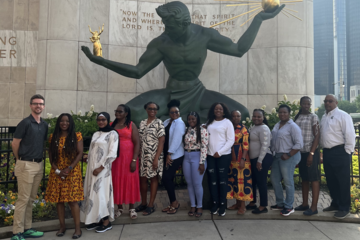
The fourth cohort of African Futures scholars recently travelled to Detroit, MI for their leadership retreat. The scholars are early-career women researchers from AAP member institutions who take part in a one-year program at Michigan State University (MSU) to strengthen and build the skills necessary to become research leaders in their fields. The program culminates in a leadership retreat to prepare scholars to incorporate what they have learned at MSU and apply it at their home institutions and as an opportunity to experience a new side of Michigan outside of East Lansing. Held June 18-21, the retreat allowed scholars to step away from campus and their research and create space to think about what it means to be a research leader. Over a two-day workshop, senior MSU faculty facilitators explored a variety of topics around identifying the qualities of a research leader and taking your academic career to the next level. There was also fun to be had as scholars took the opportunity to experience some of the culture and vibrance of the Motor City.
Co-facilitated by Drs. Nwando Achebe, Associate Dean for Diversity, Equity, and Inclusion, Faculty Development, and Strategic Implementation, Dr. Teresa Mastin, Vice Provost and Associate Vice President for Faculty and Academic Staff Affairs, and Dr. Kwesi Brookins, Vice Provost for University Outreach and Engagement, the African Futures leadership workshop conversations focused on analyzing different personality types and communication styles, academic publishing, having difficult conversations and conflict resolution, developing research plans and preparing for promotion, and leading research teams. These in-depth and interactive sessions allowed scholars to reflect on their journeys thus far while planning for their return to their home institutions to take the next step in their path to leadership.
In addition to the work in the classroom, scholars had the chance to learn more about Detroit and its history. Scholars visited the Detroit Institute of Arts, the Belle Isle Nature Center, Aretha’s Jazz Café, and various local restaurants across the city to get a taste of the breadth of what Detroit has to offer.
The current cohort of African Futures scholars will conclude their time at MSU with a virtual research showcase on July 24 at 8:00 am Eastern to share their work from the past year. You can register to attend the showcase here: https://msu.zoom.us/webinar/register/WN_eQTW_l4TSRyPmev_IovGsw
By:
Baboki Gaolaolwe-Major
Friday, Jul 5, 2024
EDUCATION
Leave a comment
Malawi Ready: A Transformative Step Towards Soil Health and Agricultural Prosperity
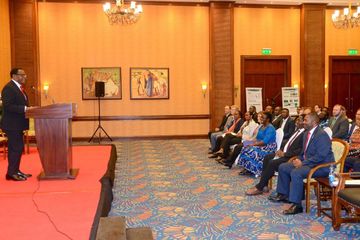
The past month has been surreal for the Alliance for African Partnership (AAP). After years of meticulous planning, we finally witnessed the African Fertilizer and Soil Health Summit in Nairobi. It's been a journey filled with challenges and triumphs. To top it off, we concluded the summit with a post-event organized by AAP, MWAPATA, and Malawian agricultural policy and development institutions under the theme "Malawi Ready."
This event served as a strong message of commitment and reinforcement by the Malawian Government to development partners, affirming that Malawi is fully prepared to implement the Africa Fertilizer and Soil Health Action Plan. His Excellency, Dr. Lazarus McCarthy Chakwera, graced the occasion as the guest of honor for "Malawi Ready."
The Importance of Restoring Soils in Malawi
Malawi, like many other African countries, faces significant challenges related to soil degradation. Soil health is fundamental to agricultural productivity, which in turn is crucial for food security, economic development, and poverty alleviation. Restoring soil fertility in Malawi is not merely an environmental imperative but a socio-economic necessity. Fertile soils lead to better crop yields, improved nutrition, and increased incomes for farmers. This sets off a positive ripple effect throughout communities, enhancing overall well-being and fostering sustainable development.
Government Support and Donor Engagement
Recognizing the critical importance of soil health, the Government of Malawi has taken decisive steps to champion this cause. President Chakwera's presence and endorsement at the "Malawi Ready" event underscore the high level of political will and commitment to this initiative. In his address, President Chakwera emphasized the government's unwavering support for the action plan, highlighting the collaborative efforts required to achieve lasting impact.
The government's role extends beyond endorsement to active engagement with various stakeholders, including donor agencies, private sector partners, and local communities. This multi-faceted approach ensures that the action plan is comprehensive and inclusive, addressing the needs and challenges of all stakeholders involved.
Securing Commitments and Investments
"Malawi Ready" was pivotal in securing commitments and investments from major development partners such as USAID, AFAP, and Catholic Relief Services. These organizations bring financial resources, technical expertise and innovative solutions essential for the successful implementation of the action plan. Their involvement guarantees a robust support system that will drive the initiative forward, ensuring sustainability and scalability.
We are thrilled to have played a central role in driving this initiative forward, led by AAP Director of the Africa Office, Prof. Richard Mkandawire, who also steered the proceedings of "Malawi Ready." The event was marked by fruitful discussions, strategic planning, and a shared vision for a sustainable agricultural future in Malawi.
The Road Ahead
The launch of "Malawi Ready" marks the beginning of a new chapter in Malawi's agricultural development. The focus now shifts to the implementation phase, where the collective efforts of all stakeholders will be crucial. Continuous monitoring, evaluation, and adaptive management will ensure that the initiatives remain aligned with the set goals and objectives. The commitment demonstrated by the Malawian Government, along with the support from international partners, sets a strong foundation for success. Together, we aim to transform Malawi's agricultural landscape, restore soil health, and create a resilient and prosperous future for its people.
In conclusion, "Malawi Ready" is not just a campaign; it is a clarion call to action. It embodies the hope and determination of a nation ready to reclaim its soil health and agricultural productivity. As we move forward, let us remember that the journey to sustainable development is a collective one, and with unity and perseverance, we can achieve remarkable milestones for Malawi and beyond.
By:
Baboki Gaolaolwe-Major
Wednesday, Jul 10, 2024
WATER, ENERGY, AND THE ENVIRONMENT
+1
Leave a comment
ADVANCED DEGREES COMMENCEMENT CEREMONY - SPEECH BY BOLAJI BALOGUN, CEO, CHAPEL HILL DENHAM
Ladies and gentlemen, distinguished faculty members, proud parents, spouses, friends, family, and most importantly, the 2024 Advanced Degrees graduating class of MSU, Good Afternoon. I am delighted to be here with you today and I am humbled to have this honour and privilege.
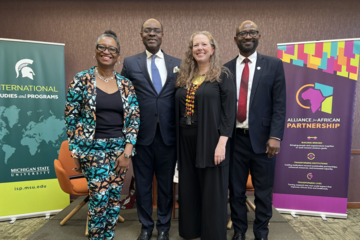
Thanks to Dan Kelly, the Chair of the Board and the Trustees; President Kevin M. Guskiewicz; Congratulations and MSU is in thoughtful hands; Interim Provost & Executive Vice President Thomas D. Jeitschko; Senior Vice Presidents; Vice Presidents; Deans, and in particular, Vice Provost Steven D. Hanson, Dean of International Studies and Programs, who I met in Nigeria in September 2022. Thank you for your kind letter at the passing of my father, Michael Olasubomi Balogun, in May 2023. Dean Judith Whipple, Acting Dean, Eli Broad College of Business and Graduate School of Management, who have graciously hosted me during this visit – and other Senior Administrators of this great institution. I must acknowledge Soji Adelaja, John A. Hannah Distinguished Professor in Land Policy and Chairman of the Board, at Chapel Hill Denham.
I commend the Professors and faculty who have dedicated themselves to producing the graduates seated in the hall today. To the parents, spouses, partners, children, family, friends and loved ones of today’s graduates, your support is truly commendable. As a father, I understand the commitment and sacrifice you have made financially and through advice and mentoring. My wife and biggest cheerleader, Kemi and 2 of our children, our daughters Michele & Marianne – are seated somewhere in the stands. Our other children, Michael, Michaela & Matthew, I wish they were here. I must mention my late Mum, Professor Wale Osisanya, Professor of English at the University of Lagos, where she was on the faculty for 35 years and gave everything for my educational foundation and values. She always hoped that after my Economics degree at the London School of Economics, I would do a Masters degree and then go get a Doctorate. Not quite the way you imagined, Mum, but nevertheless, I hope you are proud.
To today’s graduates, I congratulate you heartily and you have worked very hard to earn your degrees from a leading research university with a stellar global reputation, especially in Africa. I commend your collective spirit, dedication, and perseverance, which we are celebrating today.
For many when we think about MSU, we see an institution that epitomises the power of education to change lives. Given its rich tradition as a land grant university, academic excellence, innovative research, vibrant community spirit and commitment to global engagement, MSU is an impressive institution. It is also the US University most engaged with Africa, through the work of the Alliance for African Partnership. I have spent the last couple of days on the sprawling, East Lansing campus interacting with faculty and students here, what has made an impression on me, is the commitment to produce well-rounded individuals who are equipped to make meaningful contributions to society. Your time at MSU has equipped you with more than just knowledge and a Doctorate. It has provided you with a diverse set of perspectives, practical learning, innovation, all of which are invaluable as you embark on your next steps.
You are in that less than 1% of people globally who have a Doctoral degree and you are both lucky and at the same time under pressure to provide the less well read 99% of us, some leadership. And so what right does this Nigerian and African, who did not get a Doctoral degree, have to share these thoughts with you?
Some of you may be wondering “What next?”. Armed with your MSU PhD or Doctoral degree, please allow me to share today no more than 4 pieces of advice or life lessons, a potential pathway that might make the next few years and your actions, decisions, and investments have a real impact. First piece of advice - Work Hard and Enlarge your Influence. Second piece of advice - Work Smart and Live a Life of Significance. Third piece of advice - Spend Time with your Loved Ones and Travel a lot with them, as Travel is the Enemy of Ignorance. Final piece of advice, I want to speak to you about something that I truly believe will be a part of your future but only a few of us have it in our contemplation – We all need an Africa plan.
Work Hard and Enlarge your Influence – You will find that you only have 25-35 years to work hard before you start getting old and tired. Do not waste those years of your prime and use these years to enlarge your influence or your coast by being the very best version of whatever you do. I believe that a few things make us truly influential – Knowledge, Success, Innovation, Entrepreneurship, Relationships and Charity.
Work Smart and Live a Life of Significance – The quickest path to these things, I have just spoken about is to work not just hard but smart and live a life of meaning or purpose or significance. You need not be a wealthy entrepreneur or banker or tech entrepreneur or investor or property owner or farming business owner or politician or creative genius or sports star, to live a life of significance. It is a choice that you make whether in a long career in academia or in medicine or in charitable work or not for profit or in God’s work, or as a spouse, father, sibling, mentor that your life will be impactful in your community, state, country or the world and that when you finally bow out, it is said that you lived a life of significance.
Spend time with your loved ones and travel a lot with them, as travel is the enemy of ignorance. This time is truly priceless, and you cannot make up for it or reinvent it at the end of your career or later in life. Travel together and see the world and not just visit New York, Washington DC, Los Angeles, Dallas, Boston, Nashville, and Atlanta. Latin America and the Caribbean are a short hop away from you. Europe and the UK offer something different history and culture wise, but you have only lived a well-rounded life, when you have travelled to or in Asia, the Middle East, Israel, and Africa, especially Nigeria.
Now, when I speak of Africa, I am not referring to a singular country or big village, where everyone knows everyone as some believe. Rather, I am speaking about 54 countries with diverse cultures, languages, and governments. Let me also clear this up that stepping out of any African airport does not mean having to dodge lions, elephants, and the occasional cheetah. Yes, the wildlife in Africa is unmatched and impressive, but you are more likely to experience a traffic jam and lots of colour, on your daily commute.
As a financier I am going to speak to you about Africa in numbers…
Demography is destiny – Africa is 10% of the world’s population today but when you retire later this century, it will be 1/3rd of the world’s population. That population will not be isolated from you, and already, Africans have migrated across the world and will be integrated with every major economy globally. 1 in 4 babies are African … 1 in 10 babies are Nigerian … today. By 2100, the share of the world’s babies born in sub-Saharan Africa is forecast to reach 55% from 30% in 2021. This transition is inevitable.
401(k) - When you start accumulating your 401(k) you will find that you are immediately invested in Africa, as every major global company s already there. Coca-Cola and Pepsico are available throughout the continent, as are Visa and Mastercard, Microsoft, Amazon, Google, Meta are investing. The largest American REITs American Towers and Equinix (DC’s) are huge in Africa. All the major resource companies are in Africa. By the time you retire, I predict your 401(k) will have African home-grown brands like MTN, Dangote, Access, Flutterwave, behemoths.
AfCFTA - The African freezone is the largest of its kind covering 54 countries and by the 2nd half of this century, a third of the world’s population. Goldman Sachs research estimates AfCFTA will be 50% larger than the EU by 2075 but that analysis excludes Africa’s diaspora or international GDP which, like Mexico, could easily represent 11 to 12x diaspora remittances; that is 40% of total African spending power today.
Infrastructure multiplier – We are taught that infrastructure has a huge multiplier impact on GDP and in creating jobs and opportunities. But the impact of the first or early infrastructure investments in your community … electricity, mobile phones, internet access, roads … is much larger than simply upgrading your 4G coverage to 5G. Basic infrastructure is unleashing a continent and growth rates will reflect that.
Climate - If Africa develops like the US, or the rest of the OECD and G20 has with the same carbon per capita, it will destroy the world’s climate targets. In order to build a low carbon development path, Africa requires capital and know-how along with its abundant renewable resources for the energy transition.
We are taught that risks are balanced, like a bell curve. Positives and negatives. In hindsight, the development of China, India, or Indonesia, over the last 25 years has been inevitable. Population growth, low leverage, low dependency ratios, high growth, cheap valuations has made this an asymmetric bet. Africa is no different today. Africa can feed the world, resource, and power large parts of the world, support the world, entertain the world and, in NBA terms, beat the world! Africa’s narrative about Africa, is becoming more reflective of its truth, and the continent is rapidly emerging a global powerhouse.
Africa has 65% of the world’s arable land and 60% of the world’s uncultivated land, as well as 10% of the world’s internal renewable fresh water. When one considers this alongside the increasing focus on sustainable agricultural practices, Africa can solve the food security challenges within the continent and globally with expertise in biotechnology, agricultural sciences, land policy and supply chain management.
Africa is home to 30% of the world’s mineral reserves but accounts for just 10% of global mining exploration spend, there are significant, unverified additional reserves across the continent. The continent is home to around 65% of EV minerals lithium, cobalt, graphite, manganese etc. Africa's untapped potential for renewable energy sources, is compelling. Africa is home to 60% of the best solar resources globally, yet only 1% of installed solar PV capacity. A small part of the Sahara could power the EU or the world. Africa's wind resource potential is as high as 59,000GW and hydro- power potential is 1,750 GW.
Over 60% of Africa’s population is under the age of 25 and is the driver of growth. The economic rise of China and India were the first great shocks of this century. Africa’s rising youthful tide will most likely drive the next seismic shift. Africa is changing so rapidly it is becoming hard to ignore. The world is becoming more African, said a recent New York Times headline. The world is changing, and we need to reimagine Africa’s place in it.
As you start on this new journey, remember that with every change, there are always opportunities to explore. Be bold, resilient, embrace diversity, show empathy, stand strong, and always strive for a more equitable and prosperous future for all. There might be times you fail, or face challenges that seem insurmountable, but your indomitable Spartan spirit has been nurtured within these halls of learning and I hope that you will find the strength to keep moving and succeed.
Today, you are not just advanced degree graduates of Michigan State University; you are global citizens, poised to make a difference in the world. Congratulations, Class of 2024. The world is yours to shape, and to improve. Never forget that the impossible is the untried, so please go out and make a difference.
Thank you all and God speed.
By:
Baboki Gaolaolwe-Major
Friday, Jul 5, 2024
CULTURE AND SOCIETY
+1
Leave a comment
Associate or Full Professor of International History and Politics
The Graduate Institute of International and Development StudiesGeneva, Switzerland
invites applications for a full-time position at the rank of
ASSOCIATE OR FULL PROFESSOR of INTERNATIONAL HISTORY AND POLITICS with a specialisation in European History – “Europe and the World”
starting on 1 September 2025 or on a mutually agreed-upon date.
The Graduate Institute of International and Development Studies is seeking to recruit an Associate or Full Professor of International History and Politics for the Pierre du Bois Chair “Europe and the World”. Candidates must hold a Ph.D. in history. They must have an outstanding teaching and research track record and be able to make a significant long-term contribution in the field “Europe and the World”.
The selected candidate will be appointed as the Pierre Du Bois Chair. They must show an openness to comparative analyses and an interest to innovate from a methodological point of view. We prioritise candidates whose expertise is linked to Europe’s historical relationships and interactions with the rest of the world. We are particularly interested in candidates who work on1) the history of European imperialisms, empires and colonialism2) aspects of transnational history connecting Europe and other parts of the world (including but not restricted to the circulation of ideas and the impact of migratory flows)3) the impact and interaction of developments in Europe (broadly understood) with global security
The successful candidate will teach postgraduate courses and supervise master’s theses and doctoral dissertations in the Department of International History and Politics. They will also be called upon to teach classes and supervise master’s theses in the Graduate Institute’s Interdisciplinary Programme. The ability to work with colleagues from the other disciplines researched and taught at the Institute – International Economics, International Relations & Political Science, Anthropology & Sociology, and International Law – is expected.
The teaching language is either English or French. Prior knowledge of French is not required, but the successful candidate is expected to acquire at least a passive knowledge of it within two years of being hired.
Candidates are required to submit a motivation letter, a CV and a list of publications. Long-listed candidates will be asked for additional documents, including three reference letters.
Application deadline: 12 August 2024
To apply: https://erecruit.graduateinstitute.ch/professeurs/
Please note that applications received by post will not be considered.
For more information, candidates are encouraged to consult the Institute’s website, as well as the site of the Department of International History and Politics:https://www.graduateinstitute.ch/https://www.graduateinstitute.ch/international-history-politics
The Institute is an equal opportunity employer and value diversity. We do not discriminate on the basis of age, marital status, disability status, race, national origin, colour, gender, sexual orientation or religion.
Contact:
https://erecruit.graduateinstitute.ch/professeurs/
Website:
https://erecruit.graduateinstitute.ch/professeurs/
Primary Category:
European History / Studies
Secondary Categories:
World History / Studies
Posting Date:
06/11/2024
Closing Date
08/11/2024
By:
Jayden Hewitt
Tuesday, Jun 25, 2024
EDUCATION

No Preview Available
Leave a comment
University of Pennsylvania, Wolf Humanities Center Mellon Postdoctoral Fellowship in the Humanities
The Wolf Humanities Center awards five (5) one-year Andrew W. Mellon Postdoctoral Fellowships each academic year to scholars in the humanities who are no more than five years out of their doctorate. Preference will be given to candidates not yet in tenure track positions whose proposals are interdisciplinary, who have not previously enjoyed use of the resources of the University of Pennsylvania, and who would particularly benefit from and contribute to Penn's intellectual life. The programs of the Wolf Humanities Center are conceived through yearly topics that invite broad interdisciplinary collaboration. For the 2025–2026 academic year, our topic will be Truth.
During their appointment, Wolf Humanities Center's Postdoctoral Fellows are required to teach one course rostered in one or more of the humanities departments or programs in Penn's College of Arts & Sciences (not the Wolf Humanities Center) and must participate in the Center's weekly Mellon Research Seminar (Tuesdays, 12:00–1:30). Fellows also collaborate on the planning of a public symposium on the Center's annual topic, participate in professional development workshops, and are appointed a faculty mentor.
The 2025–2026 Fellowship appointment is twelve months (July 1, 2025—June 30, 2026) and carries a minimum stipend of $66,300, a $3000 research fund, and discounted health insurance.
The PhD (and its international equivalent, such as the DPhil) is the only eligible terminal degree, and applicants must be humanists or those in such allied fields as anthropology or history of science. Ineligible categories include an MFA or any other doctorate such as EdD, social scientists, scholars in educational curriculum building, and performing artists (note: scholars of performance are eligible).
Scholars who received or will receive their PhD (or DPhil) between May 2020 and September 2025 are eligible to apply.
Scholars who received or will receive their PhD from the University of Pennsylvania during our noted window of eligibility are welcome to apply.
The fellowship is open to all scholars, national and international, who meet eligibility requirements. International scholars outside of North America are appointed under a J-1 visa (Research Scholar status). The Wolf Humanities Center reserves the right to revoke the offer if the recipient is unable to meet this condition.
Upon receiving the award, finalists who have not received their PhD must provide a letter from their department confirming that they have completed, or will complete, all requirements (i.e. dissertation defense) by June 30, 2025. A finalist’s failure to meet this deadline will result in the offer being withdrawn.
Fellows are required to be in residence for the term of the fellowship.
Contact:
Sara Varney, Associate Director, Wolf Humanities Center
Website:
https://wolfhumanities.upenn.edu/postdoc
Primary Category:
Humanities
Secondary Categories:
Ancient HistoryArt / Art HistoryClassical StudiesHistory of Science, Medicine, and TechnologyLanguagesLiteratureMusic and Music HistoryPhilosophyReligious Studies and TheologyWomen, Gender, and SexualityWorld History / StudiesComparative Literature
Posting Date:
06/10/2024
Closing Date
11/03/2024
By:
Jayden Hewitt
Tuesday, Jun 25, 2024
EDUCATION

No Preview Available
Leave a comment
Stanford University Associate Director of Program in Feminist, Gender, and Sexuality Studied
(Hybrid)
The School of Humanities and Sciences (H&S) is the foundation of a liberal arts education at Stanford. The school encompasses 24 departments and 25 interdisciplinary programs. H&S is home to fundamental and applied research, where free, open, and critical inquiry is pursued across disciplines. As the university’s largest school, H&S serves as the foundation of a Stanford undergraduate education no matter which discipline students pursue as a major. Graduate students work alongside world-renowned faculty to pursue and shape foundational research that leads to breakthroughs and discoveries that shed new light on the past, influence the present, and shape the future. Together, faculty and students in H&S engage in inspirational teaching, learning, and research every day.
Program Description:
The Program in Feminist, Gender, & Sexuality Studies (FGSS) seeks an Associate Director (AD). FGSS offers a PhD minor that is open to all students currently enrolled in a doctoral program at Stanford. FGSS also offers an undergraduate major, secondary major, and minor, and an interdisciplinary honors program that is open to undergraduates in all majors. FGSS teaches students to analyze how ideas about and experiences of gender and sexuality impact and are shaped by societies, individuals, and institutions. Through interdisciplinary curricula, research, and practical experience, our students learn critical gender and sexuality studies methodologies.
Reporting to both the Faculty Director (FD) of FGSS and its Director for of Finance and Operations (DFO), the AD manages the programs’ day-to-day academic and administrative operations. The AD works closely with the FD to sustain the development and expansion of the undergraduate and graduate programs and leads the implementation of programmatic, curricular, and administrative priorities. The AD advises undergraduate and graduate majors, minors, and honors students in the pursuit of their academic and research trajectories. The AD also works closely with FGSS-affiliated faculty to facilitate and enhance FGSS academic and research needs. Additionally, the AD fosters connections and engagement with faculty, post-docs, lecturers, researchers, artists, and varied constituents engaged in intellectual and creative work in feminist, gender, and sexuality studies within and beyond the university.
Candidates for the position should hold a Ph.D. in any discipline, with significant focus on themes in feminism, gender, and/or sexuality. At least two years of teaching experience with significant focus in feminism, gender, and sexuality. Candidates should also exbibit the following competencies: a growth mindset, excitement about learning new skills, capacity to adapt to change, project management, organization, and attention to detail, familiarity with the higher education landscape, and aptitude in working collaboratively within a team and with varied constituencies. The AD’s time will be focused in approximately 50% teaching, advising, and curricular administration (2-3 courses) and 50% devoted to initiating and implementing program development, strategic initiatives, event planning, and financial oversight.
The incumbent will:
·Manage the programs’ day-to-day academic and administrative operations in collaboration with FD, DFO, and other Stanford employees.
·Advise undergraduate and graduate students, including the capacity to advise undergraduate honors theses.
·Create and/or collaborate in the development of curriculum and make recommendations for course improvements in coordination with the FD. Manage the coordination of FGSS course offerings and assist in the recruitment of faculty and other instructors to offer courses.
·Coordinate and assist with the hiring and coordination of lectures, post-docs, and other instructors as needed.
·Assist the FD in developing and implementing strategic planning, academic and public outreach programming, financial management and annual budgeting.
·In consultation with the FGSS Financial Manager, monitor expenses, budgets, and finances of the program. Make recommendations on funding based on program spending.
·Oversee and administer FGSS activities by evaluating academic programs, making recommendations that impact policies and programs, and coordinating and implementing changes.
Other duties may also be assigned.
This is a 100% FTE, two-year fixed-term position. It will be based on the Stanford campus and will be considered for a telecommuting option (a hybrid of working on-site and off-site), subject to operational needs.
This position is fixed-term for two years with possible renewal. If you believe that this opportunity is a match for your knowledge, skills, and abilities, we encourage you to apply. Thank you for considering employment opportunities with the School of Humanities and Sciences.
Please submit a CV; up to a 2-page cover letter outlining interest in the job, the skills, aptitudes, and qualifications that align with the position; three letters of reference and referees’ contact information are also required (please email the letters of reference directly to Maritza Colon at maritza.colon@stanford.edu).
CORE DUTIES:
·Oversee and administer research activities by evaluating academic programs, making recommendations that impact policies and programs, and coordinating and implementing changes.
·Collect and analyze data, create reports, review and explain trends to determine program effectiveness; formulate and evaluate alternative solutions and/or recommendations to achieve the goals of the program.
·Teach and/or assist in the teaching and administration of courses. Create and/or advise in the development of curriculum. Make recommendations for course improvements.
·Write and edit content for proposals, peer-reviewed publications, and other program activities under the general direction of PI. Assist with the development of research grants, (i.e., may suggest new funding opportunities, write portions of grants, and/or summarize data for grant support).
·Represent the program or function as the key contact and subject matter expert within the department, unit or school and develop communications for internal and external constituencies. Organize and/or participate in outreach activities such as events, partnerships, fundraising, training, and conferences. Lead workshops and facilitate meetings.
·Monitor expenses, budgets, and finances of the program. Make recommendations on funding based on program spend.
·May oversee and train student workers.
EDUCATION & EXPERIENCE:
Bachelor’s degree and two years of relevant experience or combination of education, training, and relevant experience. Advanced degree may be required for some programs. Program administration and or research experience may be required.
PREFERRED EDUCATION & EXPERIENCE:
Advanced degree and two years of relevant experience in area of specialization or combination of relevant education, training, and/or experience.
KNOWLEDGE, SKILLS AND ABILITIES:
·Demonstrated oral, written, and analytical skills, exhibiting fluency in area of specialization.
·Ability to oversee and provide direction to staff.
PREFERRED KNOWLEDGE, SKILLS AND ABILITIES:
·PhD required
·Ability to develop program partnerships and funding sources.
·Ability to manage budgets and develop financial plans.
·For teaching jobs, advanced degree or certification may be required for some programs.
WORKING CONDITIONS:
·May work extended hours, evenings or weekends.
·May travel locally.
·Occasional overnight travel.
The expected pay range for this position is $70,000 - $99,000 per annum.
Stanford University provides pay ranges representing its good faith estimate of what the university reasonably expects to pay for a position. The pay offered to a selected candidate will be determined based on factors such as (but not limited to) the scope and responsibilities of the position, the qualifications of the selected candidate, departmental budget availability, internal equity, geographic location and external market pay for comparable jobs.
At Stanford University, base pay represents only one aspect of the comprehensive rewards package. The Cardinal at Work website (https://cardinalatwork.stanford.edu/benefits-rewards) provides detailed information on Stanford’s extensive range of benefits and rewards offered to employees. Specifics about the rewards package for this position may be discussed during the hiring process.
Why Stanford is for You:
Imagine a world without search engines or social platforms. Consider lives saved through first-ever organ transplants and research to cure illnesses. Stanford University has revolutionized the way we live and enrich the world. Supporting this mission is our diverse and dedicated 17,000 staff. We seek talent driven to impact the future of our legacy. Our culture and unique perks empower you with:
·Freedom to grow. We offer career development programs, tuition reimbursement, or audit a course. Join a film screening or listen to a renowned author or global leader speak.
·A caring culture. We provide superb retirement plans, generous time-off, and family care resources.
·A healthier you. Climb our rock wall, or choose from hundreds of health or fitness classes at our world-class exercise facilities. We also provide excellent health care benefits.
·Discovery and fun. Stroll through historic sculptures, trails, and museums.
·Enviable resources. Enjoy free commuter programs, ridesharing incentives, discounts and more.
The job duties listed are typical examples of work performed by positions in this job classifications and are not designed to contain or be interpreted as a comprehensive inventory of all duties, tasks and responsibilities. Specific duties and responsibilities may vary depending on department or program needs without changing the general nature and scope of the job or level of responsibility. Employees may also perform other duties as assigned.
Consistent with its obligations under the law, the University will provide reasonable accommodations to applicants and employees with disabilities. Applicants
requiring a reasonable accommodation for any part of the application or hiring process should contact Stanford University Human Resources at stanfordelr@stanford.edu. For all other inquiries, please submit a contact form.
Stanford is an equal employment opportunity and affirmative action employer. All qualified applicants will receive consideration for employment without regard to race, color, religion, sex, sexual orientation, gender identity, national origin, disability, protected veteran status, or any other characteristic protected by law.
Contact:
Apply for this position directly through Stanford Universty Careers website:
https://careersearch.stanford.edu/jobs/associate-director-of-program-in-feminist-gender-and-sexuality-studies-hybrid-opportunity-25693
Job code 4111.
Requisition ID 103526.
Website:
https://careersearch.stanford.edu/jobs/associate-director-of-program-in-feminist-gender-and-sexuality-studies-hybrid-opportunity-25693
Primary Category:
Women, Gender, and Sexuality
Secondary Categories:
None
Posting Date:
06/13/2024
Closing Date
07/15/2024
By:
Jayden Hewitt
Tuesday, Jun 25, 2024
EDUCATION
No Preview Available
Leave a comment
American Council of Learned Societies Program Officer of Buddhist Studies (3-year, remote)
ACLS Mission and Overview
Formed a century ago, the American Council of Learned Societies (ACLS) is a nonprofit federation of 81 scholarly organizations. As the leading representative of American scholarship in the humanities and interpretive social sciences, ACLS’ core principle is that knowledge is a public good. As such, ACLS strives to promote the circulation of humanistic knowledge throughout society. In addition to stewarding and representing its member organizations, ACLS employs its endowment and $34 million annual operating budget to support scholarship in the humanities and social sciences and to advocate for its central role in the twenty-first century.
Overview of department
For many decades, ACLS has extended its reach beyond the borders of the United States. ACLS International Programs (IP) currently operates the Luce/ACLS Program in China Studies, the Robert H. N. Ho Family Foundation Program in Buddhist Studies, and the Summer Institute for the Study of East Central and Southeastern Europe. IP advances humanistic studies through fellowships and grants, by building communities of scholars in the world areas and disciplinary fields in which we work, and by partnering with funders, learned societies, and communities to strengthen global academic relations.
Job Summary
The Program Officer, reporting to the Director, and under the mentorship of the Senior Advisor for Buddhist Studies, will help design, implement, evaluate, and improve activities supporting scholars of Buddhist Studies and the communities in which they work. The Program Officer will help lead new programmatic work focused on community engaged research, increase connections with emerging scholarly networks in Asia and around the world, and expand the resources we offer to our growing network of international scholars through social media and events.
This position is funded by a grant from The Robert H. N. Ho Family Foundation Global. Continued employment is contingent on the renewal of grant funding.
Responsibilities include but are not limited to:
Program design, convening, and research
With the Director and Senior Advisor, design and implement new activities as part of the Program in Buddhist Studies, including (but not limited to):
A review of the Translation grant program in light of advances in machine translation and AI language models, drawing on internal and external expertise.
A new, multi-year project on community engaged research, teaching, and translation with the goal of producing a public facing product.
Develop and implement programming, competitions, and events for scholars, including workshops for international applicants, manuscript development workshops, and convenings and retreats for Fellows and mentors
Coordinate activities with other ACLS departments as necessary, including US programs, IDEA, communications, events, and finance
International engagement and network-building
Oversee outreach to Fellows, Grantees, mentors, and other scholars and specialists in Buddhist Studies to support program design, network-building, and collaboration
Research, develop and implement communications and social media strategies to increase engagement and applications from scholars based in Asian institutions
Build and develop global, regional, and local alumni networks and scholarly communities
Partner on joint programming with learned societies, Buddhist organizations, and other funders in the US and around the world
Program management
Help operate and improve all aspects of the annual application, selection, and award process, in collaboration with the IP Team
Support the recruitment of peer reviewers, mentors, Buddhism Public Scholars host institutions, and other specialists in Buddhist Studies
Draft and review program-related content as needed, including application materials, website text, and announcements
Review and analyze reports submitted by Fellows and grantees and help prepare sections of ACLS proposals and reports
Qualifications:
PhD in humanities or interpretive social sciences
Expertise and academic training in Buddhist knowledge and traditions
Excellent writing and communication skills, including the capacity to write clearly for a range of audiences
Excellent planning abilities, organizational skills, and attention to detail
Facility both for working collaboratively with a team and for working independently
Willingness to travel occasionally to events in the United States and abroad (2 to 6 times per year), to work in intensive, off-site conditions, and accommodate different time zones
Proficiency in MS Office, particularly Word and Excel
Preferred Qualifications:
Training and experience in publicly engaged research, community outreach, and the dynamics of collaboratively produced research and translation
Interest or experience in machine translation, AI language models, and translation
Experience living, working, or studying in Asia
Interest or experience in event planning, marketing, or communications
Administrative experience in non-profit organizations, government agencies, or foundations, especially those that conduct open-call, merit-based, fellowship competitions
Office policy and salary
Staff are expected to be available during ACLS’s normal hours of operation, from 9am-5pm ET.
Salary range: $80,000 - $92,000
Please apply here.
Contact:
https://acls.bamboohr.com/careers/52?source=aWQ9NDM%3D
Website:
None
Primary Category:
Asian History / Studies
Secondary Categories:
Cultural History / StudiesReligious Studies and Theology
Posting Date:
06/12/2024
Closing Date
09/10/2024
By:
Jayden Hewitt
Tuesday, Jun 25, 2024
EDUCATION

No Preview Available
Leave a comment
Cornell University, History Mellon Postdoctoral Fellowship
With the sponsorship of the Society for the Humanities, the Department of History invites applications for a two-year Mellon Postdoctoral Fellowship position beginning August 1, 2025. The fellowship carries a stipend of $62,000/year.
We seek a scholar with a PhD in History who is also grounded in theoretical and methodological public history approaches, in particular Museum Studies, Historic Preservation, or digital history. This position will involve developing new directions in public history teaching and research, and joining an interdisciplinary group of scholars and students whose projects focus on historic sites, digital media, museums, libraries, archives, and/or local communities. Geographic area and historical era open, but we prefer candidates who focus on climate or energy history, African American women’s history, or LGBTQ+ history in the Americas. The postdoc will teach a lower-level and an upper-level course each year that engage with public history topics and methods (involving, for instance, monuments, museums, oral history, historic preservation, walking tours, historically engaged performance, or documentary film). These courses would emphasize applied forms of historical engagement by undergraduates such as conducting archival research, learning and practicing oral history methods, developing curatorial skills, actively engaging with local and global individuals and communities, and asking theoretical questions about history as a process of knowledge production. The postdoc would play a central role in the Public History Initiative (PHI) and the Critical Inquiry into Values, Imagination, and Culture (CIVIC) initiative, by offering interdisciplinary courses and programming (such as lecture series) relevant to their specific field.
Applicants eligible for the Mellon Postdoctoral Fellowship for the 2025-26 and 2026-27 academic years include those who have received the Ph.D. degree after August 1, 2021 and no later than June 30, 2025. Applicants who do not have the Ph.D. in hand at the time of application must include a letter from the committee chair or department stating that the Ph.D. degree will be conferred before the term of the fellowship begins. International applicants are welcome to apply, contingent upon visa eligibility.
Application materials must be submitted via Academic Jobs Online position #27746 by October 1, 2024.
Contact:
Michael Williamson
mdw84@cornell.edu
Website:
https://academicjobsonline.org/ajo/jobs/27746
Primary Category:
Public History
Secondary Categories:
African American History / StudiesEnvironmental History / StudiesWomen, Gender, and Sexuality
Posting Date:
06/14/2024
Closing Date
10/01/2024
By:
Jayden Hewitt
Tuesday, Jun 25, 2024
EDUCATION
No Preview Available
Leave a comment
Call for Papers| African-centered Psychology: Places and Spaces We've Been and Future Possibilities
Mission of Journal
Siyabonana: The Journal of Africana Studies is an open access online peer-reviewed academic journal that publishes original research and creative intellectual work on key issues within the discipline of Africana Studies and across the global African world. Pan-African in scope, the journal publishes research articles, essays, commentaries, book reviews, interviews, and other creative work that utilizes African-centered theories, methodologies, and approaches to not only examine critical issues, but also to present solutions within all areas of Africana Studies, including the humanities, arts, and sciences. It simultaneously provides intellectual space for discourse about community social justice activist work and liberation struggles on the continent and within African world communities. Accepting intellectual and creative work from diverse scholars, activists, writers, and artists who resemble the Editorial Board’s diverse training and scholarship, The Journal of Africana Studies intentionally positions itself as an inclusive and affirming discipline-based African-centered entity. Timely and radical intellectual research and creative pieces on the prison industrial complex; Africana/Black digital humanities; Africana genders and sexualities and Africana queer theory; the Black radical tradition; political prisoners; Africana/Black Psychology; mental health, nutrition, and holistic health; the African/Black Aesthetic; Africana spiritual philosophy; Black liberation theology; and Afrofuturism are, therefore, also welcome.
About the Special Issue
We invite papers for a Summer 2025 special issue on African-centered/Africana Psychology. Africana Psychology critically investigates and interrogates the life-worlds of people of African descent from an African-centered perspective. This special edition seeks articles that address issues of identity, education, health, clinical/counseling, criminal justice, sexuality, sexism, gender, methodology, racism/oppression, religion/spirituality and intellectual history. We also welcome book reviews of recent and new publications within the domain of African-centered/Africana Psychology. Suggested article topics include, but are not limited to, the following:
The rationale for African-centered Psychology
Definitions and conceptual models/orientations in African-centered Psychology
History of the development of African-centered Psychology
African-centered Psychology in literature
The relationship between African spirituality/philosophy and African-centered Psychology
The utilization of African-centered psychology with any of the bodies of knowledge in Black Studies
The relationship between history and cultural personality
Psychological intervention and clinical treatment
Media images and Africana identity
Popular culture and Africana psychology
Intelligence testing with Black populations
The psychology of Africana leadership
Educating African-centered psychologists
The social viability/liberatory aspects of African-centered Psychology
The future scope and directions of Africana Psychology.
We encourage longer essays and research articles, as well as oral histories, institutional reports, book reviews, commentaries, artwork, and creative works such as poetry, short stories, and narratives. Essays, research articles, reports, and oral histories/interviews should not exceed 10,000 words; review essays, film reviews, and commentaries should not exceed 3,000 words; and book reviews should not exceed 1500 words. The length and medium of all creative work will be determined on a case-by-case basis.
Special Issue Editor
DeReef F. Jamison is a Teaching Professor of African American Studies at Florida State University, and serves on the Editorial Board of The Journal of Africana Studies. He received a B.S. in Psychology from Bowie State University; a M.S. in Community Psychology from Florida Agricultural and Mechanical University; and a Ph.D. in African American Studies from Temple University. His research attempts to demonstrate the connections between Africana Intellectual History and social science that are often seen as disconnected. In particular, he examines how historical figures in the Africana intellectual tradition explore the notion of Cultural Consciousness. Jamison’s research interests include Africana Intellectual History; the intellectual history and Diasporic connections of Africana Psychology; and the Psychology of race and racism. He has published articles and essays in The Journal of African American Studies; The Journal of Black Studies; Race, Gender and Class; The Griot; Africology: the Journal of Pan African Studies; The Western Journal of Black Studies; The Journal of Black Psychology; and The Black Scholar.
For inquiries, please contact DeReef Jamison at: joafst@gmail.com.
Submission Guidelines
For this special issue, the editors are asking for authors to submit a 250- 300 word abstract for initial consideration before submitting a longer work. The abstract should include the tentative title, author(s), affiliation(s), type of submission, detailed summary of the proposed submission, and representative sources. Abstracts are due no later than July 31, 2024, and decisions on acceptance will occur no later than August 15, 2024. The selection criteria will involve: relevance to theme, clarity of paper, intellectual significance, and originality.
Once abstracts are accepted by the editors, completed submissions are due no later than December 1, 2024, and should adhere to the guidelines stated above including a title page with title of submission and type of submission (research article, interview etc.), name of author(s), affiliation(s), and email(s).
Manuscripts should be submitted as a Microsoft Word document, double spaced, written in Times New Roman, size 12 font, and adhere to the most recent edition of the Chicago Manual of Style, APA Publication Manual, or MLA Handbook in terms of format and citation. The final paper submission should not exceed 25 pages via MS word.
Submission Timeline:
Abstracts Due: July 31, 2024
Notification of Acceptance: August 15, 2024
Completed Submissions Due: December 1, 2024
Publication: Summer 2025
All abstracts and submissions should be uploaded to the submissions page on the journal website at https://www.journalofafricanastudies.com/submissions.
By:
Jayden Hewitt
Tuesday, Jun 25, 2024
EDUCATION

No Preview Available
Leave a comment
IEG Fellowships for Doctoral Students (m/f/div)
IEG Fellowships for Doctoral Students (m/f/div)
The Leibniz Institute of European History (IEG) awards fellowships for doctoral students in European history, the history of religion and other historical disciplines.
The IEG funds PhD projects in European history from early modern to contemporary history. We are particularly interested in projects
with a comparative or cross-border approach
on European history in its relation to the wider world
on topics of intellectual and religious history
that make use of digital tools and methods.
What we offer
IEG Fellowships provide a unique opportunity to pursue and finalise individual PhD projects while living and working at the Institute in Mainz for 6–12 months. The monthly stipend is currently € 1,350. Additionally, it is possible to apply for family or child allowance.
Requirements
Successful candidates are required to reside at the Institute in Mainz throughout the duration of their fellowship. They are expected to be active members on the IEG’s research community and to participate in the weekly colloquia and scholarly activities. Moreover, they will present their work in progress at least once during their stay. The IEG supports the writing up of dissertations and does not provide funding for preliminary research, language courses or the revision of book manuscripts. At the time of the application deadline, candidates should have pursued their PhD for a maximum of three years. PhD theses continue to be supervised under the auspices of the fellows' home universities. We expect proficiency in English. The IEG encourages applications from women.
Application Please combine all application materials, except for the application form, into a single PDF and send it to: application@ieg-mainz.deApplications may be submitted in either English or German; we recommend that candidates use the language in which they are most proficient.
Application forms can be downloaded here: https://buff.ly/3zgRMOc
The IEG has two deadlines each year for IEG Fellowships: February 15 and August 15.The next deadline for applications is August 15, 2024.Please direct any questions concerning the IEG Fellowship Programme to Ms. Joke Kabbert: fellowship@ieg-mainz.de
By:
Jayden Hewitt
Tuesday, Jun 25, 2024
EDUCATION
No Preview Available
Leave a comment
Exploring the Psychological, Emotional, Physical and Social Impact of Global Colorism
Call for Submission:The Journal of Colorism Studies (JOCS) is accepting submissions for a themed issue titled “Exploring the Psychological, Emotional, Physical and Social Impact of Global Colorism.” The theme is aligned with the second Ronald E. Hall Conference on Colorism scheduled for August 22, 2024 and August 23, 2024.
Colorism involves distinctions based on skin color (light, medium or dark) and results in the favorable or unfavorable treatment, discrimination, biases, etc. of individuals based on the lightness or darkness of their skin color and can include other phenotypes. With its foundation deeply rooted in white superiority, white supremacy, white privilege, racism, prejudice and stereotypes, colorism is detrimental to the psychological, emotional, physical, and social well-being and is complex in nature (Colorism Project, 2006). Colorism occurs consciously and unconsciously, and acts of colorism can be intentional or unintentional, hence, the “complexity.” Colorism is one of the many issues impacting the global community intraracially and interracially involving racial and ethnic groups in various categories. The impact of this global phenomenon is traumatizing psychologically, emotionally, physically, and socially, and can impact overall well-being.
Submissions Accepted
Articles, book reviews, unpublished commentaries, case studies, interviews, film/movie reviews, unpublished blogs, and podcasts.
Submission/Author Guidelines
Submissions will not be considered for publication if they have been published before or if they are under review by another journal or publisher. Authors are responsible for obtaining permission to use from copyright holders for reproducing tables and figures. Submissions to JOCS are subject to an initial internal review. Submissions considered for potential publication will be reviewed using a blind peer review process. Submissions that do not follow author guidelines will not be considered for publication. Submissions will follow the style of the Publication Manual of the American Psychological Association (7th edition).
The submission format is as follows:
Singe spacing.
1-inch margins (top, bottom, and the sides of each page).
12-pt Times New Roman.
Lines should be left-justified, and words should not be divided at the end of a line.
Number all pages.
Submissions (including notes, references, and tables) should not exceed 25 pages.
Online Submissions
JOCS only accepts online submissions. Registration and login are required to submit items online. To submit manuscripts for review, please register at http://jocsonline.org (you will be required to create a user ID and password). Subscriptions to JOCS are free.
By:
Jayden Hewitt
Tuesday, Jun 25, 2024
EDUCATION
No Preview Available

Leave a comment