

Browse
Education
From Research to Impact: Strengthening Adolescent Nutrition in Malawi
In alignment with AAP’s promotion of and support for global health and nutrition through collaborations, Aaron Chikakuda is a 2025 awardee of the Dissertation Research Support Fund to facilitate data collection for his dissertation research in Malawi. Aaron is completing a PhD in human nutrition in the Department of Food Science and Human Nutrition under the guidance of Dr. Lorraine Weatherspoon at Michigan State University (MSU).
His research is titled “Efficacy of Weekly Iron and Folic Acid (WIFA) Supplementation Among Adolescent Girls (15– 19 years) in Malawi”.
Given the disproportionately high rates of nutritional anemias in adolescent girls (35%) in conjunction with high teenage pregnancies in Malawi (average 30% in girls 15-19 years of age), a weekly iron and folic acid supplementation program in female adolescents was initiated. The major aim of the weekly iron and folic acid supplement program (WIFA) is to address adherence and poor outcome challenges of the WHO main stay program of daily iron and folic acid supplementation in pregnant women. Most women start receiving prenatal supplements later than the recommended time of pre-conception or very early in pregnancy to maximize benefits of folic acid supplements in particular to curb adverse nutritional and pregnancy outcomes. Because the efficacy of the WIFA program is not known in Malawi, funds from the AAP Dissertation Research Support Fund Award, are assisting Aaron in investigating whether adolescent females receiving weekly iron and folic acid supplements have improved health and nutrition outcomes compared to a control sample. Data collection includes sociodemographic and nutrition intake information in addition to hematological parameters: hemoglobin, serum folate and red blood cell folate; anthropometric indices: body mass index (BMI) and mid upper arm circumference (MUAC), as well as pregnancy outcomes in a subgroup such as weight gain in pregnancy, gestational age, birth weight and birth defects (neural tube defects).
This is a three-phase study. Phase I of the study encompasses a pre-post research design with intervention and control groups (total n=750). Female adolescents that are receiving iron and folic acid supplements comprise the intervention arm of the study and female adolescents not receiving iron and folic acid supplements are the control group. The study focuses on two districts in central Malawi (Lilongwe and Dedza) and two districts in southern Malawi (Blantyre and Mwanza) based on high prevalence of teenage pregnancies in the areas. Data collection includes baseline followed by endline after 6 months to evaluate the efficacy of the program. The second phase of the study is a qualitative assessment using in-depth interviews and focus group discussions to document experiences of adolescent females taking part in the weekly iron and folic acid supplementation program as well as key informant interviews to document experiences, challenges and insights of officers from relevant governmental (Ministry of Education and Ministry of Health) and non-profit (UNICEF, World Food Program and Evidence Action) organizations involved in the program. In the third phase a subsample of pregnant adolescents will be followed up until delivery. Upon delivery of the baby, assessments on pregnancy outcomes will be conducted and documented. Laboratory staff and graduate students at Lilongwe University of Agriculture and Natural Resources as well as teachers and school nurses in Malawi are providing valuable in country data collection and study monitoring assistance. The study results will be published in scientific journals and disseminated through conference presentations and policy briefings for the ministry of health and ministry of education in Malawi and other relevant stakeholders.
After completing PhD training at Michigan State University, Aaron intends to build on this work, by continuing to generate evidence and provide policy direction on health and nutrition in women and children. He intends to continue nurturing collaborations with The Ministry of Education Science and Technology Department of School Health and Nutrition, Ministry of Health Department of Nutrition, non-profit organizations, Lilongwe University of Agriculture and Natural Resources, Michigan State University and other international partners. Aaron also plans to help build capacity in health and nutrition through training of graduate level nutrition experts by equipping them with skills in evidence-based practice, implementation of community sensitive nutrition and development projects, advanced research, and inform public health policies in Malawi. He greatly appreciates the AAP Dissertation Research Support Fund Award, which was critical for covering research expenses for PhD degree completion following termination of his USAID support mid-program. It has also opened numerous opportunities for further collaboration and career growth.
By:
Baboki Gaolaolwe-Major
Thursday, Mar 5, 2026
HEALTH AND NUTRITION
+1

Leave a comment
Strengthening Child Mental Health in the DRC: From Early Caregiving to School-Age Resilience
Children’s mental health is deeply shaped by the environments in which they grow—and at the center of that environment is the family. In low- and middle-income countries (LMICs), where families often navigate poverty, limited infrastructure, and fragile health systems, understanding how early caregiving influences long-term mental health is both urgent and transformative.
A new NIH-funded longitudinal study led by faculty at Michigan State University is addressing this critical question in the Democratic Republic of the Congo (DRC). Building on a previous early childhood parenting intervention, the project examines whether strengthening caregiving practices early in life can produce lasting mental health benefits as children reach school age.
At the heart of the study is the Mediational Intervention for Sensitizing Caregivers (MISC), a year-long, biweekly parenting support program designed to enhance responsive caregiving and promote children’s early cognitive and emotional development. While programs like MISC have demonstrated clear short-term benefits, far less is known about whether these early gains translate into sustained improvements in mental health as children grow older. This study seeks to close that gap.
Researchers are following 100 children whose mothers previously completed the MISC intervention and 114 children whose mothers received standard care. Over a three-year follow-up period, children’s mental health is assessed annually using a comprehensive set of tools, including measures of executive functioning and self-regulation, emotional and social communication assessments, video-recorded caregiver–child interactions, standardized mental health checklists, and innovative eye-tracking technology that measures children’s responses to short video scenes depicting distress and comfort. By combining behavioral observation with physiological and cognitive indicators, the study offers one of the most comprehensive examinations of child mental health trajectories in the region.
Importantly, the project does more than evaluate whether MISC works—it seeks to understand how and why it works. Researchers are examining family social factors such as caregiving environment, parental self-efficacy, and school attendance, alongside maternal mental health and child growth indicators. These factors are analyzed both as pathways through which the intervention may influence outcomes and as independent predictors of child mental health. The study also takes a dyadic perspective, recognizing that child and caregiver mental health are deeply interconnected. By assessing reciprocal influences over time, the research captures the dynamic processes that may strengthen resilience—or heighten vulnerability—within families.
The study is led by Dr. Itziar Familiar-Lopez and Dr. Michael Boivin of the Department of Psychiatry at Michigan State University. Dr. Boivin brings more than three decades of experience in child neurodevelopment research in Sub-Saharan Africa, while Dr. Familiar-Lopez contributes extensive expertise in maternal mental health, family systems, and longitudinal global mental health research. In-country leadership and partnership are central to the project’s success, with Dr. Desire Tshala and his team at the Institute National pour la Recherche Biomedical working closely with Dr. Zacharie Mulumba, a Congolese researcher and Mandela Washington Fellow.
For Dr. Mulumba, the project has been both professional and deeply personal. After being selected among more than 10,000 applicants for the Mandela Washington Fellowship, he completed a six-week Civic Engagement program at Michigan State University. There, an introduction to Dr. Boivin sparked a collaboration that would take him from East Lansing to Kahemba, a remote region in the DRC heavily affected by konzo—a neurological condition linked to cyanide exposure from improperly processed cassava.
Before returning home, Dr. Mulumba received training in eye-tracking technology, which was being used for the first time in this setting. Soon after, he traveled by road for two days—nearly 19 hours on the second day alone—to reach Kahemba. The challenges were immense: impassable roads, limited infrastructure, families relying on seasonal forest activities for survival, and children affected by konzo with severe motor impairments. Despite these barriers, the research team conducted eye-tracking assessments with approximately 130 children. Community members were welcoming, and conversations with parents—particularly mothers—offered powerful insight into daily realities and resilience.
Returning to Kinshasa after weeks in Kahemba felt, in Dr. Mulumba’s words, like “entering another world.” The experience underscored a central lesson of global health research: local context, patience, and partnership are indispensable.
Mental health disorders account for a growing burden of disease globally, yet prevention strategies tailored for LMIC contexts remain limited. By establishing whether early parenting support produces durable mental health benefits—and identifying the family and developmental mechanisms that drive those effects—this study provides critical evidence for scalable, culturally responsive interventions.
At its core, this work reminds us that strengthening caregiver–child relationships early in life may be one of the most powerful tools we have to promote resilience, dignity, and long-term well-being. Through sustained partnership and shared commitment, this collaboration between researchers in the United States and the DRC is helping to shape a future where children’s mental health is supported not only in theory, but in practice—within the communities where it matters most.
By:
Baboki Gaolaolwe-Major
Friday, Mar 20, 2026
HEALTH AND NUTRITION
+1
Leave a comment
African Futures Scholar Gladys Gakenia Njoroge
“As I leave here, I want to build a product that is of quality, something that can be used out there in the world, something bigger than myself.” 🌟Meet Dr. Gladys Gakenia Njoroge, Assistant Professor and researcher in Biostatistics at United States International University - Africa, Nairobi, Kenya.She reflects on her journey: “This experience gave me a chance to concentrate on my work, I wake up every day thinking about my project and growth.” ✨The program supported Gladys in refining her skills, focusing on impactful work, and preparing her to create meaningful contributions beyond her research.
By:
Baboki Gaolaolwe-Major
Wednesday, Mar 4, 2026
EDUCATION
Leave a comment
New Digital Archive on Lagos History
We are pleased to announce the launch of Our Lagos History, a digital archive dedicated to preserving and sharing historical records on Lagos. The archive can be assessed at www.ourlagoshistory.org. The collection includes letters, newspapers, photographs, and personal writings sourced from private archives. Some materials are presented in their original format, while others are incomplete due to their fragile condition. Our Lagos History makes Lagos history accessible to researchers, educators, and the wider public. We invite you to explore the stories, people, and ideas that have shaped the city.
Questions about the collection can be directed to the coordinators (Halimat Somotan and Mufutau Oluwasegun Jimoh) at ourlagoshistory@gmail.com.
Contact Information
Halimat Somotan and and Mufutau Oluwasegun Jimoh at ourlagoshistory@gmail.com.
Contact Email
ourlagoshistory@gmail.com
URL
http://ourlagoshistory.org
By:
Aaron Dorner
Tuesday, Mar 3, 2026
CULTURE AND SOCIETY
+1

No Preview Available
Leave a comment
Bridging Traditional Medicine and Data Science: A Transcontinental Approach to Diabetes-Related
As the global health community increasingly recognizes that the most persistent health challenges require collaborative interdisciplinary solution, the intersection of traditional knowledge and modern statistical innovation offers particularly promising avenues for advancement. Through the Alliance of African Partnership’s (AAP) African Futures Program, my year as a visiting scholar at Michigan State University in (MSU) has embodied this collaborative spirit, marrying Africa’s rich ethnobotanical heritage with innovative biostatistical methodologies to address one of the continent’s most pressing, yet often overlooked, diabetes complications.
Diabetes-induced erectile dysfunction (DIED) affects an estimated two-thirds of male diabetic patients globally, with prevalence rates exceeding 71% in African populations. Despite these staggering figures, conventional pharmacological interventions, primarily phosphodiesterase type 5 inhibitors, offer merely symptomatic relief while failing to address underlying hormonal and metabolic dysregulation. Moreover, these treatments remain inaccessible to many due to cost, adverse effects and contraindications in cardiovascular compromised patients. This clinical gap has driven my research focus toward evaluating indigenous medicinal plants that have supported African communities for generations, specifically Mondia whitei (Mw) and Withania somnifera (Ws), traditionally renowned for their adaptogenic and aphrodisiac properties.
The African Futures Program has provided the essential infrastructure to transform this research from a localized inquiry into a globally informed investigation. I have spent the 2025 academic year collaborating closely with my two mentors: Prof. Yuehua Cui in MSU's Department of Statistics & Probability and Prof Calvin Omolo of USIU-Africa, Department of Pharmacy Practice & Public Health. This partnership has been instrumental in elevating our methodological approach by moving beyond standard herbal efficacy testing to implement mixture design experiments and advanced regression analyses that can detect subtle synergistic interactions between bioactive compounds.
Our recent study, conducted at USIU - Africa Pharmacy Laboratories represents a paradigm shift in phytotherapeutic research methodology. Rather than testing herbs in isolation, a common limitation in traditional medicine research, we employed advanced mixture design methodologies to evaluate the combined effects of Mondia whitei and Withania somnifera in alloxan-induced diabetic rat models. The results have been compelling. While the individual extracts showed modest improvements in testosterone restoration and glycemic control, an optimized herbal combination demonstrated statistically significant synergistic effects producing the greatest improvement in testosterone levels and substantial reductions in fasting blood glucose compared to single-herb treatments. These findings suggest that strategic combination of these herbs may simultaneously address the metabolic deregulation and vascular dysfunction underlying DIED through complimentary pathways, Withania somnifera improving insulin sensitivity and systemic metabolic health while Mondia whitei enhances local nitric oxide critical for erectile function. Further research is underway to identify optimal formulation ratios and validate these effects in clinical settings.
What distinguishes this research within the global health landscape is its commitment to methodological rigour that meets international standards while remaining culturally grounded and accessible. During my tenure at MSU, I have actively disseminated these findings through high-impact academic channels including presentations at the Dahshu Data Science Symposium on "Innovative Frontiers: AI and Data-Driven Advances in Drug Development" and at the 2025 Women in Statistics and Data Science Conference. These platforms have not only amplified African pharmaceutical research within global scientific discourse but have also facilitated crucial networking with biostatisticians and epidemiologists exploring similar One Health intersections between plant-based interventions and chronic disease management.
Beyond the laboratory and conference podium came other openings through this fellowship. Our research team was recently selected for the 3rd cohort of the Collaborative Online International Learning (COIL) Faculty Fellows Program. This will enable us to develop virtual exchange curricula that will train the next generation of African Epidemiology and Public Health researchers in advanced biostatistical methods. Additionally, I have engaged extensively with MSU’s research ecosystem through workshops hosted by the American Statistical Association, the Department of Epidemiology & Biostatistics, and specialized training in machine learning applications for healthcare data skills that are already informing grant proposals aimed at securing sustainable funding for this research trajectory.
As we look toward translating these preclinical findings into clinical applications, the importance of sustained international partnership becomes increasingly evident. Current pharmacological solutions for DIED remain inadequate for Africa’s growing diabetic population, projected to double by 2045. The development of evidence-based Phytomedicines, validated through rigorous statistical frameworks yet derived from accessible indigenous resources, represents a uniquely African solution to a global health challenge. However, realizing this potential requires continued collaboration between African research institutions and international partners who can provide advanced analytical capabilities, funding access, and platforms for global advocacy.
The AAP’s version of advancing health through collaboration finds its truest expression in such transcontinental research partnerships. By connecting USIU - Africa’s ethno-botanical expertise with MSU’s statistical progress, we are not merely studying herbal extracts; We are modeling a new approach to global health research, one that respects traditional knowledge systems while demanding scientific excellence. As we finalize our first publication and prepare grant applications for expanded clinical trials, I am reminded that the most powerful innovations in health often emerge not from isolated laboratories, but from the fertile intersection of diverse perspectives, methodologies, and shared commitment to healing.
In an era where pharmaceutical accessibility remains profoundly equitable, partnerships that validate and optimize Indigenous medicinal resources offer more than academic advancement, they offer hope for sustained, culturally congruent healthcare solutions. Through the African Futures Program, we are demonstrating that when African traditional medicine meets rigorous biostatistical science, the result is not just better research, but a pathway toward health equity that honors both our scientific aspirations and our cultural heritage.
Gladys G. Njoroge is a research scholar with the Alliance for African Partnership at Michigan State University and faculty member at USIU-Africa, Department of Pharmacy Practice & Public Health. Her research focuses on phytotherapeutic interventions for diabetes complications and the application of advanced statistical methodologies in traditional medicine research.
By:
Baboki Gaolaolwe-Major
Tuesday, Mar 3, 2026
HEALTH AND NUTRITION
+1
Leave a comment
African Futures Scholar Asha Nalunga
“The program goes beyond giving space for research, it provides mentorship on how to become a leader in your industry.” 🌟Meet Dr. Asha Nalunga, Lecturer at Makerere University, Uganda, Department of Agribusiness and Natural Resource Economics, specializing in employment in horticultural value chains.She reflects on her journey: “AAP provides a space where you can actually focus on your research, think critically, and achieve the goals you want to achieve.” ✨The program helped Asha develop new skills, gain guidance from experienced professionals, and expand her perspective in her field.
By:
Baboki Gaolaolwe-Major
Wednesday, Feb 25, 2026
EDUCATION
Leave a comment
African Futures Scholar Betina Lukwambe
“I came as a researcher, I am leaving as a global voice.” Meet Dr. Betina Lukwambe, Senior Lecturer at the University of Dar es Salaam (UDSM), Department of Aquaculture Technology, Tanzania.Through the program, she strengthened her communication and leadership skills, preparing her to make an impact beyond her research. ✨She expresses her thanks: “Asante sana (Thank you very much) to Michigan State University for this experience!”
By:
Baboki Gaolaolwe-Major
Thursday, Feb 19, 2026
EDUCATION
Leave a comment
Alliance for African Partnership (AAP) welcomes the largest cohort yet of African Futures Research L
Fourteen scholars from across the AAP consortium are embarking on a year-long program focused on artificial intelligence and sustainable futures
East Lansing, Michigan — Alliance for African Partnership (AAP), a consortium of ten leading African universities, Michigan State University (MSU), and a network of African research institutes, is pleased to announce the sixth cohort of the African Futures Research Leadership Program, a competitive visiting scholar initiative supporting early career researchers from AAP member institutions. This year’s cohort — the largest in the program’s history — will explore the theme Artificial Intelligence in Africa: Transdisciplinary Innovations for Sustainable Futures.
Each scholar is paired with mentors from their home institutions and MSU for one year of impactful research, professional development, including curriculum innovation, scholarly and policy writing, grant proposal development, as well as conference attendance. Scholars will engage both virtually and in person with mentors and colleagues across disciplines to co-create research that advances sustainable futures across the continent.
“This sixth cohort marks a significant turning point for the African Futures Research Leadership Program,” said Jose Jackson-Malete, co-director of the Alliance for African Partnership. “Welcoming our largest and most interdisciplinary group of scholars to date highlights both the rising demand for collaborative research leadership opportunities and the strength of our partnerships across African institutions. The focus on artificial intelligence and sustainable futures also signals how the program continues to evolve to address emerging global and continental priorities while empowering scholars to lead transformative research in their fields.”
This year’s scholars are:
Patrick Wafula Wamalwa– Agricultural Engineering, Egerton University
Evalyn Wanjiru Mwihia– Veterinary Pathology, Microbiology and Parasitology, Egerton University
Florence Ndibuuza– Higher Education, Makerere University
Evah Maina– Pharmacy and Health Sciences, United States International University – Africa
Keiphe Nani Setlhatlhanyo– Industrial Design and Technology, University of Botswana
Bakadzi Moeti– Educational Foundations, Faculty of Education, University of Botswana
Thabang Madigoe– Business Management, University of Pretoria
Sean Kruger– Economic and Management Sciences, University of Pretoria
Sphiwe Skhosana– Natural and Agricultural Sciences, University of Pretoria
Daurice Nyirongo– Open, Distance and eLearning (ODeL), Lilongwe University of Agriculture and Natural Resources
Elhadji Bassirou Toure– Mathematics and Computer Science, Université Cheikh Anta Diop
Nedson Theonest Kashaija– Water Resources Engineering, University of Dar es Salaam
Fochi Amabilis Nwodo– Property Law, University of Nigeria, Nsukka
Salimatou Traoré– English, Université Yambo Ouologuem of Bamako
The program will begin in February 2026 with virtual collaboration, followed by an in-person residency for nine of the scholars at MSU from August through December 2026, and continued virtual engagement into early 2027. Due to new visa restrictions, five scholars will participate virtually during the entire program. Scholars will receive a small grant for research, teaching, and professional development, including conference participation and publication support, as well as a stipend during their MSU residency along with visa and travel support.
AAP aims for this cohort to generate innovative research aligned with AI’s potential to contribute to sustainable development in Africa — from health and education to environment, culture, governance, and entrepreneurship — and to lay the groundwork for long-term academic partnerships and future funding opportunities.
For more information, visit the Alliance for African Partnership website.
This project is made possible with the philanthropic support of Carnegie Corporation of New York
By:
Justin Rabineau
Wednesday, Feb 18, 2026
AGRI-FOOD SYSTEMS
+6
Leave a comment
African Futures Scholar Miriam Kyule
"When I go back home, I am inspired to inspire.” 🌟Meet Dr. Miriam kyule (PhD, AGED), a PhD in Agricultural Education and Lecturer of Agricultural Education at Egerton University, Kenya, and a scholar of the Research Leadership Program (Cohort 5).She reflects on her journey through the program and says: “I see this program as a platform that makes you better than coming in.” ✨🤝 Interested in connecting with Dr. Kyule and other scholars? 🎥 Watch her story and see how her journey is shaping her leadership.
By:
Baboki Gaolaolwe-Major
Wednesday, Feb 11, 2026
EDUCATION
Leave a comment
African Futures Scholar Portia Loeto
“My hope is really to shine a spotlight on Botswana.” 🌟Meet Dr Portia T. Loeto, Scholar of Gender and Cultural Studies University of Botswana_Official, Botswana.She reflects on her journey: “Collaborating with all these people is a space for me to learn, a space for me to be inspired, and a space for me to dream bigger.” ✨The program supported Portia in expanding her academic network, strengthening cross-disciplinary collaboration, and amplifying research that drives meaningful social dialogue beyond academia.
By:
Baboki Gaolaolwe-Major
Thursday, Feb 5, 2026
EDUCATION
Leave a comment
Michigan State University and the Alliance for African Partnership Awarded $895,000 Carnegie Grant
FOR IMMEDIATE RELEASE
Michigan State University and the Alliance for African Partnership Awarded $895,000 Carnegie Grant for REIMAGINE Project Advancing Graduate Education and AI in Africa
Michigan State University (East Lansing, Michigan) has been awarded a 36-month, $895,000 grant from the Carnegie Corporation of New York under its prestigious Higher Education in Africa program. The grant will support the Alliance for African Partnership (AAP) consortium’s efforts to advance innovative graduate education ecosystems across African universities and to develop a collaborative, transdisciplinary doctoral program focused on artificial intelligence.
The AAP REIMAGINE initiative supports forward-thinking strategies that reshape higher education for the future. Through this investment, AAP—MSU’s flagship platform for equitable and sustainable collaboration with African higher education institutions—will expand its work to strengthen graduate student environments, enhance supervisory and research cultures, and foster institutional systems that enable student success on the continent.
A key component of the project is the development of multiple Artificial Intelligence Doctoral Training Programs, designed to equip a new generation of African scholars with advanced AI expertise, research skills, and leadership capacity. The initiative will leverage MSU’s long-standing partnerships with universities across Africa, ensuring African-led direction, contextual relevance, and sustainability.
“The REIMAGINE Project is fundamentally about examining how doctoral education and research ecosystems across African universities can evolve to better support transdisciplinary scholarship in artificial intelligence,” said Dr. Jose Jackson-Malete, Co-Director of the Alliance for African Partnership and Project Lead for the Carnegie-funded REIMAGINE initiative. “This work is critically needed now. Without intentional investment in doctoral training, supervision systems, and collaborative research environments, Africa risks falling behind in shaping—and benefiting from—the rapid advances in AI that are already transforming societies and economies worldwide.”
Over the next three years, the project will:
Review and strengthen policies for graduate student mentorship, supervision, and research environments across AAP member institutions.
Support institutional innovations that promote student well-being, academic success, and professional development.
Launch a continentally grounded transdisciplinary doctoral program focused on artificial intelligence, expanding access to emerging fields that drive economic and societal transformation.
Foster deeper collaboration between MSU scholars and African research teams through joint programs, co-created curricula, and capacity-building initiatives.
Since its inception in 2016, AAP has worked across the consortium and beyond to promote equitable partnerships, research excellence, and sustainable development solutions. This new investment from Carnegie marks a pivotal milestone in scaling AAP’s impact on higher education transformation.
About the Alliance for African Partnership (AAP) AAP is a consortium convened by Michigan State University to promote collaborative, transdisciplinary partnerships among 10 member African institutions, MSU, and global stakeholders. The Alliance focuses on building capacity, supporting innovation, and advancing shared research priorities that address global challenges.
About the Carnegie Corporation of New York Founded in 1911 by Andrew Carnegie, the Carnegie Corporation of New York is one of America’s oldest philanthropic foundations focused on advancing knowledge and understanding through grants in education, strengthening U.S. Democracy, international peace and security, and higher education in Africa, supporting initiatives that promote civic engagement, reduce polarization, and foster global cooperation, continuing Carnegie's legacy of social progress. The REIMAGINE program supports bold, future-focused approaches to revitalizing higher education and strengthening global knowledge systems.
By:
Baboki Gaolaolwe-Major
Thursday, Jan 22, 2026
YOUTH EMPOWERMENT
+2
No Preview Available
Leave a comment
AAP Global Engagement Fund Support Arts-Based Youth Research and Engagement
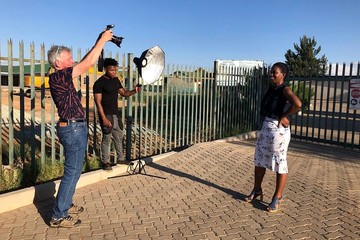
When photographer and educator Prof. Peter Glendinning of Michigan State University returned to South Africa this September, his goal went far beyond presenting artwork. Supported by the Alliance for African Partnership (AAP) Global Engagement Fund (GEF), Glendinning traveled to Johannesburg and Cape Town to advance a collaborative, arts-driven research initiative that is reshaping how youth experiences are documented and understood across Africa. For years, Glendinning has been developing Attached to the Soil, a project that pairs portrait photography with metaphor and narrative to explore young people’s aspirations, challenges, and identities. What began as a 2019 Fulbright project in South Africa has evolved—through sustained partnership—into a model for how the arts can generate meaningful social insight. This work aligns directly with AAP’s culture & society priority area, which supports projects that use cultural expression to address complex societal issues.
Strengthening a Continental Research Partnership
During his visit, Glendinning met with partners at University of Pretoria, one of AAP’s 12 member institutions, including Prof. Zitha Mokomane, a professor in the Department of Sociology and Deputy Dean for Teaching and Learning in the Faculty of Humanities, who has been conducting sociological analysis of the project’s original youth-created images and stories. The findings point to recurring themes: belonging, hope, fear, opportunity, and the persistence of socio-economic barriers.
With support from the Global Engagement Fund, the partners spent their time together outlining the next phase of the work—a potential 2027 pan-African expansion that could engage youth from multiple institutions and countries. The goal is to create one of the most comprehensive collections of narrative and visual data on African youth aspirations to date.
“The dataset we envision would allow us to compare experiences across countries, contexts, and cultures, using the arts as a bridge,” Glendinning explained. The in-person meetings made possible by the GEF award were essential for refining the research design, establishing a shared methodological framework, and preparing for future proposal development.
Cultural Institutions as Crucial Partners
Glendinning’s work emphasizes not only the creation of new cultural materials but also the preservation of Africa’s photographic heritage. While in Johannesburg, he met with leaders at the Bensusan Museum of Photography to advance efforts to secure funding for preserving its internationally significant collection of historic photographic equipment and images. He also held discussions at the Nelson Mandela Foundation, which held an 8-month exhibit of the project in 2023, exploring how youth-generated narratives from Attached to the Soil could contribute to public memory and civic learning through the foundation’s ongoing partnership. These engagements expand the project’s reach beyond academia and into community and heritage spaces—an approach deeply aligned with AAP’s focus on research for broader impact.
Festival Participation Amplifies Youth Perspectives
Glendinning’s work also reached public audiences during the inaugural Cape Town Photography Festival, where Attached to the Soil opened as an exhibition at the Simon’s Town Museum. The festival setting provided a platform for deeper conversation around the project’s themes. During a public dialogue, Glendinning and Malissa Louw, one of the original participants, spoke about the creative process and the realities behind the images—drawing attention to the power of youth storytelling as a form of social documentation.
He also led two workshops: a digital photography master-class for community members and a session for 40 students at the Cape Peninsula University of Technology. Both emphasized photography as a tool for reflection, empowerment, and evidence-gathering—illustrating how artistic training can support community insight and youth leadership.
A Model for Arts-Driven, Partnership-Based Research
Following the festival, Glendinning continued planning with Prof. Mokomane during her September visit to Michigan State University, which was also supported by the GEF. Together, they are refining the concept for the multi-country expansion and identifying ways for AAP partners to contribute to the next phase.
For AAP, Glendinning’s and project and his partnership with Mokomane exemplify the role arts and culture can play in addressing societal challenges: by elevating local narratives, strengthening community connections, and deepening understanding across diverse contexts. The Global Engagement Fund is central to this impact—making it possible for faculty like Glendinning to build the relationships and shared vision that long-term, equitable partnerships require.
As plans move forward, Attached to the Soil will offer youth across the continent the chance to tell their stories—and help researchers, educators, and communities better understand the world through their eyes.
By:
Baboki Gaolaolwe-Major
Monday, Dec 15, 2025
CULTURE AND SOCIETY
+2

Leave a comment