

Browse
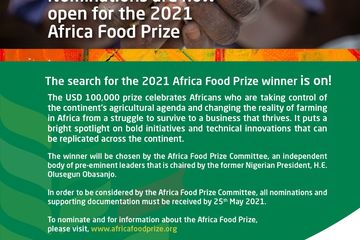
Africa Food Prize 2021 nominations now open
Click this link to learn more
By:
Elaina Lawrence
Monday, Aug 16, 2021
EDUCATION
Leave a comment
Making Food systems Equitable: An African Dialogue on Gender and Food Systems
In countries where women are most marginalized, discriminated under the law and where gendered norms prevent women from owning property and resources, people are also the hungriest. This is because gender equality and food systems are intertwined. However, too often, we only focus on the roles that women play in production, processing, trading of food and in making decisions about consumption and purchase of food at household level. And while this is important, we must also focus on whether the food system as organized is just and equitable and whether it promotes the empowerment and livelihoods and health of women and girls. Stark gender inequalities are both a cause and an outcome of unsustainable food systems, unjust food access, consumption and production. Tackling gender injustice and truly empowering women is not only a fundamental prerequisite for food systems transformation but also a goal.
This dialogue is one in a series of regional dialogues to discuss how we can achieve the triple goal of gender equality, sustainable and healthy food systems. It will bring together scientists, farmers and farmer organizations, policy makers, consumers, private sector and others to discuss and share solutions on guaranteeing land rights for women, rural women’s economic empowerment, women’s voice and decision making in food systems, bridging the gender technology gap and more.
Key outcomes of the dialogue include: (i) a set of solutions and commitments for gender equality in food systems (ii) an African position on what commitments are needed to achieve gender equality in food systems for the UN Food Systems Summit (iii) a community of practice to advance commitments on gender equality in food systems.
To take part in the dialogue, please visit the Summit Dialogues website
By:
Derek Tobias
Monday, Aug 16, 2021
AGRI-FOOD SYSTEMS
No Preview Available
Leave a comment
Call for Papers
We are pleased to share with you the Call for Papers for the Eleventh International Conference on The Constructed Environment, University of Calgary, Calgary, Canada, 12–14 May 2021.The Constructed Environment Research Network is brought together by a common shared interest in human configurations of the environment and the interactions among the constructed, social and natural environments. We seek to build an epistemic community where we can make linkages across disciplinary, geographic, and cultural boundaries. As a Research Network, we are defined by our scope and concerns and motivated to build strategies for action framed by our shared themes and tensions.The Eleventh International Conference on the Constructed Environment features research addressing the following annual themes and special focus:
2021 Plenary Speakers
The International Conference on the Constructed Environment will feature plenary sessions by some of the world’s leading thinkers and innovators in the field.
Eliot TretterAssociate Professor, Department of Geography and the Urban Studies Program, University of Calgary, Canada
Leroy Little BearBlackfoot Researcher, Professor Emeritus, University of Lethbridge, Canada
Kelly ColesPMP, Director, Design & Construction, Calgary Municipal Land Corporation, Canada
Reimagining the Scholarly Conference
Our mission is to provide a safe, sustainable, and accessible way for us to come together and interact as a Research Network. We are taking on these challenges by offering a blended conference experience, with session types explicitly designed to make the most of both online and place-based social knowledge processes. We are trying to move away from the either/or of place-based or online conferences. And at the same time be ready for the possibility of place based cancelation due to COVID-19. This way we build for our Research Network Members resilient spaces for communication, engagement, and participation.
We are moving to bring conference presentations into the digital era. All presenters, in-person or online, will be given personal Presenter Pages:
Linked to your profile page on CGScholar.com
Displaying abstract summary
Thematic connection to panelists and peers
Ability to add digital media: video, sound, other files.
You do not need to commit either to a place-based or virtual presentation at the time of submission. You can present both ways, or change your mode of the presentation if your preferences change.And all content will be displayed online.This way we build for our Research Network Members flexible, and at the same time resilient, spaces for communication, engagement, and participation.
Become a Presenter
Benefits of an Audience Pass
Important Dates
We welcome the submission of proposals at any time of the year. All proposals will be reviewed within two to four weeks of submission. Again, you do not need to commit either to a place-based or online presentation at the time of submission. You can present both ways, or change your mode of the presentation if your preferences change.
Proposal & Registration Dates
Proposal Deadlines
Late
12 Apr 2021
Registration Deadlines
Regular
12 Apr 2021
Late
12 May 2021
Submit a proposal by 12 February 2021*
Submit Your Proposal Today
By:
Elaina Lawrence
Monday, Aug 16, 2021
EDUCATION
Leave a comment
CALL FOR PAPERS
We are pleased to share with you the Call for Papers for the Nineteenth International Conference on New Directions in the Humanities, Complutense University of Madrid, Madrid, Spain, 30 June - 2 July 2021.The New Directions in the Humanities Research Network is brought together by a common interest in established traditions in the humanities while at the same time developing innovative practices and setting a renewed agenda for their future. We seek to build an epistemic community where we can make linkages across disciplinary, geographic, and cultural boundaries. As a Research Network, we are defined by our scope and concerns and motivated to build strategies for action framed by our shared themes and tensions.
The Nineteenth International Conference on New Directions in the Humanities features research addressing the following annual themes and special focus:
2021 Plenary Speakers
The Nineteenth International Conference on New Directions in the Humanities will feature plenary sessions by some of the world’s leading thinkers and innovators in the field.
Reimagining the Scholarly Conference
Our mission is to provide a safe, sustainable, and accessible way for us to come together and interact as a Research Network. We are taking on these challenges by offering a blended conference experience, with session types explicitly designed to make the most of both online and place-based social knowledge processes. We are trying to move away from the either/or of place-based or online conferences. And at the same time be ready for the possibility of place based cancelation due to COVID-19. This way we build for our Research Network Members resilient spaces for communication, engagement, and participation.
Follow this link to learn more and submit your proposal.
By:
Elaina Lawrence
Monday, Aug 16, 2021
EDUCATION
Leave a comment
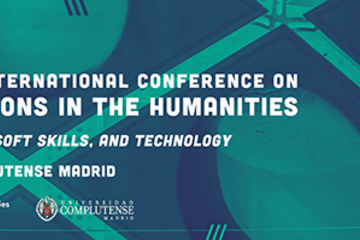
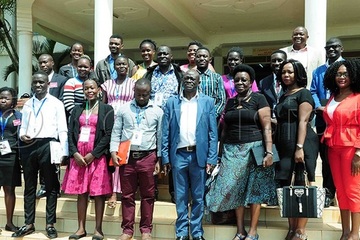
Check out these rising stars! Michigan Fellows Agribusiness Initiative (MFAI)
Congratulations to the Michigan Fellows Agribusiness Initiative (MFAI) on receiving a Professional Fellows Program alumni award signifying your growth and continued success. We are delighted for the success of the 2nd Agribusiness Apprenticeship Program and can't wait to see how these young agribusiness professionals make their marks in Uganda and beyond.
A special thanks to St. Lawrence University for hosting the training, the US Department of State Bureau of Educational and Cultural Affairs for its financial support, and to MFAI’s ongoing partners: the Empowerment Initiative for Women and Youth, Uganda; the US Mission in Kampala; Kyambogo University; and, the Africa 2000 Network, Uganda!
https://www.newvision.co.ug/news/1536048/us-embassy-st-lawrence-university-partner-promote-agribusiness
By:
Elaina Lawrence
Monday, Aug 16, 2021
EDUCATION
Leave a comment
CFP: History in Africa 2022 "New Interdisciplinary Approaches to African History"
History in Africa is seeking contributions that examine interdisciplinarity in African history in new ways. Interdisciplinarity happens across academia on multiple, overlapping levels including the use of methods from other disciplines, team-based collaborations (multidisciplinary), and the creation of new fields (transdisciplinary).
As historians of Africa, we may engage in interdisciplinary work by doing ethnographic research or by maintaining an appointment in a multidisciplinary African Studies program. Meanwhile, at many of our institutions, there are pressures to establish new interdisciplinary majors, often in STEM, but also in the humanities and social sciences. How does this proliferation of interdisciplinary programming relate to us as historians? In particular, the editors are interested in how scholars are rethinking interdisciplinary methods while engaging with source materials. As historians, we have generally taken for granted our capacity to engage in interdisciplinary work, especially by working with anthropology, linguistics, or even archaeology (Zeleza 2007; Brizuela Garcia 2008). Yet, as historians of Africa we also rely on literature, visual arts, and, increasingly, digital media, in our scholarship and teaching. Are there ways in which interdisciplinarity in African history is being redefined by changing methodologies, archival materials, or sources?
This CFP comes as the story of the post-World War II origins of African Studies and the role of scholars in a changing world faces new scrutiny. It is compelling that African Studies did not emerge on the scene in the 1950s as the story has often been told. Instead, African Studies began in the aftermath of the US Civil War as Black intellectuals and activists developed an interdisciplinary and pan-African outlook to their work that originally flourished at Historically Black Colleges and Universities. (James Pritchett, "Reflections on the State of African Studies," Presidential Lecture, ASA 2014, Indianapolis, IN) The theme of the 63rd ASA meeting that we just shared virtually called on us to recognize and confront these legacies of division and exclusion in African Studies. We must also respond to the range of twenty-first century movements calling for social justice on the African continent and in the Global North (Ampofo 2016). How do interdisciplinary frameworks provide different creative spaces to address these calls to action that also shape our work as historians of Africa?
We invite contributions that address interdisciplinarity in African history in relation to methods, source analysis, and historiographical debates.
As always, submissions that fall outside of the scope of this special section theme of interdisciplinary approaches are welcome.
We also invite submissions for other features in our journal including Archival Reports,“Interview with an Archivist,” and “History from Africa” on a rolling basis. Please address any questions to the Managing Editor.
Possible topics related to our interdisciplinary theme include:
Theorizing interdisciplinary methods
Promise and challenge of collaboration
Interdisciplinary methods and public histories
Redefining the discipline
Linking Africa and its diasporas
Interdisciplinarity and the digital humanities
Racial justice and interdisciplinarity
Centering Africa in interdisciplinary approaches
SUBMISSION INSTRUCTIONS
Please email a 500-word abstract to managingeditor@historyinafrica.org by February 15, 2021 with the subject line: HiA Abstract Submission 2022. By late February, authors will be notified whether to submit a full article for peer review by June 1, 2021. Please note that invitations to submit articles for peer review do not guarantee publication.
Articles selected for publication after peer review will be included in the 2022 volume of History in Africa. Articles may appear in advance of the publication date via FirstView once the copy editing process is completed. Any queries should be addressed to Lorelle Semley at managingeditor@historyinafrica.org.
Works Cited
Paul Tiyambe Zeleza, “Introduction: The Disciplining of Africa,” in Zeleza, ed., The Study of Africa: Disciplinary and Interdisciplinary Encounters, vol. 1 (CODESRIA: Dakar, 2007), 1-35.
Esperanza Brizuela-Garcia, “Towards a critical interdisciplinarity? African history and the reconstruction of universal narratives,” Rethinking History Vol. 12, No. 3, September 2008: 299–316.
James Pritchett, “Reflections on the State of African Studies,” Presidential Lecture, ASA 2014, Indianapolis, IN, https://www.youtube.com/watch?v=cYxbYLgx32M
Akosua Adomako Ampofo, “Re-Viewing Studies on Africa, #Black Lives Matter, and Envisioning the Future of African Studies,” African Studies Review, Vol. 59, No. 2 (September 2016): 7–29.
By:
Elaina Lawrence
Monday, Aug 16, 2021
EDUCATION

No Preview Available
Leave a comment
Webinar: Retrieving Women's Voices in African Political History 12/01/2020
Since the 1970s, scholars have raised awareness about the gender biases of archival sources, especially when it comes to colonial, postcolonial, national or diplomatic archives. They have shown that women’s invisibility did not mean an absence of traces, and advocated innovative methodologies and the search for unusual sources to reconstruct women’s lost voices in African history.
Our guest speakers work on African women's voices in various historical, geographical and more importantly political contexts, and with many different sources (public archives, literature, autobiographies...). They will share their insights on how to retrieve, create or re-interpret sources about women’s power and how to find new conceptual tools to complicate political narratives
Speakers: Anna Adima (Doctoral researcher, University of York), Marciana Nafula Were (Lecturer, Tom Mboya University/Stellenbosch University) & Immanuel Harisch (Doctoral researcher, Department of African Studies, University of Vienna).
The discussion will be informal (short presentation of archives/sources; Q&A). This working group doesn’t mean you have to work: just come join us to listen and/or contribute to a friendly discussion where students, researchers and professors are all welcome!
Registration to access the online meeting here: https://www.eventbrite.com.au/e/beyond-silences-retrieving-womens-voices-in-african-political-history-tickets-132949793411
By:
Elaina Lawrence
Monday, Aug 16, 2021
EDUCATION
No Preview Available
Leave a comment
CFP: Entremons UPF Journal of World History
Entremons UPF Journal of World History invites you to submit
an original text for its possible inclusion in the next issue of their journal.
Entremons is an annual publication sponsored by the University Pompeu Fabra and accepts both academic articles and recently published books' reviews about World History.
The texts that will be considered for publication should be sent to revista.entremons@upf.edu between January 1st and March 1st, 2021.
Articles can be written in English, Spanish, or Catalan, and they must include a summary and keywords both in the original language and in English.
Rules for citations can be found at their website www.entremons.org
By:
Elaina Lawrence
Monday, Aug 16, 2021
EDUCATION

No Preview Available
Leave a comment
Africa: How The Digital Revolution Can Help Level The Playing Field for African Women in Agriculture
The race to limit the spread of Covid-19 has, through necessity, accelerated many other transformations that were already under way, including the digital revolution in African agriculture. What had previously been a growing but limited shift towards the use of digital tools and technologies for food production and business has become a lifeline in the face of market restrictions, food insecurity and lockdowns. And among the biggest winners have been women.
https://agra.org/news/africa-how-the-digital-revolution-can-help-level-the-playing-field-for-african-women-in-agriculture/
By:
Amy Jamison
Monday, Aug 16, 2021
AGRI-FOOD SYSTEMS
No Preview Available
Leave a comment
Ufahamu: A Journal of African Studies
Check out the latest edition of Ufahamu: A Journal of African Studies!
https://escholarship.org/uc/international_asc_ufahamu/42/1
By:
Elaina Lawrence
Monday, Aug 16, 2021
EDUCATION

Leave a comment
A special issue of the journal L'Ouest saharien: "The Status of Women in the Sahara-Sahel"
Appel à contributions pour la revue L’Ouest saharien
Numéro thématique (2022)
« Les conditions féminines au Sahara-Sahel »
Coordinatrices du numéro
Camille Evrard, historienne, chercheure associée au laboratoire FRAMESPA (UMR 5136 - Université Toulouse Jean Jaurès) et au laboratoire
CITERES (UMR 7324 - Université de Tours)
Erin Pettigrew, historian, Assistant Professor, History and Arab Crossroads Studies, New York University Abu Dhabi
Argumentaire
Ce numéro thématique de la revue L’Ouest saharien souhaite mettre en valeur les recherches récentes en sciences humaines et sociales portant sur la condition féminine dans la vaste région sahélo-saharienne habitée par des populations mauritaniennes, sahraouies, marocaines, algériennes, maliennes et nigériennes. Il vise à interroger l’apparente homogénéité historique et socio-culturelle de ces dernières en engageant une discussion sur l’exceptionnalité des femmes du monde sahélo-saharien. Les sociétés au coeur de cet appel ont souvent été décrites comme uniques, au sein du monde musulman, pour ce qui est de l’indépendance féminine, tant sur le plan de l’organisation familiale et du mariage que sur celui du recours au droit musulman, voire de la présence dans l’espace public. Cela rejoint, par ailleurs, les traits communs soulignés de ces sociétés qui ont partagé, dans l’histoire, un mode de vie lié au désert, des caractéristiques socio-économiques, des pratiques religieuses marquées par l’école juridique malékite et la présence des ordres soufis, des organisations politiques non centralisées, etc. Il n’en reste pas moins qu’elles présentent aussi de nombreuses différences. Elles sont traversées par des fractures statutaires et identitaires profondes qui poussent à resserrer la focale et regarder de plus près les conditions variées de l’histoire des émancipations féminines en leur sein. Surtout, ces sociétés ont connu, pendant la période coloniale et, plus encore, au cours des processus de décolonisation et de construction des États postcoloniaux, des réalités très différentes qui composent aujourd’hui un paysage contrasté.
On attribue souvent à la période coloniale des ruptures brutales avec un passé imaginé comme figé dans le temps. L’imposition coloniale des systèmes d’éducation, de santé, de politique représentative et d’économie - puis l’appropriation de ces systèmes par les États postcoloniaux - imprime sans doute des transformations sociales profondes et fournit de nouvelles opportunités dont les femmes se saisissent, ou qu’elles rejettent. Néanmoins, des recherches sur les périodes précédentes mettent en lumière des modèles locaux de contestation et d’action parfois remobilisés dans la période contemporaine. En outre, si jusqu’aux années 1970 avant les grandes sécheresses qui frappent la région, la plupart de ses populations sont nomades, le Sahara accueille aussi des communautés oasiennes (semi)sédentaires et urbaines. Par la suite, le développement des industries extractives, associé aux puissantes vagues de sédentarisation, entraîne un brassage socio-culturel plus important au cœur de villes “ouvrières”. Ces transformations suscitent elles aussi des positions nouvelles pour les femmes, positions qui demandent à être interrogées à la lumière d’un cadre plus vaste pour valider l’hypothèse d’un tournant dans le rapport qu’elles entretiennent à la loi, l’Etat, l’action collective. Enfin, les différences sociales et statutaires aussi bien que l’histoire politique propre à chaque pays renforcent l’hétérogénéité des expériences vécues par les femmes. Ce numéro thématique cherche donc à comprendre comment s’expriment ces réalités différentes malgré les traits communs à cette région du Sahara-Sahel.
De nombreux travaux ont été menés ces dernières années sur le féminisme, la condition des femmes et les luttes pour leurs droits dans le monde musulman (Howe, 2021 ; Bruzzi et Sorbera, 2020 ; Ali, 2012 ; Docquois et Lamloum, 2006 ; Ferjani, 2006 ; Shaheed, 2004), le monde arabe (Kréfa et Le Renard, 2020 ; Jasser et al. 2016), en Afrique subsaharienne (Burrill et. al., 2010 ; Callaway et Creevey, 1994 ; Badran, 2011 ; Gomez-Perez et Brossier, 2016 ; N’Diaye, 2014 ; Alidou, 2005), au Maghreb (Brand, 1998 ; Charrad, 2001 ; Mahfoudh et Delphy, 2014), ou encore autour de la Méditerranée (Rey et al., 2008), mettant en exergue leur longue histoire ainsi que le dialogue renouvelé qu’entretiennent les mouvements les plus récents avec les figures et les idées plus anciennes, partout dans le monde musulman. Ces recherches ont permis un panorama vaste et varié, mêlant réflexion sur les normes sociales, le féminisme et l’islam, les luttes politiques, la discussion juridique (Lydon, 2007 ; Warscheid, 2019 ; Calloway et Creevey, 1994 ; Wiley, 2018 ; Diagana, 2020 ; Dhoquois-Cohen et Lamloum, 2006). Elles ont aussi attiré l’attention sur l’évolution du droit dans le domaine de la protection des femmes victimes de violence ou de l’égalité entre femmes et hommes, et sur le poids des institutions internationales dans les évolutions sociétales et les débats que ces dernières ont entraîné (Boyd et Burrill, 2020 ; Guignard, 2018 ; Hodgson, 2017 ; Kang, 2015 ; Tripp, 2019). Il n’en demeure pas moins que les populations sahélo-sahariennes sont restées, dans ce panorama, peu représentées.
Dans l’esprit d’un renouveau des études sahariennes mettant en lumière le dynamisme historique, social, intellectuel, et économique du Sahara - auparavant considéré comme un espace vide et aride, en marge des centralités nord-africaines ou subsahariennes - ce numéro thématique se focalise sur les espaces sahariens de ce qui est aujourd’hui la Mauritanie, le Mali, le Niger, l’Algérie, le Maroc et le Sahara occidental, ainsi que sur les grandes villes sahéliennes qui accueillent un brassage socio-culturel important. Nous sollicitons des études qui s'appuient sur des approches méthodologiques variées issues des sciences historiques, anthropologiques, sociologiques, et géographiques. Il n’y a pas de limites concernant le cadre chronologique des articles, même si l’historicisation des sujets contemporains nous semble essentielle pour favoriser une meilleure compréhension des transformations dans la vie des femmes. Les thématiques et les angles d’approches attendus pour construire ce dossier sont donc très ouverts pourvu qu’ils touchent à la condition féminine dans cette région, de l’histoire ancienne à la période actuelle. Les articles pourront traiter le rapport à la famille, au droit et/ou à la religion, les courants de pensées, la place en politique ou le militantisme, des actrices observées dans un environnement local précis.
Plusieurs axes de réflexion sont proposés mais ils ne sont pas exclusifs :
Normes sociales, culturelles et religieuses : une homogénéité factice ?
Les femmes dans un contexte de marginalité (minorités ; statuts “inférieurs” ou défavorisés)
Le “sensible” en fonction des communautés
Le “genre” et la sexualité
Les femmes dans les traditions sahariennes d'érudition et d'autorité religieuse
Mobilité sociale et activités de subsistance
Les luttes, le droit et l’État
Le droit pour construire l’égalité ; le droit pour mettre fin aux violences
L’imbrication des droits coutumier, religieux et “positif” du point de vue de la cause des femmes
L’impact des réformes des codes de la famille, du statut personnel, des lois contre les violences à l’égard des femmes
Le rapport à l’État dans les revendications
Les militantismes, des moyens “d’empuissantement” contrastés
Les femmes dans les partis politiques nationalistes, dans les mouvements révolutionnaires
Les associations et organisations des femmes
Les moyens et les modes de lutte : politiques, religieux, sociaux
L’utilisation des réseaux sociaux et des médias
Les échanges régionaux
Les influences régionales ou internationales plus larges
Les courants de pensées (féminisme islamique, afro-féminisme, féminisme laïc, etc.)
Les influences coloniales, de coopération, des institutions internationales dans les termes de la lutte
Le phénomène d’ “ongisation” dans l’Ouest saharien et ses impacts
Conditions de soumission
Faire acte de candidature en envoyant une courte note d’une page (problématique du texte, exposé du déroulé de l’argumentaire, exposé des données, des sources et terrains mobilisés). Les propositions, de 3 000 signes maximum, en français, espagnol, ou anglais sont à envoyer à Camille Evrard (evrardcamille1@gmail.com) et à Erin Pettigrew (erin.pettigrew@nyu.edu) avant le 15 février 2021.
Les articles retenus, en français, espagnol ou en anglais attendus pour le mois de juin 2021 devront avoir un format de 45 000 signes espaces compris (espaces, notes de bas de page et bibliographie compris) dans leur version destinée à la publication, ainsi qu’un court résumé de 800 signes (espaces compris), et des mots clés. Ils feront l’objet d’un atelier de discussion collective qui permettra de débattre et de renforcer l’argumentaire commun. Ils seront ensuite soumis à évaluation avant leur acceptation finale.
N’hésitez pas à nous contacter pour toutes précisions.
Calendrier
Diffusion appel à contributions : 15 décembre 2020
Envoi de la proposition d’article : 15 février 2021
Sélection des propositions retenues : 1er mars 2021
Envoi d’une première version des articles présélectionnés : 30 juin 2021
Retour des reviewers : 15 septembre 2021
Textes définitifs : 15 novembre 2021
Publication du numéro : Printemps 2022
By:
Elaina Lawrence
Monday, Aug 16, 2021
EDUCATION

Leave a comment
Archives of Afro-Asia: Excavating the Cultural Politics of the Early Decolonisation Era
CALL FOR SUBMISSIONS
The Bandung Conference of 1955 is commonly described as a pivotal moment in international politics – both a critical space of political articulation of the “Third World” and a prelude to the Non-Alignment Movement of the 1960s. While an earlier historical literature on the “Bandung moment” and the era of Afro-Asian solidarity has tended to primarily focus on interstate diplomacy and international cooperation, in the last decades, and especially since the conference’s fiftieth anniversary in 2005, scholars from the humanities and social sciences have been working in re-thinking and opening up the field in creative and productive directions. As the cultural and literary turns prompted a pluralisation of research agendas and methodologies in historical scholarship more broadly, scholars of Afro-Asian encounters have been moving away from perspectives that reify the nation-state as the locus of historical narration, to focus instead on cultural and discursive production and circulation as deeply constitutive of the politics of decolonisation and Afro-Asian solidarity. This includes promising research on the “cultural Cold War” and a rising interest in modes of writing and representation that cut across – and complicate – the cultural and racial boundaries and political formations of the decolonising world. Likewise, scholars have been increasingly aware of the “archive” not as a reservoir of information to be mined, but as a political and dynamic space to be critically engaged, questioned and subverted. A particularly exciting avenue of research is focused on the silences, absences, and exclusions produced by the colonial archive, leading to a critical engagement with marginalised institutional spaces – such as underexplored public and private archives in the Global South – and other registers and practices of archive making, beyond conventional textual and documental forms.
In order to grasp the heterogeneous nature and non-linear dynamics shaping the Afro-Asian movement, especially in view of the relative dearth – but increasing number – of studies that examine the everyday performance of Afro-Asian solidarity, this Special Issue of Itinerario will excavate the material, textual, affective, and performative dimensions of Afro-Asia in the early decolonisation era. We are interested in mapping out the imaginative geographies and political formations produced and inhabited by Afro-Asian writers, activists, and intellectuals; in taking account of the pragmatics of transnational interactions and dialogue; and in exploring the multiple archives and registers of the Afro-Asian movement.
We invite proposals considering the “Archives of Afro-Asia” problematic in the following terms:
Beyond Textual Register: we encourage papers interrogating historical sources and archival registers that cannot be captured, limited, and subsumed to textual forms. We are especially interested in studies exploring the critical possibilities associated with integrating records of orality, musicality, visual cultures, performance, and the senses in our understandings of the early decolonisation era.
Beyond Colonial Temporality: We invite papers exploring the creative and critical potential of marginalising “the colonial era” and moving towards innovative approaches to the “precolonial register” and Afro-Asian futurities. We also welcome papers that explore how AfroAsian actors mobilised notions of the “pre-colonial” and various forms of “futurology” in the early decolonisation era.
Beyond Territorial Locations: colonial archives are territorially bounded institutions, in both material and epistemic terms. They reside in buildings, cities, nations, and their practices of organisation of knowledge are shaped by the territoriality of the state itself. Yet, AfroAsia is a fluid de-territorialised arena marked by circulations. We welcome papers invested in displacing territorial imaginations to re-centre the “oceanic” as productive space.
Beyond the Human: modern colonialism was a deeply anthropocentric affair, as it produced not only the dehumanisation of Europe’s racial “other”, but also the marginalisation of non-human actors through processes of capitalist extraction and environmental degradation. We invite papers that interrogate the process by which the boundaries of humanity were being re-negotiated during the early decolonisation era, as well as papers exploring the agency or role of non-human actors in the Afro-Asian moment.
Complicating Authorship: We welcome papers that expand the “canon” of AfroAsian authorship beyond the male, bourgeois, and European(ised) self, to include texts, discourses and forms of representations speaking to inner experiences of Afro-Asian otherness and uttered from marginalised positions (e.g. voices of feminist, working class and queer subjects).
Pluralising Textual Forms: AfroAsian print cultures were necessarily diverse. They included statements, resolutions, and other texts produced at conferences, symposia and gatherings of activists and intellectuals, as well as a number of periodicals and books involving fictional and non-fictional writing. In addition to these highly visible materials, we invite papers dealing with personal or marginalised archives of Afro-Asia – such as diaries, letters, and other forms of self-writing that went unpublished or circulated outside main publishing networks.
Epistemic Creativity and Disobedience: AfroAsianism has more frequently been studied as an eminently political project. We know relatively less about how intellectuals, thinkers and researchers of the decolonising world engaged academic discourse and the labour of theory. As intellectual, social, and student movements demand the decolonisation of the University and of the disciplines in our current moment, we invite papers interrogating the practices of epistemic creativity and disobedience undertaken by Afro-Asian actors during the decolonisation era.
The Social and Material Lives of Texts: books, periodicals, newspapers, and texts in general are material objects and commodities in their own right, emerging from the convergence of cultural, political and economic forces. We welcome contributions interested in following the material lives of texts and exploring their historical role as concretised expressions of relations of textual and cultural production. We are interested in papers that interrogate the notion of AfroAsian print culture and readerships, especially looking at the circulation and consumption of printed texts across transnational and local scales.
If you wish to contribute to this Special Issue, please submit proposals containing title, institutional affiliation, and an abstract of no more than 500 words to the editors, Caio Simões de Araújo (caio.simoesdearaujo@wits.ac.za) and Luca Raimondi (luca.raimondi@wits.ac.za) by 15 January 2021. Notifications of acceptance will be sent out by 22 January 2021. Full papers are expected by 1 May 2021.
Contact Info:
Caio Simões de Araújo (caio.simoesdearaujo@wits.ac.za) and Luca Raimondi (luca.raimondi@wits.ac.za)
By:
Elaina Lawrence
Monday, Aug 16, 2021
EDUCATION

Leave a comment