

Browse
Education
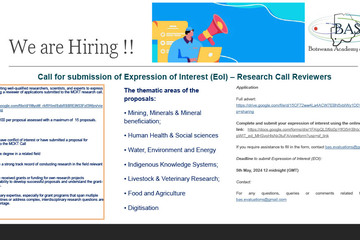
Call for submission of Expression of Interest (EoI) – Research Call Reviewers
The BAS is inviting well-qualified researchers, scientists, and experts to expressinterest in being a reviewer of applications submitted to the MCKT research call.https://drive.google.com/file/d/1MyoM_rkf01lmISxbRS8REiN53FzI5Wjm/view?usp=sharingHonorarium: $100 per proposal assessed with a maximum of 15 proposals.Eligibility1. Should not have conflict of interest or have submitted a proposal forconsideration to the MCKT Call2.Post graduate degree in a related field3. Should have a strong track record of conducting research in the field relevantto the call.4. Should have received grants or funding for own research projectsdemonstrated ability to develop successful proposals and understand the grantwriting process.5. Interdisciplinary expertise, especially for grant programs that span multiplescientific disciplines or address complex, interdisciplinary research questions arean added advantage.The thematic areas of theproposals:• Mining, Minerals & Mineralbeneficiation;• Human Health & Social sciences• Water, Environment and Energy• Indigenous Knowledge Systems;• Livestock & Veterinary Research;• Food and Agriculture• DigitisationApplicationFull advert:https://drive.google.com/file/d/15CF72ww4La4ACW7EBN5xblWy1D0YbMag/view?usp=sharingComplete and submit your expression of interest using the online form at thislink: https://docs.google.com/forms/d/e/1FAIpQLSf9z0pYIfG5rKBhIx7Ag8JFi4-pWIT_ed_MHSvoHlsNx3tuFA/viewform?usp=sf_linkIf you require assistance to fill in the form, contact bas.evaluations@gmail.comDeadline to submit Expression of Interest (EOI):5th May, 2024 12 midnight (GMT)Contact:For any questions, queries or comments related to this call,bas.evaluations@gmail.com
Read more

By: Jayden Hewitt
Due Date: May, 5, 2024
Education
Leave a comment
No Preview Available
AFRICA GPS Africa’s Global Partnership Scholars Program
AFRICA GPS
Africa’s Global Partnership Scholars Program
In an era where complex global challenges demand collective action, the need for international collaboration and knowledge sharing has never been more critical. Recognizing this, the Alliance for African Partnership, in partnership with the African Studies Center and the Tanzania Partnership Program, is introducing Africa’s Global Partnership Scholars Program (Africa GPS) in support of Michigan State University’s (MSU’s) global mission. Africa GPS is a cohort based, mentored program, designed for early- to mid-career faculty at MSU to create and deepen new scholarly partnerships with collaborators and peer institutions in Africa. The objectives of Africa GPS are to:
Foster the development of a group of faculty members dedicated to establishing and enhancing international research connections, collaborating on solutions with African partners, and adopting a global perspective in their scholarly work.
Support MSU’s 2030 strategic plan goal of discovery, creativity and innovation for excellence and global impact.
Connect MSU faculty with potential collaborators and mentors in Africa, expand the scholars' international networks, and offer support for establishing long-lasting collaborations.
Heighten global awareness and research dialogue.
Elevate the status of MSU’s global mission.
Capitalize on opportunities to leverage external resources and form partnerships.
ELIGIBILITY FOR APPLICATION
Tenure-stream or fixed term faculty at Michigan State University who are beyond the first year ofappointment or completing the first year of appointment at the time of application, and without prior scholarly experience in Africa are eligible to apply for Africa GPS.
REQUIRED APPLICATION MATERIALS
As part of the application process, the applicant must submit the following materials:
Completed application cover page (see end of document) including the signatures of an academic supervisor or unit leader.
A 4-page max curriculum vitae.
A one-page statement from the nominee that describes her/his reasons for applying, potential research focus, and if known, the AAP consortium institution and African country of interest for the collaboration. As part of the program, AAP can help identify the country, mentor and/or the collaboration partner based on the applicant’s interests.
A letter expressing strong support from the Chair/School Director/Department Head or the Dean. The letter should affirm:
The candidate’s international interest, experience, and/or research
The candidate’s strengths as a researcher within the context of unit expectations
The candidate’s proposed project will advance the mission and goals of the academic unit, be supported by the unit, and benefit international partners.
A commitment from the applicant’s unit/college to provide a 20% match.
FUNDING
To facilitate the participation of faculty members selected as Africa GPS Fellows, AAP will provide support for the following:
Up to $10,000 in support of international travel and scholarly collaborations with a researcher and/or mentor at an AAP Consortium member institution. The $10,000 may be used to support the MSU faculty members’ individual travel, collaborative research activities or to bring an African partner to MSU.
Connection with potential collaborators, mentors, and institutions in Africa.
Structured workshops on establishing and navigating international partnerships.
Financial Guidelines:
The financial support must be expended during the first year of the program.
A 20% match from the applicant’s unit, department or college will be required.
PROGRAM EXPECTATIONS
Africa GPS participants are expected to develop a sustainable collaboration with peer researchers at an AAP consortium institution. As a result, within two years of being selected for the program, the scholar must submit evidence of:
A collaborative research paper coauthored with their African collaborator to be submitted for publication.
A concept note of a proposal to a funding agency to sustain the partnership with the African collaborator.
Progress reports every six months to AAP documenting how the collaboration is progressing and any challenges that may have arisen.
Attend MSU’s Africa@MSU faculty welcome event in Fall and Spring semesters of 2024 and 2025.
SELECTION CRITERIA FOR GLOBAL RESEARCH FELLOWS
The criteria below will be utilized to evaluate candidates for their selection to the Africa GPS program:
Eligibility Criteria: Applicants must demonstrate they are either tenure-track or fixed-term faculty members who have completed their first year of appointment or are in the process of completing it at the time they apply.
Commitment Level: Applicants need to show a readiness to dedicate the necessary time to maximize the benefits of the Fellowship year, along with a proven scholarly potential that supports such a commitment.
Research Interest: There should be clear evidence of the candidate's enthusiasm for international research and the personal and professional growth opportunities offered by Africa GPS.
Unit Support: Candidates must have strong support from relevant departmental or school and college administrators, indicated by enthusiastic recommendations.
Alignment of Interests: The applicant’s international research interests should align with the Africa GPS’s mission to foster excellence in international research.
SELECTION OF FELLOWS
Application materials will be reviewed by a selection committee within ISP. Scholars will be announced by early June 2024. Funds must be transferred to selected scholars by June 30, 2024.
SUBMITTING APPLICATION MATERIALS
Candidates must submit complete application packets by 5 p.m. ET on Friday, May 10, 2024. Applications must be submitted electronically via the application portal. Applications without all the required supporting materials will not be considered.
If you have any questions, please contact Mr. Justin Rabineau at: rabinea1@msu.edu
Read more
By: Jayden Hewitt
Due Date: May, 10, 2024
Education
Leave a comment
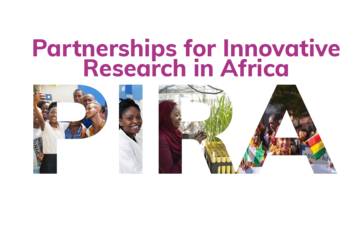
Partnerships for Innovative Research in Africa (PIRA) Strategic Funding
Partnerships for Innovative Research in Africa
2024 Call for ProposalsInfo session and Q&A slides
The Alliance for African Partnership (AAP), a consortium of ten leading African universities, a distinguished research network for African research institute, and Michigan State University, is inviting proposals for its Partnerships for Innovative Research in Africa (PIRA) strategic funding program. As a consortium-wide initiative, PIRA is a tiered funding opportunity designed to cultivate and support multidirectional, collaborative research partnerships at any stage of their development, whether they are initiatives to explore and create new relationships or scale existing ones. One of the unique aspects to these grants is the expectation that organizations will establish and develop fair and equitable partnerships from conception to closeout of the project, involving local stakeholders throughout the project, respecting their knowledge and expertise, and taking an adaptive approach that is responsive to the local context. Proposals should outline processes to establish such partnerships. Fair and equitable partnerships must also be established among members of the consortium if multiple organizations are working on the implementation of the project. Proposed partnership activities may entail cooperative research, capacity building initiatives, outreach and/or other activities that align with AAP’s pillars of building bridges, transforming institutions, and transforming lives. Proposals must address at least one of AAP’s priority areas: agri-food systems; water, energy and environment; culture and society; youth empowerment; education; health and nutrition; and, science, technology, and innovation.
Proposals are encouraged from diverse disciplinary perspectives. Submitted proposals must include principal investigators from both MSU and at least one African AAP member university. The project implementation timeframe will be 18 months.
FUNDING TIERS
The tiered funding structure is designed to support partnerships at different stages of maturity to create and strengthen relationships among institutions and act as a catalyst for research teams in securing external funding that will allow for long-term engagement. Applicants should submit proposals for the funding tier that best fits the level of engagement established among the PIs on the research team. However, AAP management reserves the right to relegate proposals to a different tier if deemed more appropriate during review. To ensure broad impact, more awards will be given at the planning grant level than the scaling grant level. Proposed activities for each tier may include, but are not limited to:
Planning Grants (up to $50,000), inception and early-stage partnership research activities, travel support for co-developing joint proposals (in accordance with all MSU travel guidelines), short-term capacity building trainings, network development, research symposia, or other activities that align with AAP’s priority themes and strategic objectives.
Scaling Grants (up to $100,000), continuation of ongoing partnerships that have the potential to significantly scale their research, capacity building, or outreach activities, broader institutional linkages, or other activities that align with AAP’s priority themes and strategic objectives.
ELIGIBILITY
The lead investigators for proposals must come from MSU and AAP African member universities. Proposals may also include partners from other institutions globally. Teams are encouraged to include partners from the private sector, governments, civil society organizations, and pan-African/global institutions.
Individuals who were PIs or co-PIs on grants from the previous round of PIRA grants or AAP’s strategic partnership grants are not eligible to lead proposals under this call but may participate as team members.
MSU ISP staff are not eligible to lead proposals.
GUIDELINES FOR APPLICANTS
All submissions must have a cover sheet and proposal narrative that includes the information listed below, a budget and budget narrative using the provided template, and letters of support. Please submit all application material via the application portal by Wednesday, August 14 at 11:59 PM EST.
Application with the project's title as well as names, institutional affiliations, titles of all principal investigators, and a brief (about 100 words) project summary
A proposal narrative, not to exceed 5,000 words with one appendix for references cited, that includes:
A description of the partnership, containing:
Capacity statements from each partner institution that outlines their respective strengths in relation to their proposed roles and responsibilities in the partnership
A brief description of the past or ongoing partnership, if applicable
The rationale for partnership and evidence that it will create or cultivate equitable, sustainable, and mutually beneficial partnerships
A problem statement that identifies the shared challenges to be addressed by the program activities, the theory of change, their relevance to AAP’s themes and pillars
Clearly defined objectives of the proposed partnership
A description of program activities as well as a logical framework that connects the proposed activities with their intended outputs, outcomes, and programmatic objectives
A timeline of activities
A monitoring, evaluating, and learning plan that outlines proposed indicators and collection methods
Identification of potential sources of additional funding that the partnership will pursue during the program’s period of performance
A line-item budget and budget narrative using the template provided. Templates and more information on budgetary considerations are below in BUDGET. A letter of support from each partner’s department, institution, or organization; and A CV or resume of each principal investigator (1-page max).
A letter of support for each PI from their dean or head of department that signifies buy-in from each partner at the institutional level. Please use the provided template
SELECTION CRITERIA
Program goals should align with at least one of AAP’s pillars:
Building bridges: Bringing people and organizations together to work toward common goals. Illustrative activities under this objective include: sponsoring thematic symposia or workshops that bring people together across sectors and disciplines or travel for preparation of proposals for larger grant applications. This also includes network development, communications among research groups or networks (e.g. digital innovations and digital forums), dissemination of knowledge through online journals and/or sharing of best practices among partners
Transforming institutions: Promoting sustainable and effective partnerships among institutions, enhancing resources, and increasing institutional capacity. Illustrative activities under this objective include: institutional capacity development at universities, NGOs, or in the public sector such as building financial management capacity, improving teaching and learning at universities, and/or increasing proposal development skills, among others.
Transforming lives: Supporting research with real-world impact that improves African lives and livelihoods. Illustrative activities under this objective include: putting research into action through evidence-based outreach and engagement, conducting early-stage research that has obvious potential to impact lives and livelihoods, improving dissemination of research outputs to practitioners and policy-makers, and/or designing innovative research-into-practice methodologies.
Submitted proposals will be evaluated according to the following criteria:
Evidence of a collaborative and equitable partnership that strengthens personal, professional, and/or institutional networks in a mutually beneficial and sustainable way. Other AAP principles that need to be demonstrated in the proposal and later in the implementation are mutual trust and respect, sustainability, innovativeness, co-creation, accountability, transparency, flexibility as well as multi-disciplinarity and trans-disciplinarity.
Alignment of proposed activities and program goal(s) to AAP’s 3 strategic objectives and 7 priority areas.
Potential for program deliverables to significantly contribute to their respective academic, technical, or technological fields.
Potential to create innovative models of community engagement and development that positively impact people’s lives.
Potential for principal investigators to attract and or leverage additional external funding to sustain program’s impact.
A thorough monitoring, evaluating, and learning plan that links program activities to their intended outputs and outcomes and includes a clear description of the MEL tools that will be used, what indicators will be measured, and a timeline for evaluation and reporting.
Gender equality, equity and inclusion are core values of AAP and are thus central to this call. All projects funded must demonstrate how they follow principles of gender and inclusion and should explain how applicants will integrate gender, equity, and inclusion issues in all stages of the project, including rationale, design, intended results, data collection, analysis, interpretation, and knowledge mobilization processes.
BUDGET
PIRA BUDGET TEMPLATE [.XLSX]
Using the template provided, applicants must submit a line-item budget and budget narrative for the life of the program that details each institution’s requested budget as well as an overall budget summary. Suggested line items are provided as guidelines but are not comprehensive or required. Proposed budgets should be co-created by the partnership teams and reflect an equitable distribution of funds, with each institution completing a separate tab within the budget template to show the anticipated disbursement of resources and cost sharing broken down by yearly expenditures. The budget narrative should clearly explain how the line items are calculated and for what purpose they will be used in achieving the program’s objectives. Please note that the MSU PI and their home department will be responsible for the financial administration of the award. As such, it is required that the MSU PI involve their department’s fiscal officer in the development of the proposed budget to ensure all financial guidelines and reporting requirements are met. Please submit budgets as an Excel file or similar formatted version that allows the reviewers to view the formulas used in the calculations.
Communications and Engagement10% of the total requested funds must be earmarked for communication and engagement efforts. For example, if a team is requesting a scaling grant for $100,000, at least $10,000 of that must be budgeted for communication and engagement efforts, such as developing creative projects that translate the research, engagement workshops and developing and utilizing dissemination tools such as video production, creation of digital resources, community engagement activities, etc.
Cost Share
10% of the total requested funds must be matched with contributions (monetary and/or in-kind) from all partners. The Co-PIs’ colleges, faculties. and/or departments will be expected to contribute to the costs of the proposed activities to ensure that the commitment to long-term partnering is shared by these units.
Ineligible Expenses
While funding may be used for a variety of activities, the following expenses are not eligible to be covered with the PIRA grants:
Regular salary of MSU faculty (summer salary is allowable)
Indirect costs (IDC)
Equipment exceeding $5,000
Construction-related costs
Total project salary & fringe cannot exceed 30% of total combined project budget.
SELECTION PROCESS
Proposals will initially be reviewed by the AAP management team according to the guidelines and criteria above. Short-listed applications will be assessed by external peer reviewers for quality of technical content. Final selections will be made by the AAP management team in consultation with its internal partners and consortium members.
SUBMISSION AND AWARD TIMELINE
APPLICATION PORTAL
Full proposal packages are due on Wednesday, August 14 at 11:59 PM EST and awards will be announced by early October. AAP management will work with awardees to finalize the plan and budget by November 20, 2024. Programs may begin according to their timeline but not before a final work plan and budget has been approved by AAP management. Programs must begin no later than January 22, 2025 and all program activities must be completed within 18 months of the start date. Progress will be due to AAP management at regular intervals throughout implementation. In addition, AAP will be conducting intermittent surveys of the awardees to evaluate the PIRA grant-making process and how successfully it embodies the AAP’s values of equity, transparency, and accountability.
Read more

By: Justin Rabineau
Due Date: Aug, 14, 2024
Agri-food systems
+6
Leave a comment
No Preview Available
Call for Applications: Africa Fellows in Education Program
Call for Applications: Africa Fellows in Education Program Deadline: Apr 01, 2024 Donor: PEP - Partnership for Economic Policy (PEP) Grant Size: Funding includes a $35K research (cash) grant. Other expenses, with a value of up to $25K, for mentorship, study visits, conference travel, and in-country workshops to share research findings and training will be covered directly by the Program. The Global Education Analytics Institute (GEAI), in collaboration with PEP, invites young African researchers, who are motivated to work on educational improvement and could benefit from additional support, to submit an expression of interest in the AFEP. For more information, visit https://lnkd.in/d29YWbZB
Read more
By: Jayden Hewitt
Due Date: Apr, 1, 2024
Water, energy, and the...
+1
Leave a comment
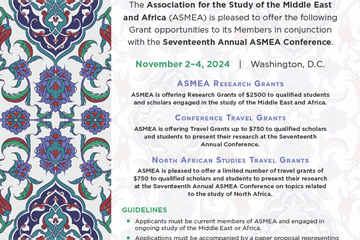
Seventeenth Annual ASMEA Conference CALL FOR PAPERS & PANELS
Washington Marriott Georgetown November 2-4, 2024
ASMEA is currently seeking proposals for outstanding paper and panel presentations at the Seventeenth Annual Conference. Scholars from any discipline, tenured or nontenured faculty, or those otherwise affiliated with a recognized research institution, may submit proposals to present at the Conference. Unique proposals from senior graduate students (ABD) will also be considered. Proposals on topics related to the Middle East and Africa should consist of a one-page summary outline of new and unpublished research. A recent C.V. with all contact data also must be included with name, e-mail, phone number, and affiliation. The deadline for proposals is May 1, 2024. In conjunction with the Seventeenth Annual Conference, the following GRANT OPPORTUNITIES are available to ASMEA Members:ASMEA Research Grants ASMEA is pleased to offer research grants of $2500 to qualified scholars and students engaged in the study of the Middle East and Africa. Application deadline is April 15, 2024. Conference Travel GrantsASMEA is offering travel grants up to $750 to qualified scholars and students to present their research at the Seventeenth Annual Conference. Application deadline is April 15, 2024.North African Studies Travel GrantsWe are pleased to offer a limited number of travel grants of $750 to qualified scholars and students to present their research at the Seventeenth Annual ASMEA Conference on topics related to the study of North Africa. Application deadline is April 15, 2024.Questions? See our FAQ or contact ASMEA at 202.429.8860 or info@asmeascholars.org.
Association for the Study of the Middle East and Africawww.asmeascholars.org
Read more
By: Jayden Hewitt
Due Date: May, 1, 2024
Education
Leave a comment
No Preview Available
Seventeenth Annual ASMEA Conference CALL FOR PAPERS & PANELS
Washington Marriott Georgetown November 2-4, 2024
ASMEA is currently seeking proposals for outstanding paper and panel presentations at the Seventeenth Annual Conference. Scholars from any discipline, tenured or nontenured faculty, or those otherwise affiliated with a recognized research institution, may submit proposals to present at the Conference. Unique proposals from senior graduate students (ABD) will also be considered. Proposals on topics related to the Middle East and Africa should consist of a one-page summary outline of new and unpublished research. A recent C.V. with all contact data also must be included with name, e-mail, phone number, and affiliation. The deadline for proposals is May 1, 2024. In conjunction with the Seventeenth Annual Conference, the following GRANT OPPORTUNITIES are available to ASMEA Members:ASMEA Research Grants ASMEA is pleased to offer research grants of $2500 to qualified scholars and students engaged in the study of the Middle East and Africa. Application deadline is April 15, 2024. Conference Travel GrantsASMEA is offering travel grants up to $750 to qualified scholars and students to present their research at the Seventeenth Annual Conference. Application deadline is April 15, 2024.North African Studies Travel GrantsWe are pleased to offer a limited number of travel grants of $750 to qualified scholars and students to present their research at the Seventeenth Annual ASMEA Conference on topics related to the study of North Africa. Application deadline is April 15, 2024.Questions? See our FAQ or contact ASMEA at 202.429.8860 or info@asmeascholars.org.
Association for the Study of the Middle East and Africawww.asmeascholars.org
Read more
By: Jayden Hewitt
Due Date: Apr, 15, 2024
Education
Leave a comment
No Preview Available
Dr. Anthony B. Pinn Postdoctoral Associate in African and African American Studies at Rice Univ.
The Center for African and African American Studies invites applications for a one-year (renewable for a second year) Dr. Anthony B. Pinn Postdoctoral Associate in African and African American Studies.
This position is from August 1, 2024, through July 31, 2025, with the possibility of renewal for a second year (subject to performance review and funding). It is a full-time, residential position with a 1/1 teaching load and is benefits-eligible. The Postdoctoral Associate will receive an annual salary of $75,000 and a $3,000 one-time stipend for research and/or relocation to Houston.
The successful candidate’s primary responsibility during their time at Rice will be to make substantial progress on their own research and writing projects and to engage with the university’s diverse intellectual community. The successful candidate will be paired with a faculty mentor and be expected to present work-in-progress to occasional campus audiences. Fellows will have the opportunity to contribute to the CAAAS curriculum in consultation with the director and director of undergraduate studies.
Eligibility:
Candidates from any social science or humanities discipline are eligible to apply, those with interdisciplinary commitment will receive priority. Candidates must have been awarded their Ph.D. between January 1, 2022 and July 31, 2024. Candidates must have an expressed and demonstrated commitment to teaching and research in African and African American Studies; research in the digital humanities, medicine, law, and the environmental sciences are especially encouraged to apply. The selection committee is also especially interested in work that is situated in Houston, Latin America and the Caribbean, and/or Africa.
Required application materials:
Cover letter
CV
Writing sample (chapter length, approximately 25 pages)
Three letters of recommendation
Application instructions:
Combine all materials except the letters of recommendation into one PDF. Have the letters of recommendation sent separately to jobs@rice.edu.
If you have difficulty attaching the required documents, please email them to jobs@rice.edu and they will be attached to your application.
Review of applications will begin on March 15, 2024
Rice University HR | Benefits
https://knowledgecafe.rice.edu/benefits
Read more
By: Jayden Hewitt
Due Date: Mar, 15, 2024
Education
Leave a comment
Transforming Institutions Strategic Funding
AAP seeks proposals from consortium members and their partners for projects that directly address AAP's Transforming Institutions pillar - transforming institutions to be better able to participate in sustainable, equitable, and research-driven partnerships that make a broader impact on transforming lives. Successful applicants will receive up to $20,000 USD in seed funding to develop international strategic partnerships with universities, institutions of higher education and research, and/or organizations in the public and/or NGO sectors.
Proposed projects should focus specifically on institutional and capacity strengthening. This could include projects that: aim to reinforce institutional strengths; contribute to individuals’ capacity strengthening, which will lead to institutional strengthening; plan for the creation of new units or institution-wide initiatives; and/or pilot new approaches to support research, teaching, or outreach that can be scaled up across the institution(s).Some specific examples of the types of programs that could fall under this funding initiative: developing plans or programs to improve institutional financial management structures, building capacity of administrative units or leaders, improving structures for outreach and research dissemination, creating new and innovative curricula or pedagogical approaches in priority areas, strengthening student service units focused on various aspects of student success, or institutional programs to promote diversity, equity, and inclusion (for faculty staff, and/or students). Proposals that solely focus on research topics unrelated to institutional capacity strengthening and do not directly address how the work contributes to institutional strengthening will not be considered.
I. Guidelines
Proposals may be submitted in one of the following three project categories in support of institutional strengthening and capacity development:
Exploratory Projects to support initial-stage partnership development. This funding is meant for new partnerships that have not previously worked together
Proposal Development Projects to support partners to develop a proposal in response to a specific funding opportunity
Pilot Workshop Projects to support short-term training activities or workshops
We highly encourage projects that incorporate South-South collaboration. This has been identified as an AAP priority and will be factored into the selection process. We also encourage collaboration across Francophone and Anglophone countries/consortium members.
Proposals that address at least one of the following focus areas will receive priority in review:
student success
financial management systems
diversity, equity, and inclusion (DEI)
science communication
Details on funding and development of applicants’ project budget:
Applicants can request a maximum of $20,000 USD.
Funding can cover travel and/or associated meeting or workshop costs. The budget may also cover salary/fringe expenses up to a total of $5,000 USD.
Travel can include any of the following—within Africa, to Africa from external locations, from Africa to the US, or to other locations outside of Africa. Virtual engagement is highly encouraged as it can be cost effective.
Applicants are required to contribute 20% in cost share for the project, in addition to the amount that AAP awards. For example, if an applicant requests $20,000 from AAP, the applicants will need to contribute a total of an additional $4,000 in cost share to the project, so that the total budget for the project would be $24,000.
Cost share refers to the resources a recipient contributes to the total cost of an agreement. Cost share can be cash, in-kind contributions (such as donated time of a faculty member) or a combination of the two.
The cost share required is a combined 20% contribution across all the partner institutions, with each institution contributing some amount. It must be verified in a letter of endorsement from the applicant partner institution leadership (e.g., Dean). Please see the link to the template that AAP has provided under Section IV. Proposal Requirements.
MSU PI’s should identify the relevant fiscal officer within their department and verify within the budget template
Indirect costs are not allowed. This is because AAP is an entity directly funded by Michigan State University. Projects funded by AAP do not allow for indirect, administrative, or contingent costs. AAP policy allows funding only for those activities that can be directly attributed to the funded project. Applicants are responsible for communicating with and receiving approvals from appropriate administrative, research, or finance offices at their institutions and to verify that they understand that indirect costs are not allowed under this grant program.
II. Eligibility
Proposals should include co-PIs (project leads) from each of the partner institutions included in the proposal. Proposals must include PI(s) from MSU and PI(s) from at least one other AAP consortium member (Egerton University, Makerere University, University of Dar es Salaam, Lilongwe University of Agriculture and Natural Resources, University of Botswana, University of Nigeria-Nsukka, Université Cheikh Anta Diop, Université des Lettres et des Sciences Humaines de Bamako, University of Pretoria, United States International University – Africa, and ANAPRI). As mentioned above, AAP highly encourages South-South collaboration and proposals with multiple consortium members and/or additional partners are welcomed.
Priority will be given to PIs who have not received funding from AAP previously through any AAP-funded program.
Faculty members may only be listed (as PI or as team member) on one proposal submitted to AAP for each round of funding.
AAP will work with successful applicants to verify a timeline for when activities will be completed. (Partnership teams should carry out projects between June 3, 2024 and August 29, 2025). Awarded funds must be transferred to the MSU PI's department by June 30, 2024.
III. Evaluation Criteria
Criteria that will be used to evaluate the proposals includes:
Evidence of a shared vision and mutually beneficial interests among the partners, and a joint commitment to the success of the proposed partnership
Clarity of the connection of proposed activities to AAP’s Transforming Institutions pillar
Demonstrated integration of gender, equity, and inclusion principles
Quality of short-term outputs/outcomes of proposed activities
Potential for a sustained, productive partnership; quality of long-term impacts of proposed activities
Potential for leveraging significant external funding
Indicators used to evaluate the outputs/outcomes of completed projects include:
Evidence of continued productive collaboration among partner institutions around transforming all organizations involved in the partnership
The number and quality of institutional improvements that stem from partnership activities
Symposia or conferences held to disseminate work stemming from partnership activities
Collaborative grant applications submitted and awarded
Collaborative research publications completed
Other measures of institutional transformation as proposed by the implementing teams
Reporting: A follow-up report including data on these criteria will be required 30 days after the project end date.
IV. Partnership Activities
Proposed partnerships should center on capacity strengthening activities, including external funding proposal development and dissemination of outputs, which contribute to transformation at all partnering institutions. Proposed activities should ultimately lead to potential long-term collaborations among the partner institutions. Follow-on funding may be allocated for continued support to develop these partnerships depending on the outcomes of the initial budget and availability of funds.
V. Partnership Funding
Transforming Institutions partnership funds will provide partial support of travel, meeting, and workshop costs for AAP consortium faculty members and their partners. The Co-PIs’ colleges, faculties. and/or departments will be expected to contribute to the costs of the proposed activities to ensure that the commitment to long-term partnering is shared by these units. A total of 20% match (monetary and/or in-kind) is required with contributions from all partners. These awards should ultimately result in the development and submission of a collaborative funding proposal (including partner institution faculty) for external funding, as well as having positive impacts on other indicators of institutional transformation.
VI. Proposal Requirements
Proposals must be submitted in English via the online submission form linked below and should include the following documents:
Narrative (maximum of five pages), which addresses the specific areas below. Please use these as section headings in the proposal, which will help applicants organize their proposals and help the reviewers score the proposals.
The proposed topics or issues that the activities will address
The activities being proposed for this funding. Please include a description of the activities, the role of each partner, and the timeline.
A general description of the partners and individuals who will take part in the project
The history of partnership among those involved and the potential for sustained future engagement
A description of the partners’ shared vision and how each partner will benefit from the proposed activities
Considerations taken for gender, equity, and inclusion (in terms of the team members and the project activities)
How the activities will contribute to transforming all the institutions included in the partnership. Please describe the objectives of the activities, the anticipated short-term outcomes of the project, and their relation to the institutions’ needs
The anticipated longer-term outcomes and impact of the proposed activities
Identification of external funding opportunities that could support the proposed research/activities in the future
Short project summary (200 words maximum) giving an overview of the work proposed including expected impacts, project outputs, etc.
Letters of endorsement from each applicants’ deans, department chairpersons, or supervisors committing to a total minimum of 20% matching funds, providing a description of any monetary or in-kind contributions from each partner institution, and acknowledging that indirect costs are not allowed. Please use the provided letter of endorsement template.
Proposed itemized budget. Please use the provided budget template.
VII. Submitting a Proposal
Please submit proposals via our online submission form. In addition to the information required on the submission form, be sure to include all required documents listed above in (narrative, letters of endorsement, proposed budget using the provided template).
Submission deadline: March 1, 2024 (11:59pm EST)
Questions
Please contact AAP Program Manager Justin Rabineau (rabinea1@msu.edu) or AAP Co-Director Amy Jamison at (jamisona@msu.edu) with any questions.
Read more
By: Justin Rabineau
Due Date: Mar, 1, 2024
Agri-food systems
+6
Leave a comment

UNLEASH Rwanda
Would you like to make a difference in your community? Are you passionate about the Sustainable Development Goals? Join the next UNLEASH Innovation Lab in Rwanda, a thriving start-up hub on the African continent.
The UNLEASH Innovation Lab in Rwanda will take place from December 2 to December 8, and changemakers aged between 18-35 will have the opportunity to apply for this transformative (and fully-funded!) experience until July 19.
During the Lab, 1,000 young participants from all over the world will come up with new ideas and co-create innovative initiatives through human-centered design thinking – a process that focuses on the real needs of the people that the solution caters to. Experienced facilitators and experts will guide the participants through different stages of the innovation process.
Who can apply?
The Innovation Lab in Rwanda is open to young people between the ages of 18 and 35. We select participants that are:
Passionate and committed to solving the world’s sustainability challenges
Creative and have an innovative mindset
Enthusiastic about working together with peers and experts
Able to understand and communicate in English
Apply Now: https://docs.google.com/forms/d/e/1FAIpQLSdKQHPtjR2UTrJjzxFPhc8MkZOmRMjFeOrp8jac5JQZ4tTNyQ/viewform
Learn More:
https://unleash.org/rwanda/
Read more
By: Raquel Acosta
Due Date: Jul, 19, 2023
Water, energy, and the...
+2
Leave a comment
No Preview Available
CFP: Summer School ‘service – servility – servitude’.
SERVICE–SERVILITY–SERVITUDE
CALL FOR PAPERS—SUMMER SCHOOL
Labour history has long been framed through the ‘free/unfree’ divide. Moreover, slavery as well as wage labour, indentured work and convict labour, as well as other labour relations, have traditionally been studied in isolation from each other. In the last decades, however, labour historians have highlight- ed the need to move beyond the ‘free/unfree’ divide (van der Linden and Brass, 1997; van der Linden 2008), expanded the range of labour relations un- der study, and insisted on the relevance of a proces- sual perspective (De Vito, Schiel and van Rossum, 2020; Schiel and Heinsen, forthcoming). Especially the latter approach highlights the complex making of labour coercion, and offers the possibility to re- think key concepts, e.g. the ‘working class’, and pe-riodisations in labour history.
Building on these new insights, the summer school foregrounds the potential of the concepts of ‘service’, ‘servility’ and ‘servitude’ to provide further entry points into this expanded labour history. At the same time, it seeks to uncover the historical importance of service and servile forms of labour that have been marginalized through discourses that focus on ‘free/ unfree’ labour, or have been addressed within isolat- ed fields of research.
We think of labour regimes as diverse as family la- bour or domestic service, we look at shopworkers sharing work-spaces as well as close social ties in an Asian ‘bazaar’, we address inmates who worked in private households, or doing service as a pun- ishment for certain crimes, workers in ‘informal’ backyard manufacturing units, farm hands living on
the margins of agricultural households, or tributary and enslaved workers tied to service provision with- in the relationship to their ‘employers’ or polity. The triad of ‘service – servility – servitude’ operates as a structuring element particularly for types of work marked by high socio-spatial proximity with capital, one that provides an alternative facet for the inquiry into labour relations and enriches our understanding of the complexities of labour coercion. Thus, we are not only expanding the scope of current discourses on labour, but also the theoretical – more often than not binary – framework often applied. Using the triad ‘service – servility – servitude’ opens up new perspectives in the study of labour, and will consider overlooked histories.
We seek to bring together early-career and estab- lished scholars working in the field from across the world, specifically highlighting the implications of studies on and from the Global South towards our understanding of global modernities in labour re- gimes without restricting our inquiry by excluding the contexts of the Global North. The summer school is designed to allow PhD students not only to present
their own work, but also to engage with theoretical and methodological questions in training groups organized and moderated by established scholars. Reading sessions of key texts from diverse regions, small reading groups and discussing writing meth- ods will provide a space for students to openly dis- cuss challenges faced during research and writing phases. Participants are encouraged to suggest or provide a paper or a source which inspired their re- search.
The summer school will be held at the Universidade Federal Fluminense, Niterói-Brazil. It is open to grad-uate students in history, sociology, anthropology, and archaeology, based in any part the world. We welcome paper proposals:
•focusing on any geographical and chrono- logical context;
• addressing different aspects of the triad ‘ser- vice – servility – servitude’;
•exploring aspects like race, gender, sexuali- ty, and even an intersectionality perspective in connection to the applicants’ research themes.
Please submit your paper proposal (approx. 500 words), abstract, a short summary of you argument, current affiliation and short bio-note latest by 15 July, 2023 to: paulocruzterra@id.uff.br
Subject: Summer school: Service – Servility – Servitude
Candidates with PhD funding are expected to fund their trips. However, candidates without funding can apply in their application for support of their travel expenses.
You will be informed about the outcome of your application by 15 August 2023. Successful applicants will be expected to pre-circulate their papers among the participants by 30 October 2023.
For further information and queries, please contact:
Paulo Cruz Terra - paulocruzterra@id.uff.br
Michaela Dimmers - dimmers@mwsindia.org
Organizers
Paulo Cruz Terra, Universidade Federal Fluminense, Niterói-Brazil Christian G. De Vito, Bonn Center for Development and Slavery Studies, Bonn, GermanyMichaela Dimmers, Max Weber Forum for South Asian Studies, Delhi, India and Centre for Modern Indian Studies, Göttingen, GermanySebastian Schwecke, Max Weber Forum for South Asian Studies, Delhi, India Nitin Varma, Humboldt University, Berlin, Germany
https://urldefense.com/v3/__https:/networks.h-net.org/user/login?destination=node*12878235__;Lw!!HXCxUKc!xG5cbwfRnov-_t-LpqbdmKgrFR4aMSR-jpJ-WKppfFGWfbc_46W3Wl5bm0vTb77mKSxcc-a89NQmldaz8PKLLeW2UPnw$
Read more
By: Raquel Acosta
Due Date: Jul, 15, 2023
Culture and society
+1
Leave a comment
No Preview Available
CFA: Prize: Queer African Studies Association Prize for Best Published Scholarly Essay by a Graduate
Articles published in 2022 are eligible for the QASA prizes:
The Queer African Studies Association Prize for Best Published Scholarly Essay by a Graduate Student
The Queer African Studies Association Prize for Best Published Scholarly Essay by a Junior Scholar
To nominate, use this form https://forms.gle/X1BoufgL5R4ZkZxS6 (self-nominations are encouraged).
The full information is:
These two prizes are awarded for the best published essays (i.e., journal articles or chapters in a multi-author volume) to appear in a scholarly publication (broadly defined, including peer-reviewed journals and university press books but not limited to them) in the previous calendar year (e.g., online or in print between January 1, 2022, to December 31, 2022) in the field of queer African studies (broadly defined, including essays within any discipline, on any topic, on any African region, people, culture, etc.). The prizes go to, respectively, graduate students (at the time of the essay’s publication) and junior scholars (those who are, at the time of the essay’s publication, postdocs, adjuncts, independent scholars, activists, visiting untenured professors, or untenured faculty at the time of publication). Nominees need not be QASA or ASA members. The QASA Prize Committee selects the best essay from among the nominated essays. Essays must be nominated using the authorized Google Form at https://forms.gle/YcN93ACtzEeYhEV57. The award winners will be announced at the annual African Studies Association conference every November. Award winners will receive a small cash prize.
Read more
By: Raquel Acosta
Due Date: Aug, 31, 2023
Culture and society
+2
Leave a comment
No Preview Available
CFP: AIMS Dissertation Workshop, submissions due August 1, 2023
Announcing the 2023 AIMS Graduate Student Writing Workshop
October 5th and 6th
University of Maryland - College Park
The American Institute for Maghrib Studies (AIMS) invites doctoral and masters candidates to its annual Dissertation Workshop scheduled for October 5th and 6th hosted by the Department of History at the University of Maryland - College Park.
The workshop provides the opportunity for current doctoral or master candidates to present, discuss, and receive valuable feedback on work related to North Africa. Accepted applicants will submit a piece of writing from their dissertations or theses at any stage (prospectus, dissertation chapter, or article draft). Participants will be organized into panels to present their work and read and discuss other participants’ work. Scholars working on North African studies in a variety of disciplines will offer feedback, as well as perspectives on publishing, job market conditions, and other topics germane to professional academic development. The workshop further affords the chance to meet, learn from, and develop relationships with colleagues in the field.
Graduate students from all disciplines are welcome. In the past they have included: history, political science, sociology, anthropology, archaeology, comparative literature, psychology, public health, musicology, and more. Some funding will be available for travel expenses and lodging.
Additional details:
This workshop is open only to AIMS members. To become a student member ($50) or to renew your membership, please visit www.aimsnorthafrica.org or email Terry Ryan at aims@aimsnorthafrica.org
To apply, please submit your contact information, CV, and a short (300-word) abstract on your paper via this Google Form: https://forms.gle/iYcw7HjWCY85LDrP9
The deadline for submissions is August 1, 2023.
Selected participants will be notified via email by August 15th and asked to submit a chapter, prospectus, or article draft for review by September 15th.
Please share this announcement with interested colleagues and friends!
If you have any questions, please contact Caroline Angle Maguire at cangle@umd.edu.
This event is co-sponsored by the American Institute for Maghrib Studies and the Department of History at University of Maryland - College Park.
https://aimsnorthafrica.org/annual-dissertation-workshop/
Read more
By: Raquel Acosta
Due Date: Aug, 1, 2023
Education
+1

Leave a comment