

Browse

No Preview Available
Request for Proposals: Clinical Cancer Research Grant Program
The Clinical Cancer Research Grant Program has announced its applications to support innovative, patient-centered interventional clinical trials aimed at improving cancer treatment options and quality of life.
For more information, visit https://www.risingtide-foundation.org/clinical-cancer-research-how-to-apply/
Premium Link: https://grants.fundsforngospremium.com/opportunity/op/request-for-proposals-clinical-cancer-research-grant-program
Read more

By: Aaron Dorner
Due Date: Jun, 22, 2026
Agri-food systems
+5
Leave a comment
No Preview Available
RFAs: Richard and Susan Hayden Academy Fellowship Program
The Richard and Susan Hayden Academy Fellowship Program is pleased to announce its applications to support early-to-mid-career professionals to spend ten months at Chatham House developing an independent research project while engaging in international affairs.
For more information, visit https://www.chathamhouse.org/academy/fellowships-and-leadership-programme/richard-and-susan-hayden-academy-fellowship
Premium Link: https://grants.fundsforngospremium.com/opportunity/op/rfas-richard-and-susan-hayden-academy-fellowship-program
Read more
By: Aaron Dorner
Due Date: Apr, 7, 2026
Agri-food systems
+5
Leave a comment
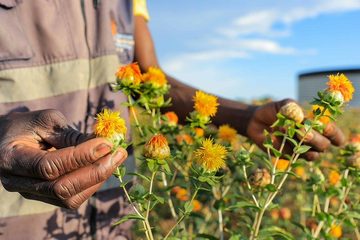
CALL FOR RESEARCH GRANT PROPOSALS UNDER THE SUPPORT TO REGIONAL MULTI-ACTOR RESEARCH NETWORK (RMRN)
1.0 Background
Agroecology has emerged as a critical and transformative approach for addressing Africa’s persistent food and nutrition security challenges while simultaneously safeguarding environmental sustainability, biodiversity, and climate resilience. Across Sub-Saharan Africa, food systems are increasingly under pressure from climate variability, land degradation, declining soil fertility, loss of biodiversity, and socio-economic inequalities that disproportionately affect smallholder farmers, women, and youth. Conventional agricultural approaches have often struggled to respond adequately to these complex and interconnected challenges, highlighting the need for more holistic, inclusive, and sustainable food system solutions.
Agroecology offers such a pathway by integrating ecological principles, local knowledge, and socio-economic considerations into agricultural production and food system transformation. By promoting biodiversity, improving soil health, strengthening resilience, enhancing resource recycling, and fostering synergies within farming systems, agroecology contributes not only to increased and more stable productivity but also to improved livelihoods, nutrition outcomes, and environmental integrity. Importantly, agroecology emphasizes co-creation and sharing of knowledge among farmers, researchers, policymakers, and other stakeholders, making it particularly relevant for Africa’s diverse agro-ecological and socio-cultural contexts. Despite growing evidence of the benefits of agroecology, its systematic integration into national agricultural policies, investment plans, and development strategies across Africa remains limited. This gap is often attributed to weak science-policy interfaces, insufficient policy-relevant evidence, and limited platforms for dialogue between researchers, practitioners, and decision-makers. As a result, agroecology is frequently under-represented in public investment frameworks and national agricultural development agendas, constraining its scaling and wider adoption.
Under the NDICI AFRICA/2023/447-700 programme, the Forum for Agricultural Research in Africa (FARA), in collaboration with the Regional Universities Forum for Capacity Building in Agriculture (RUFORUM), is implementing a set of coordinated actions aimed at addressing these gaps. The programme seeks to strengthen science–policy interfaces, support advocacy efforts, and enhance evidence-based decision-making to ensure that agroecology becomes an integral component of national and regional agricultural and food system strategies in Sub-Saharan Africa. By leveraging FARA’s continental science agenda and RUFORUM’s extensive network of universities, researchers, and Regional Multi-stakeholder Research Networks (RMRNs) and Regional Centres of Excellence for agroecology (RCoEs), the programme creates a platform for sustained engagement between science, policy, and practice.
A key element of this initiative is the provision of targeted financial support to selected researchers and scientists to generate applied, policy-relevant agroecology research outputs. This support is intended to enable the production of decision-support information, policy-oriented studies, and knowledge products that respond directly to the needs of policymakers, practitioners, and advocacy actors. The supported research will contribute to raising awareness, strengthening advocacy, and informing the integration of agroecology principles and practices into national agricultural investment plans, sector policies, and development programmes.
Through this approach, the programme aims to amplify African-led research and innovation in agroecology, strengthen the role of researchers as contributors to policy processes, and support evidence-based advocacy for sustainable, inclusive, and resilient food systems. Ultimately, these efforts will contribute to advancing agroecology as a recognized and prioritized pathway for achieving food security, environmental sustainability, and socio-economic development across the continent.
2.0 Objectives of the Call
The primary objective of this grant is to provide financial support to researchers and experts to conduct specialized studies that will contribute to the advocacy work and
Feed into decision-support information systems for science-policy interfaces.
Disseminate and publicize selected agroecology scientific/research outputs.
Increase awareness and policy support for agroecological principles and practices.
Demonstrate the contribution of agroecology to the transformation of African food systems.
3.0 Scope of Studies & Priority Areas
Proposals must directly address agroecology principles and align with African agricultural priorities.
Key areas include:
Agroecological Principles, including but not limited to Biodiversity, soil health, recycling, synergies, resilience, and co-creation of knowledge.
Policy Advocacy, strategies for the recognition of agroecology as an activity of national interest.
The role of agroecology in food and nutrition security.
Gender-sensitive outreach and social inclusion in agroecological practices.
4.0 Eligibility Criteria
This is a closed-competitive call restricted to applicants who meet the following criteria:
Applicants must be members of the RMRN/RCoE Consortium, PANAP Networks Member institution. Confirmation of institutional or network affiliation confirmation is required.
The call is open to students, early-career researchers, academic staff, farmer organizations, NGOs, or research institutes.
Applicants must be based in Africa, either through citizenship or institutional affiliation.
Applicants must demonstrate the ability to conduct applied research or community-based projects, including access to research sites and/or farmer networks.
Applicants must demonstrate compliance with research ethics standards, particularly when engaging with indigenous communities and traditional knowledge systems.
5.0 Financial Support & Modalities
Maximum Grant Amount: Up to EUR 5,000 per selected proposal. A maximum of ten (10) proposals will be funded under this call
Eligible costs: Funds may be used to cover:
Monthly stipend support special studies
Travel costs to attend national or international conferences for the presentation of research findings,
Costs associated with organizing visibility and advocacy meetings.
No-Profit Principle: Grants are awarded in accordance with the no-profit principle as stipulated under the PRAG guidelines.
Financial Accountability: All expenditures must be fully justified, reasonable and supported by appropriate documentation.
Duration of the Studies: Up to 30th November 2026
6.0 Application Requirements
Interested applicants must submit a complete proposal package comprising the following:
Technical Proposal: A detailed description of the proposed research, including the methodology, alignment with agroecology principles, and the expected policy and /or community impact.
Budget: A detailed and itemized budget outlining the requested funding (up to a maximum of EUR 5,000), with clear justification for each cost item.
Work Plan: A realistic timelines indicating key activities, milestones and deliverables.
Curriculum Vitae: CV of the Lead Applicant, highlighting relevant experience and expertise and any others that will handle key research areas, indicating 3 references
Proof of Affiliation: Documentary evidence confirming membership in the PANAP Network or RMRN/RCoE Consortium.
7.0 Application Submission
Please submit your proposal through the official RUFORUM Information Management System (https://rims2.ruforum.org/).
Instructions for submission can be accessed on this link
8.0 Selection and Evaluation Process
Proposals will undergo a rigorous internal evaluation conducted jointly by FARA and RUFORUM. To be considered for selection, applicants must meet the set eligibility and quality criteria.
Note: Final selection is subject to approval by the EC/INTPA Project Manager. Successful applicants will be required to sign a formal grant contract prior to project commencement.
9.0 Expected Outputs
Selected grantees will be expected to deliver the following outputs:
Submission of high-quality research reports and/or publication of findings in reputable journals or other recognized knowledge platforms
Presentation of research results at national and or international conferences, workshops or scientific forums.
Active participation in agroecology dialogues, policy roundtables and stakeholder consultations to promote uptake of findings
Contribution to the development or strengthening of decision-support information systems relevant to agroecology and sustainable food systems.
Timelines
Milestone
Date
Call Launch
27th February 2026
Information Sharing Session with PANAP Network, RMRNs
11th March 2026
Application Deadline
30th March 2026
Evaluation Period
By 20th April 2026
Contract Signing
10th May 2026
Onboarding
15th May 2026
For more information: Please contact:cgs@ruforum.org
Read more
By: Aaron Dorner
Due Date: Mar, 30, 2026
Agri-food systems
+1
Leave a comment
No Preview Available
Seed Grant for New African Principal Investigators (SG-NAPI)
With the support of the German Federal Ministry of Research, Technology and Space (BMFTR), UNESCO-TWAS launched a new programme to strengthen the capacity of African countries lagging in science and technology. The programme is aimed at early career researchers who have obtained their PhD abroad and have recently returned or will shortly return to an academic position in their home country. Grants are awarded to promising high-level research projects in Agriculture, Biology, Chemistry, Earth sciences, Engineering, Information Computer Technology, Mathematics, Medical Sciences and Physics and/or Germany’s High-Tech Agenda carried out in African countries lagging in science and technology identified by TWAS.
Deadline
31 March 2026
Partner Organizations
German Federal Ministry of Research, Technology and Space (BMFTR)
Country where tenable
SG-NAPI Eligible Countries
Minimum degree held
PhD
Field
Agriculture, Biology, Chemistry, Earth Sciences, Engineering, Information Computer Technology, Mathematics, Medical Sciences and Physics
Age limit
40
Image
The Seed Grant for New African Principal Investigators (SG-NAPI) was established in response to the needs of researchers in developing countries, particularly those attached to institutions that lack appropriate research facilities. Under this scheme, grants can be awarded for research projects in Agriculture, Biology, Chemistry, Earth Sciences, Engineering, Information Computer Technology, Mathematics, Medical Sciences and Physics to Principal Investigators in the African countries lagging in science and technology identified by TWAS, to enable them to purchase the research facilities they need to enhance their productivity.
The Seed Grant for New African Principal Investigators (SG-NAPI) aims to support early-career scientists in Sub-Saharan Africa, with particular emphasis on Least Developed Countries (LDCs).
Seed Grant for New African Principal Investigators (SG-NAPI) is fully funded by The German Ministry of Research, Technology and Space (BMFTR).
Programme Details
SG-NAPI Grants are awarded to high-level promising research projects in Agriculture, Biology, Chemistry, Earth Sciences, Engineering, Information Computer Technology, Mathematics, Medical Sciences and Physics carried out by Principal Investigators (PI) in the African countries lagging in science and technology identified by TWAS.
In addition, Germany’s High-Tech Agenda is a national innovation initiative focused on key emerging technologies. If your research aligns with any of the following research areas Artificial Intelligence (AI), Quantum Technologies, Microelectronics, Biotechnology, Fusion and climate-neutral energy Generation or Technologies for climate-neutral mobility, you are strongly encouraged to apply.
The total amount awarded for SG‑NAPI may be up to USD 67,700.
The grants, typically awarded for a duration of 30 months, can be utilized for the purchase of scientific equipment and consumables. This includes in exceptional cases partial funding for fieldwork, maintenance of equipment and specialized literature, such as textbooks and proceedings only. If any single item of equipment is valued at USD 5,000 or above, a valid proforma invoice from a supplier must be uploaded to the application portal. The grant does not cover salaries of the Principal Investigator or travel expenses unless they are clearly related to one of the conference and/or mobility components mentioned below. Additionally, please note that the purchase of fuel, fees for experts or consultants or labourers, laptops, tablets, drones and laboratory animals is not supported.
Awarded PIs may also support MSc student as part of the project, request funding for international conference grant, industrial link grant with partners in Germany, collaborative mobility grant in Germany and open access publication grant. Full details of each component are laid out in the guidelines.
The programme has an additional component which seeks to enhance the productivity of female scientists returning to academia after a maternity leave, scientist-after-child grant. Full details of this component can be found in the guidelines.
Eligibility
Applying Principal Investigators must be nationals of an eligible country, who holds a PhD and has good research experience. The grant should operate within a university or a research institution in one of the African countries lagging in science and technology.
The PI must be 40 years old or younger. Any applicant turning 41 in the year of application is not eligible.
The PI must have obtained their Ph.D. within the last 5 years in a country other than their home country.
The PI must have returned to their home country (refer to list in the guidelines) within the last 36 months or will return home before the end of 2026.
The PI must hold, be offered or be in the process of accepting a position at an academic and/or research institution (including international research centers) in their home country.
The PI must be national of an eligible African country that is lagging in science and technology (refer to list in the guidelines).
Applicant must at the time of application NOT have an active research grant with TWAS or OWSD Early Career Women Scientists (ECWS) Fellowship.
Applications from women scientists and those working in Least Developed Countries are especially encouraged.
The applicant must submit a strong Research Proposal, you may find further information on how to write a strong proposal by visiting Rising Scholars.
Please be advised that applicants may apply for only one programme per calendar year in the TWAS and OWSD portfolio. Applicants cannot apply for other TWAS programmes i.e. Postdoctoral and Visiting Researcher programme within the same year in order to be present in their home country throughout the duration of the grant.
Agreement
If selected, a trilateral written agreement is drawn up between TWAS, the Principal Investigator and the home institution. The home institution undertakes to administer the grant according to the agreement and to provide laboratory space, salaries and other facilities necessary for the project. Equipment, consumables and literature provided for the project through the SG-NAPI grant programme remain the property of the home institution after the project is completed.
In general, the grant funds are kept at TWAS for the purchase of items requested by the grant holder. TWAS places the orders with the supplier(s) upon receipt of proforma invoices submitted by the grant holder in accordance with the approved itemized budget.
The agreement will also provide details on how to activate other benefits of the grant such as support for MSc students, international conference grant, industrial link grant, collaborative mobility grant, open access publication grant and scientist-after-child grant.
Grant holders must submit a final report before the completion of the award.
How to apply
Ensure that you have read and fully understood the guidelines.
SG-NAPI grant applications, once the call opens will need to be submitted online by clicking on the “Apply Now” link at the bottom of this page. Please note the link will only be active once the call opens and not before (or after it is closed).
Please note that a researcher may only submit one application at a time and for only one kind of grant. Applicants cannot apply for other TWAS programmes i.e. Postdoctoral, Visiting Scholar and Visiting Researcher programme within the same year in order to be present in their home country throughout the duration of the grant.
For any queries please contact the TWAS SG-NAPI Grants office, e-mail: sgnapi@twas.org
When to apply
The deadline for receiving applications will be updated once decided. We strongly recommend that you do not wait until the deadline but submit the application as early as you can to enable us to process your application as quickly as possible.
Notification
Please note that the assignment meetings of the SG-NAPI Grants Committee will be held by the end of the year. Applicants will be notified of the outcome shortly after the meeting.
Any PI currently holding an award for any TWAS programme may not apply before completing the current award.
Application doc(s):
sg-napi_msc_form.docx653.2 KB
application_guidelines_sg-napi_2026_3.pdf310.6 KB
APPLY NOW
Read more
By: Aaron Dorner
Due Date: Mar, 31, 2026
Science, Technology an...
Leave a comment
2027 Fulbright Research Awards for African Scholars
U.S. Embassy Uganda is accepting applications for the 2027 Fulbright African Research Scholar Program. This award funds African university faculty, administrators, and research institute professionals to conduct postdoctoral research or curriculum development and research at a U.S. academic or research institution during the 2027-2028 academic year.
Please review the award types and eligibility requirements carefully below. Awards are open without regard to academic discipline, faculty rank, sex, or age. All applications are due by April 10, 2026. All applications should be submitted at https://apply.iie.org/fvsp2027.
Note: Proposals involving dissertation research or general professional travel are not eligible for this program. Curriculum development grants contribute to the development of new courses, curricula, or programs upon the participant’s return to their home institution.
Applications are currently being accepted for:
Research Grants (awards of three to nine months in duration)
Applicants should have a productive scholarly record, and a specific detailed project statement directly related to their ongoing teaching and/or research responsibilities. Funding is normally for one term/semester of about four months. Longer grants may be possible if the research proposal clearly demonstrates that the project requires more time. Applicants must have a Ph.D.
Program and Curriculum Development Grants (awards of three to five months in duration)
Applicants will conduct reading and research of benefit to both the scholar and their home institution. Proposals should be linked to the applicant’s professional duties (classroom instruction, student advising, and university outreach) and should provide specific details that demonstrate how the scholar would use the knowledge gained to update / develop new courses, curricula, or other academic programs at their home institution. A doctorate degree is not required for this grant, but applicants must hold a minimum of a master’s or equivalent graduate degree at the time of application.
In addition, applicants can choose to apply directly for a Notre Dame Visiting Scholar Award.
Notre Dame Visiting Scholar Award
The University of Notre Dame will host two Fulbright Scholars from Uganda in the 2027-2028 academic year. Prospective applicants interested in the following fields will be hosted at the University of Notre Dame.
Sustainability, resilience, mitigation and adaptation
Peacebuilding, including peace processes, religion and peacebuilding, and the role of new technologies
Global Health including WASH (water, sanitation, and hygiene), nutrition and maternal health
A letter of support from a faculty member at Notre Dame is recommended but not required for consideration. Please contact kampalaexchanges@state.gov for added questions related to the Notre Dame opportunity.
Fulbright Research Awards for African Scholars: Eligibility and Selection
Applicants must be Ugandan citizens.
Awards are open without regard to academic discipline, faculty rank, sex, or age.
Proposals for clinical medical research involving patient contact cannot be approved under the Fulbright Program.
Preference will be given to those proposals that best promote the spirit and goals of the Fulbright Program: to increase and enhance mutual understanding between the United States and other countries through interpersonal contact and the sharing of professional/academic experience and expertise among the widest possible audience. Applicants must provide a detailed project statement to help facilitate the U.S. host placement process and address why their research needs to take place in the United States.
Applicants must include a bibliography of one to three pages of references relevant to the proposed activities/research within their project statement.
Preference will be given to applications that include a letter of support from a potential U.S. host institution willing to support your project proposal.
Applicants open or interested to have host placement at University of Notre Dame should indicate this as their preferred U.S. host within their applications.
For research applicants, preference is given to individuals who have at least three years of university teaching experience and a productive scholarly record.
Plagiarism in any part of an application will result in disqualification from participation in the program.
Applications for doctoral dissertation research, postdoctoral research immediately following the completion of a doctorate degree, or general professional travel, are ineligible.
Preference is given to individuals who have not visited the United States within the past five years.
Applicants must have a strong command of the English language.
Applications are reviewed by a local selection panel. Final nominations are reviewed in the United States and selections are made by the J. William Fulbright Foreign Scholarship Board. Whenever possible, scholars should plan to travel beginning August 2027 or January 2028 to coincide with U.S. university schedules. Only short-listed candidates will be contacted after review of submitted applications.
Read more
By: Aaron Dorner
Due Date: Apr, 10, 2026
Agri-food systems
+5
Leave a comment
No Preview Available
Bayer Foundation Fellowships
We offer scientific fellowships for outstanding master, PhD, and medical students to pursue international research projects, internships, and more, providing additional funding for international placements to enhance their study programs.
In line with our commitment to gender equality in science, we strongly encourage applications from women, individuals from low- & middle-income countries, parents with caring responsibilities for children, and individuals working within Germany with German as a second language.
Who can apply?
Fellowship in Drug Discovery Sciences
For master or PhD students from all scientific disciplines including pharmacy and data science, with fundamental or applied studies with relevance to the pharmaceutical and consumer healthcare (over-the-counter) industries.
Fellowship for Agricultural Science
For master or PhD students from all scientific disciplines including data science, with fundamental or applied studies with relevance to the Crop Science industry.
Fellowship for Medical Sciences
For all students of human & veterinary medicine, or master and PhD students in medical engineering, applied medical sciences, data science in medicine and public health.
These fellowships have been established in memory of Otto Bayer, former director of research at Bayer, Jeff Schell, co-founder of Plant Genetic Systems now part of Bayer Crop Science, and Carl Duisberg, former Chairman of the Board of Management at Bayer.
Fellowship for Climate & Health
For students in the fields of human or veterinary medicine, or master and PhD students in natural sciences, pharmacy, public health, or epidemiology with relevance to the impact of climate change on health, with a focus on:
The health of women and other vulnerable populations
Cardio-Renal Health
Neglected Tropical Diseases
Respiratory Health
What can I apply for?
Applicants are eligible for up to 10.000 € funding and can undertake fellowships for up to six months.
The fellowship can be used for research projects, internships and more. People studying in Germany must undertake placements in a second country and those studying outside Germany must undertake their fellowships at a German research institution. For more detailed information please see our guidelines and frequently asked questions (link below).
How can I apply?
Before you begin applying, please read the complete application guidelines and FAQs here. Familiarize yourself with the application form (see preview here) and collect all relevant documentation and content prior to starting your application.
Application phase: February 18 - April 15, 2026. Applications can only be made through our digital portal below (click the button).
Please contact us with any questions at: bayer.fellowship@bayer.com.
Apply now!
Fellowship for STEM Student Teachers & Teachers
This fellowship is designed for teachers that will shape the perspectives of future generations and provides funding for teachers e.g. for internships, research projects and trainings.
Who can apply?
This fellowship is only available to applicants currently working or studying in Germany!
Trainee teachers or students of pedagogy (Bachelor, Master, PhD, Staatsexamen) with a focus on STEM subjects
Newly qualified teachers (< 3 years) with a primary focus on STEM subjects
Grundschule or Förderschule teachers seeking to enhance their capacity and knowledge regarding STEM education.
What can I apply for?
Applicants are eligible for up to 10,000€ in funding and can undertake fellowships for up to twelve months.
The fellowship can be used for internships, research projects in STEM education, trainings, summer schools, research courses etc. related to STEM education in Germany or abroad. For more detailed information please see our guidelines and frequently asked questions (link below).
How can I apply?
Before you begin applying, please read the complete application guidelines and FAQs here. Familiarize yourself with the application form (see preview here) and collect all relevant documentation and content prior to starting your application.
Application phase: February 18 - April 15, 2026. Applications can only be made through our digital portal below (click the button).
Please contact us with any questions at: bayer.fellowship@bayer.com
This fellowship is established in memory of Kurt Hansen, former Chairman of the Board of Management at Bayer.
Apply now!
Read more
By: Aaron Dorner
Due Date: Apr, 15, 2026
Agri-food systems
+3
Leave a comment
Call for Concept Notes: Action Research for Climate Adaptation in Agriculture
Website LinkIntroductionThe purpose of this Request for Concept Notes (RfCN) is to invite concept notes fromresearchers within organizations based in Kenya and Nigeria to conduct innovative andfeasible action research under the Climate Adaptation in Agriculture (ARCAA) program.ARCAA supports locally led climate-adaptation action research aimed at informingclimate-smart agricultural innovations and accelerating their adoption and scaling in Kenyaand Nigeria. This RfCN is jointly issued by RTI International and RUFORUM, with fundingfrom the Gates Foundation.About RTIRTI International is an independent, scientific research institute dedicated to improving thehuman condition by turning knowledge into practice. RTI publishes more than 1,000 peerreviewed journal articles annually, often in collaboration with global research partners, with afocus on informing decision-making and public policy. RTI also implements internationaldevelopment programs, with experience in more than 100 countries around the world. RTI'sagriculture and food systems practice conducts research and implements programs thatsustain the environment and support equitable, thriving communities. RTI has worked withclients across the public, private, foundation, and nonprofit sectors globally.About RUFORUMRegional Universities Forum for Capacity Building in Agriculture (RUFORUM) is a network ofuniversities across 40 countries in Africa. RUFORUM collaborates globally with otheruniversity networks, development partners, policymakers, and leaders to leverage synergiesand work towards shared objectives in delivering science solutions for development, humancapital development, and institutional reform in the African Higher Agricultural Educationsystem. The network is African owned, aligned with country goals, and thrives in multistakeholder engagement that promotes equity and implements gender responsiveinterventions. RUFORUM is nested within continental and global frameworks, including theComprehensive Africa Agriculture Development Programme (CAADP), Africa’s Agenda2063, and the United Nations Sustainable Development Goals. We recognize that youth arethe driving force behind change and are leading the charge for a better Africa.Background on ARCAAAfrica is disproportionately vulnerable to the impacts of climate change, yet most climateresearch on the continent is led by scientists based outside Africa.1 This imbalance limitsrepresentation of local perspectives and perpetuates dependency on external solutions.To address this gap, RTI and RUFORUM, with funding from the Gates Foundation, havelaunched the ARCAA program. ARCAA aims to support locally led action research thatincreases adoption and scaling of innovations and technologies to strengthen farmers’adaptation to climate change in Kenya and Nigeria. Ultimately, the results of the actionresearch funded through ARCAA are expected to meet the needs of small-scale producersby enhancing their productivity, income, and nutrition in the face of climate shocks andenvironmental stresses.The program takes an “action research” approach. ARCAA expects funded action researchto be guided by the following principles set out by the Adaptation Research Alliance:
Read more
By: Aaron Dorner
Due Date: Apr, 17, 2026
Agri-food systems
+2
Leave a comment

No Preview Available
Apply for a Fellowship at STIAS
Website/Application LinkSTIAS provides and maintains an independent ‘creative space for the mind’ to advance scientific inquiry and engaged scholarship across all disciplines. The Institute is global in its reach and local in its African roots, and values original thinking and innovation in this context. The Fellowship programme comprises projects which are entirely self-generated and proposed by applicants, as well as projects or programmes initiated and led by STIAS typically with select partner organisations. A prospective STIAS Fellow may apply either individually, or as part of a team, or as an Iso Lomso early career scholar, or as an artist-in-residence.
The STIAS terms run from mid-January to mid-June (first semester), and from mid-July to mid-December (second semester). The Fellowship programme is guided by the Institute’s commitment to being a creative space for the mind, an inter/cross generation space as well as a cross-disciplinary space that encourages cross-pollination of ideas and hence gives preference to projects that will tap into, and benefit from, a multi-disciplinary discourse while also contributing unique perspectives to individual, collective and engaged discourses, an opportunity for a Fellow beyond self. STIAS Fellows are, except in prior agreed-to circumstances, expected to be resident at STIAS for the duration of a Fellowship in pursuit of their proposed research project.
Read more
By: Aaron Dorner
Due Date: Apr, 30, 2026
Agri-food systems
+6
Leave a comment
No Preview Available
The Science Granting Councils Initiative (SGCI) in sub-Saharan Africa call for proposals to support
Call for Proposals
Deadline: Thursday, April 30, 2026 - 23:59 ET
Programs: Science Granting Councils Initiative in Sub-Saharan Africa
Duration: 30 months
Topic(s): Science and Technology
Funded by The Government of Norway, the United Kingdom’s Foreign, Commonwealth and Development Office (FCDO) and Wellcome
Budget Up to CAD500,000
Point of contact SGCSSA@idrc.ca
Type: Grant
Status: Open
Scope
This funding opportunity supports the establishment and operationalization of the Capacity Strengthening Hub under Phase III of the Science Granting Councils Initiative (SGCI-3). The Hub will play a coordinating role in strengthening the research and innovation management capacities of Science Granting Councils (SGCs) across sub-Saharan Africa.
Working under the strategic guidance of the Capacity Strengthening Committee (CSC) and in close collaboration with the Program Management Team (PMT), the Hub will coordinate annual capacity-strengthening plans, manage a digital-learning and knowledge-sharing platform and support monitoring, evaluation and learning related to institutional development. It will also facilitate communication, peer exchange and feedback across participating Councils and technical partners.
The Hub will not directly deliver training, mentoring, or technical assistance, as these activities will be funded and implemented separately under SGCI-3.
Eligibility
This funding opportunity is open to legally registered organizations based in sub-Saharan Africa, applying either individually or as the lead organization of a consortium, with demonstrated expertise in research and innovation management and experience supporting capacity strengthening of Science Granting Councils and public sector science, technology and innovation institutions. Applicants must have the legal authority to contract and manage funds and the capacity to work in English and French; additional eligibility requirements are outlined in the full call for proposals.
More details
For more information, please read the detailed call for proposals document and frequently asked questions.
Learn more about SGCI.
More questions? Please direct them to SGCSSA@idrc.ca.
Read more
By: Aaron Dorner
Due Date: Apr, 30, 2026
Science, Technology an...
Leave a comment
No Preview Available
ICGEB BiotechNet Grants 2026 CRP – Collaborative Research Programme
Funding opportunities are made available through the Collaborative Research Programme (CRP) – ICGEB Research Grants, a dedicated source of funding that aims to finance projects addressing original scientific problems of particular relevance for the host country and of regional interest. The BiotechNet CRP scheme foresees the award of 2-year Research Grants to local investigators in Ethiopia, Djibouti, Kenya and Uganda to conduct original research projects having national/regional relevance. Through these grants, beneficiary research institutes will be supported in the creation and/or upgrading of appropriate research facilities.
Closing Dates for Applications:30 APRIL 2026, 23:59 CET
Apply
Biotechnet Grants Guidelines 2026
CRP online submission Guidelines
Download poster
FAQ
Read more
By: Aaron Dorner
Due Date: Apr, 30, 2026
Science, Technology an...
Leave a comment
No Preview Available
TWAS-CSIR Postgraduate Fellowship Programme
The Council of Scientific and Industrial Research (CSIR) of India and UNESCO-TWAS have established a number of fellowships for foreign scholars from developing countries, who wish to pursue research toward a PhD in emerging areas of science and technology, for which facilities are available in CSIR laboratories and institutes.
Deadline
06 May 2026
Partner Organizations
Council of Scientific and Industrial Research, India
Eligible nationalities
Developing countries in the South
Host countries
India
Level
PhD
Minimum degree held
MSc
Duration
Up to 4 years
Field
01-Agricultural Sciences
02-Structural, Cell and Molecular Biology
03-Biological Systems and Organisms
04-Medical and Health Sciences incl. Neurosciences
05-Chemical Sciences
06-Engineering Sciences
07-Astronomy, Space and Earth Sciences
08-Mathematical Sciences
09-Physics
Age limit
35
Sandwich option
YES
Applications can only be submitted via online portal once the call is open.
Please use the “apply now” button at the bottom of this page to start your application once the call is open.
Opening date of this fellowship: 6 March 2026
Closing date of this fellowship: 6 May 2026
Applicants are encouraged to apply for the preliminary acceptance letter as early as possible, even before the opening date of the call. Keeping in mind that only Acceptance letters dated the same year as the year of application are eligible.
Programme Details
TWAS-CSIR Postgraduate Fellowships are tenable in CSIR research laboratories and institutes in India for a maximum period of four years.
Applicants may be registered for a PhD degree in their home country, or may enrol in a PhD course at any University in India.
Eligible CSIR institutions: Information on CSIR laboratories and institutes can be obtained by following the links here: https://www.csir.res.in/about-us/csir-network-map. Alternatively, a list of eligible institutes is available at the bottom of this page as a Word document.
SANDWICH Fellowships (for those registered for a PhD in their home country): The Fellowship may be granted for a minimum period of 6 months and a maximum period to be decided by the host institute, but no greater than 3 years.
FULL-TIME Fellowships (for those not registered for a PhD): The Fellowship may be granted for up to a maximum duration of 4 years.
CSIR will provide a monthly stipend to cover for living costs, food and health insurance. The monthly stipend will not be convertible into foreign currency. In addition, Fellowship awardees are entitled to subsidized accommodation.
The language of instruction for foreign scholars in CSIR laboratories/institutes is English.
Eligibility
Applicants for these fellowships must meet the following criteria:
Be a maximum age of 35 years on 31 December of the application year.
Be nationals of a developing country (other than India).
Must not hold any visa for temporary or permanent residency in India or any developed country.
Hold a Master's degree in science and technology.
Be regularly employed in their home country and hold a research assignment there.
SANDWICH Fellowships: Be registered PhD students in their home country and provide the "Registration and No Objection Certificate" from the HOME university.
FULL-TIME Fellowships: Be willing to register at a university in India within the first year, if agreed to by CSIR.
Be accepted at a CSIR laboratory/institution and provide an official acceptance letter from the host institution (see sample Acceptance Letter that can be downloaded below or included in the Application Form). NB: Requests for acceptance must be directed to the chosen CSIR host institution(s);
provide evidence of proficiency in English, if medium of education was not English;
provide evidence that s/he will return to her/his home country on completion of the fellowship;
not take up other assignments during the period of her/his fellowship;
be financially responsible for any accompanying family members.
Submitting your application
If already registered for a PhD in their home country, applicants should ensure that the Vice-Chancellor or Registrar of the HOME university signs a copy of the "Registration and No Objection Certificate" (see sample included in the Application Form), a copy of which should be sent to both CSIR and TWAS.
Applicants should submit the acceptance letter from a CSIR institution when applying or by the deadline at the latest. Without preliminary acceptance, the application will not be considered for selection.
Applications for the TWAS-CSIR Postgraduate Fellowship Programme can ONLY be submitted to TWAS via the online portal. A tutorial on how to use the online application form is available below for download.
Please be advised that applicants may apply for only one programme per calendar year in the TWAS and OWSD portfolio. Applicants will not be eligible to visit another institution in that year under the TWAS Visiting Professor programmes. One exception: The head of an institution who invites an external scholar to share his/her expertise under the TWAS Visiting Professor programmes may still apply for another programme.
Results of the fellowship selection should be available in at the end of 2026 or early 2027 and selected candidates will be able to start their fellowship NO earlier than 2027.
Contact Details
• TWAS Fellowships OfficeICTP Campus, Strada Costiera 1134151 Trieste, ItalyPhone: +39 040 2240-3314Fax: +39 040 2240-689E-mail: fellowships@twas.org
• Dr (Mrs) Mamta SharmaPrincipal ScientistInternational S&T Affairs Directorate (ISTAD)Council of Scientific and Industrial Research (CSIR)Anusandhan Bhavan, 2, Rafi Marg, New Delhi 110 001Tel: +91-11-23470218 or 8987482814E-mail: mamtasharma@csir.res.inWeb: www.csir.res.in
Contact email:
fellowships@twas.org
Application doc(s):
online_forms_applicants_tutorial.pdf1.34 MB
sample_preliminary_acceptance_letter.pdf62.54 KB
updated-list-of-csir-eligible-centres_2023.docx27.66 KB
APPLY NOW
Read more
By: Aaron Dorner
Due Date: May, 6, 2026
Water, energy, and the...
+1
Leave a comment
No Preview Available
AgroServ's Transnational/Virtual Access Programme – Application procedure
Website Link: agroserv Transnational/Virtual AccessBenefits of AgroServ's access
Free AccessUtilize services offered by AgroServ partners at no cost.
Travel SupportReceive reimbursement for travel and accommodation expenses.
On-site SupportAssistance during project execution at partner facilities.
Knowledge TransferAccess necessary expertise to complete your experimental work.
Overview
AgroServ enables researchers from academia and industry and all practitioners who are interested in doing research in agroecology to access installations and services across Europe, with a Catalogue of services provided by the 11 Research Infrastructures within AgroServ. Our focus is on supporting research in sustainable and resilient agriculture, emphasizing the 'one health' approach.
Read more
By: Aaron Dorner
Due Date: Jun, 8, 2026
Agri-food systems
+2

Leave a comment